
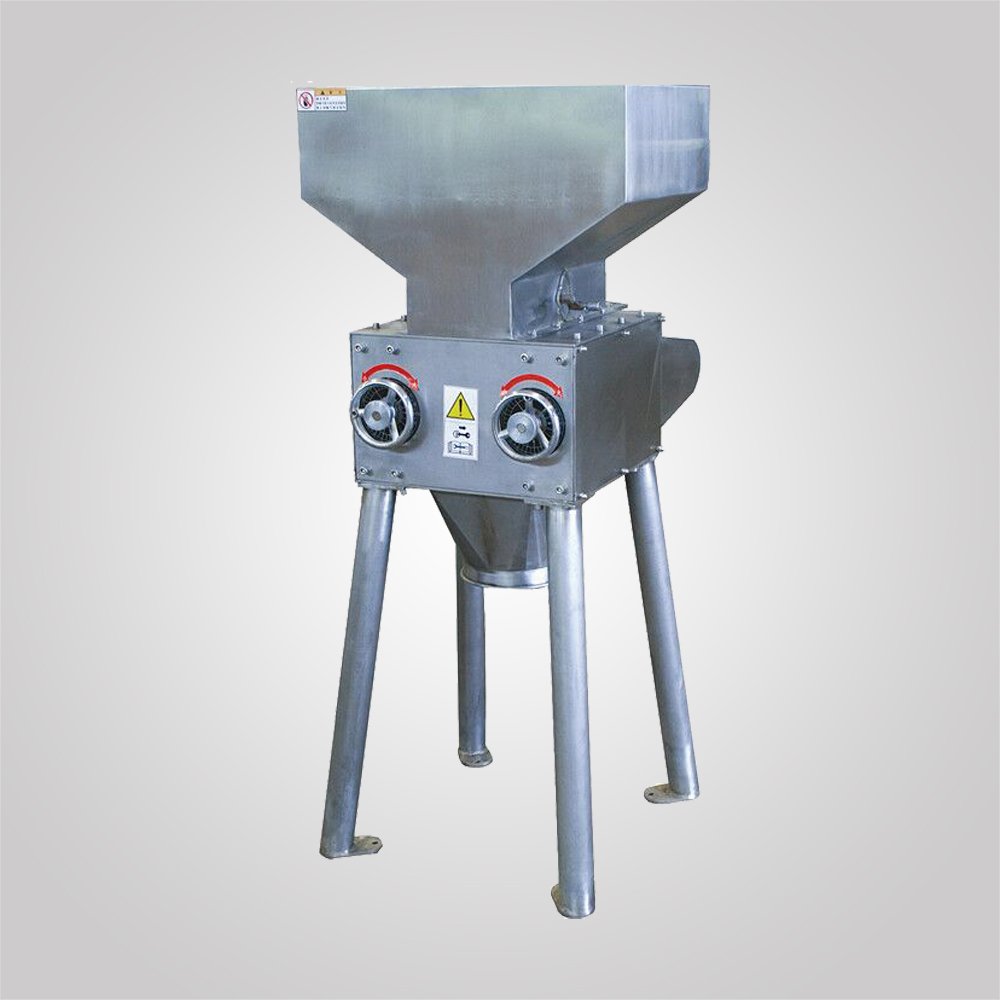
Nowadays, most craft breweries adopt roller mills for malt crushing. Featuring simple structure, convenient adjustment and low risk of over‑crushing, roller mills deliver reliable performance thanks to their well‑designed internal components.
Malt milling is the very first step of beer brewing. Crushing quality directly affects mashing sugar yield, wort lautering speed and wort clarity. To select and operate a roller mill properly, it is essential to understand its core internal structure.
Core Component: Alloy Roller Assembly
The rollers are the heart of a roller mill, determining crushing performance, service life and particle consistency. Tiantai mill rollers are manufactured by centrifugal casting. This process delivers high‑density and uniform wall thickness. The roller surface reaches high hardness, resisting wear and deformation under long‑time heavy‑duty malt milling, so stable particle size can be maintained batch after batch.
Two Roller Surface Types: Flat Roller and Knurled Roller
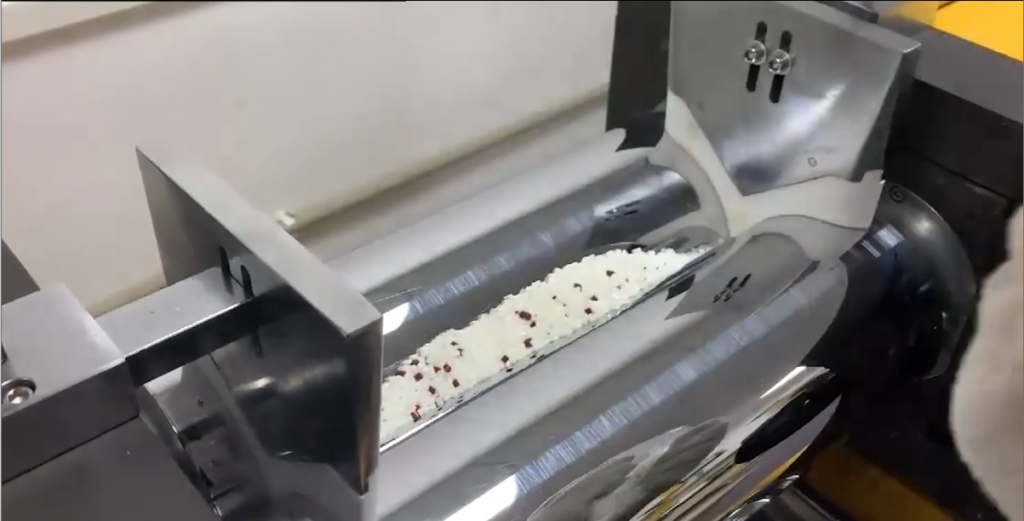
According to different milling stages, there are two main roller surfaces: flat roller and knurled roller. They serve different purposes in multi‑stage crushing.
Flat roller: Mostly used for the first and second roller pairs on multi‑roller mills with vibrating sieve. It applies gentle compression to crack malt grains while keeping husks largely intact for preliminary crushing and grain classification.
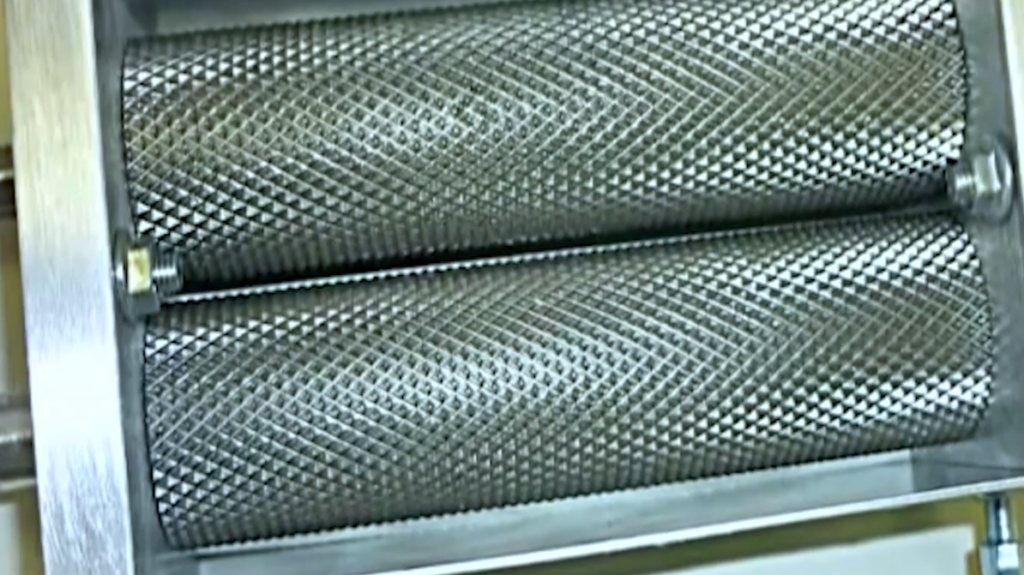
Knurled roller: Applied to all types of roller mills. Its surface is machined with special slotted knurling. These grooves are not parallel to the roller shaft but set at a certain inclined angle. The angled grooves enhance rolling friction and create strong shearing force, bringing higher crushing efficiency and more even particle size.
Counter‑Rotating Rollers With Different Speeds
The key crushing unit consists of a pair of knurled rollers rotating towards each other at different speeds. Malt falls into the gap between two rollers. Under combined compression and shearing friction generated by speed difference, starchy endosperm is separated from malt husks. The husks remain as complete as possible while endosperm gets fully crushed. This design effectively avoids over‑crushing or insufficient crushing.
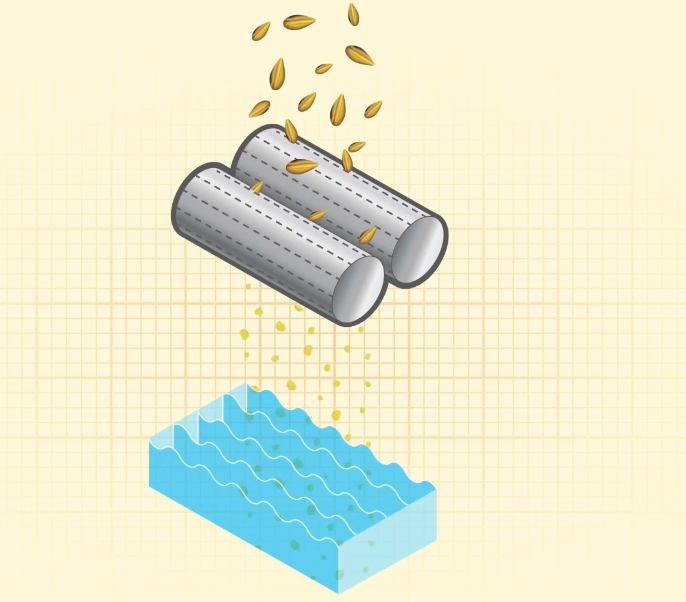
In short: flat rollers complete preliminary cracking and classification; knurled rollers finish precise grinding; counter‑rotating rollers with speed difference realize professional malt crushing.
Auxiliary Internal Structures For Stable Operation
Besides roller assemblies, roller mills contain other precision internal parts to guarantee stable production, especially on 4‑roller and 6‑roller models.
- Precision gap adjustment unit Equipped with handwheel and fine‑tuning screw rod with scale marks. Operators can accurately change roller gap to adjust crushing fineness for base malt, roasted malt, wheat malt and other grains.
- Spring overload protection mechanism Built‑in buffer springs. When hard foreign objects such as nails or stones enter the roller gap, rollers will automatically retract to prevent scratches or tooth damage on roller surfaces.
- Enclosed feeding and material guide parts Inner guide plates guide malt evenly into roller gaps, preventing uneven milling. Enclosed structure reduces dust and meets food‑grade sanitary requirements.
- Vibrating sieve assembly (4‑roller & 6‑roller models) Multi‑layer internal screens separate whole husks, coarse particles and fine flour. Fractions are sent to corresponding rollers for secondary crushing, so milling quality is further improved.
Roller Mill VS Hammer Mill On Internal Design
Hammer mills rely on high‑speed impact from hammers. There is no classified processing for husk and endosperm. Husks are easily smashed into fine powder, often causing lautering bed compaction.
By contrast, roller mills adopt multi‑stage roller design and differential‑speed shearing principle. Husks and endosperm are treated separately. Controllable crushing performance makes roller mills standard equipment for commercial craft breweries.
The outstanding performance of malt roller mills comes from elaborate internal‑structure design: high‑hardness centrifugal‑cast rollers, well‑matched flat and knurled rollers, differential‑speed counter‑rotating system, together with precise adjusting and protecting components. They realize the target of crushing endosperm while preserving malt husks, stabilizing mashing quality and improving brewing efficiency.
Tiantai malt roller mills are equipped with wear‑resistant alloy rollers and standard knurling workmanship. Suitable for production from 200L up to 10‑ton batches, they match perfectly with complete brewhouse systems. Follow us for more professional knowledge about beer brewing and brewery equipment.