
In a traditional brewing system, the wort needs to move smoothly from the Lauter Tun to the next stage of the brewhouse. Although this may seem like a simple transfer, controlling the wort flow can have a significant influence on lautering performance and the overall brewing process.
A Wort Grant with Level Control can be used as an intermediate vessel between the Lauter Tun and the wort pump. It provides a buffer for the wort while helping regulate the flow between the lauter outlet and the downstream equipment.
For breweries looking for better control of the lautering process, a Wort Grant with Level Control can be a useful part of the brewhouse system.
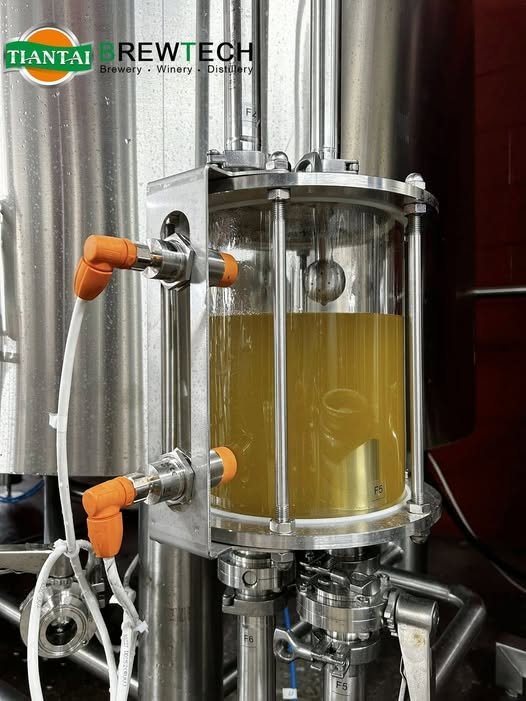
Wort Grant with Level Control
What Is a Wort Grant?
A wort grant is a small intermediate vessel used to collect wort from the Lauter Tun before it is pumped to the kettle or another part of the brewing system.
In a typical brewing process, wort passes through the false bottom of the Lauter Tun and leaves through the wort outlet. Instead of connecting the Lauter Tun directly to a pump, the wort can first enter the grant.
The vessel provides a temporary buffer between the Lauter Tun and the wort pump.
A Wort Grant with Level Control adds a level measurement or control system to this arrangement. The liquid level inside the grant can then be monitored, allowing the pump or flow system to respond to changes in wort supply.
This can help create a more stable transfer process.
Why Use a Wort Grant with Level Control?
The main purpose is to help balance the wort coming from the Lauter Tun with the wort being pumped to the next stage.
During lautering, the wort flow from the grain bed is not always perfectly constant. At the same time, the downstream pump may have a different flow capacity.
If the pump removes wort faster than it enters the grant, the liquid level can fall too low. If the inflow is greater than the pump flow, the level can rise.
A Wort Grant with Level Control provides a buffer between these two processes.
By monitoring the liquid level, the brewery can adjust the downstream flow and maintain a more stable operating condition.
1. Provides a Buffer Between the Lauter Tun and Pump
One of the main functions of a wort grant is to separate the wort filtration process from the pumping process.
Without an intermediate vessel, the Lauter Tun outlet and pump need to be closely matched.
Changes in the grain bed permeability, lautering speed, or pump flow can directly affect the system.
A Wort Grant with Level Control provides additional flexibility.
The grant can temporarily collect wort when the inflow is higher than the pump demand and supply the pump when the inflow decreases.
This makes the transfer process less sensitive to short-term changes in flow.
2. Helps Prevent Pump Cavitation and Dry Running
A wort pump requires a sufficient supply of liquid at its inlet.
If the pump draws wort from the Lauter Tun too quickly, the liquid level near the outlet can become too low. This may cause unstable pump operation or, depending on the system design, lead to cavitation or dry running.
With a Wort Grant with Level Control, the level inside the intermediate vessel can be monitored.
If the level drops below the desired operating range, the control system can reduce the pump speed or flow rate.
This helps maintain a suitable liquid supply to the pump.
The exact control strategy depends on the pump type, sensor, automation system, and brewery design.
3. Supports More Stable Lautering
Lautering is an important stage of the brewing process.
After mashing, the grain bed acts as a natural filter. Wort needs to be collected from the grain bed without creating excessive flow that could disturb the bed.
If wort is removed too aggressively, the pressure difference across the grain bed may increase.
A controlled wort flow can therefore help the brewer maintain more stable lautering conditions.
A Wort Grant with Level Control does not replace proper lautering control, but it can provide an additional layer of flow management between the Lauter Tun and the pump.
This can be particularly useful in larger brewhouses where wort flow rates are higher.
4. Automatic Level Monitoring
Wort Grant with Level Control can continuously monitor the amount of wort inside the grant.
Depending on the brewery’s automation design, the level signal can be used to control a pump through a variable frequency drive or another flow-control method.
For example, when the liquid level becomes higher, the pump can increase its flow. When the level begins to fall, the pump can slow down.
This creates a more balanced relationship between wort inflow and outflow.
The result is a more stable transfer process with less need for constant manual adjustment.
5. Easy Visual Monitoring
Although automatic level control can provide continuous information to the control system, visual monitoring can also be useful.
Many wort grants are designed so that the brewer can easily observe the wort level.
This allows the operator to quickly identify unusual conditions such as a rapidly falling level, excessive foaming, or an interruption in wort flow.
For manual and semi-automatic brewhouses, this can be particularly useful.
For fully automated systems, the level sensor can provide information directly to the PLC and operator interface.
How Does a Wort Grant Work?
The basic process is relatively simple.
After lautering begins, wort flows from the Lauter Tun into the wort grant.
The liquid accumulates temporarily inside the vessel. A pump then transfers the wort from the grant toward the wort kettle or the next process stage.
With a Wort Grant with Level Control, a level sensor measures the amount of wort inside the vessel.
The control system can use this information to adjust the pump speed or regulate the downstream flow.
Ideally, the system maintains the wort grant within a suitable operating range.
This allows the Lauter Tun to continue draining while the pump operates according to the actual wort supply.
Wort Grant vs. Direct Pumping
Not every brewery needs a wort grant.
In some smaller brewhouses, the Lauter Tun can be connected directly to the wort pump. This can simplify the system and reduce equipment requirements.
However, direct pumping requires careful matching between wort flow and pump capacity.
A Wort Grant with Level Control provides an additional buffer and makes flow management easier.
For larger brewing systems or breweries looking for more automation, this arrangement can provide greater flexibility.
The best choice depends on brewhouse capacity, lautering method, pump configuration, automation requirements, and available space.
What Should You Consider When Choosing a Wort Grant?
The design should match the brewery’s actual brewing process.
Capacity
The grant should have enough volume to provide a useful buffer without becoming unnecessarily large.
Level Sensor
The level measurement method should be suitable for hot wort and compatible with the brewery’s cleaning and automation systems.
Pump Configuration
The pump capacity should be matched with the expected wort flow and level-control strategy.
Sanitary Design
The vessel should be manufactured with food-grade materials and designed for effective cleaning and drainage.
Automation
For automated brewhouses, the level signal should be compatible with the PLC and control system.
Installation Position
The wort grant should be positioned to provide suitable gravity flow from the Lauter Tun while maintaining a practical connection to the wort pump.
Is a Wort Grant with Level Control Right for Your Brewery?
A Wort Grant with Level Control can be a useful addition to breweries that want better control over wort collection and transfer after lautering.
Its main advantages include providing a buffer between the Lauter Tun and pump, supporting stable wort flow, helping protect the pump from low-level conditions, and enabling automatic flow adjustment.
It can be particularly valuable in larger or more automated brewhouses where stable wort transfer is an important part of process control.
However, the system should always be designed according to the actual brewhouse layout and brewing process.
Customized Wort Grant Solutions from TIANTAI
At TIANTAI, we manufacture customized brewery equipment for different brewhouse configurations and production capacities.
Our Wort Grant with Level Control can be designed according to the Lauter Tun capacity, wort flow rate, pump configuration, level measurement method, automation system, and brewery layout.
The system can also be integrated with PLC-based brewhouse control to provide more consistent and convenient wort transfer.
Whether you are building a new brewhouse or upgrading an existing system, our engineering team can help develop a suitable wort collection and level-control solution for your brewing process.
Email: [email protected]
Edit by Jane