
When opening a brewery, many clients ask us: “Do I need a hot water tank?”
Some brewers are looking to reduce their initial investment by eliminating the hot water tank. After all, some people consider a Hot Liquor Tank (HLT) to be just a glorified hot water tank and believe that beer can be brewed without one. Others consider the HLT an essential part of their brewing process and find it difficult to brew efficiently without it.
So, do you really need a hot water tank in a brewery? Let’s take a closer look.
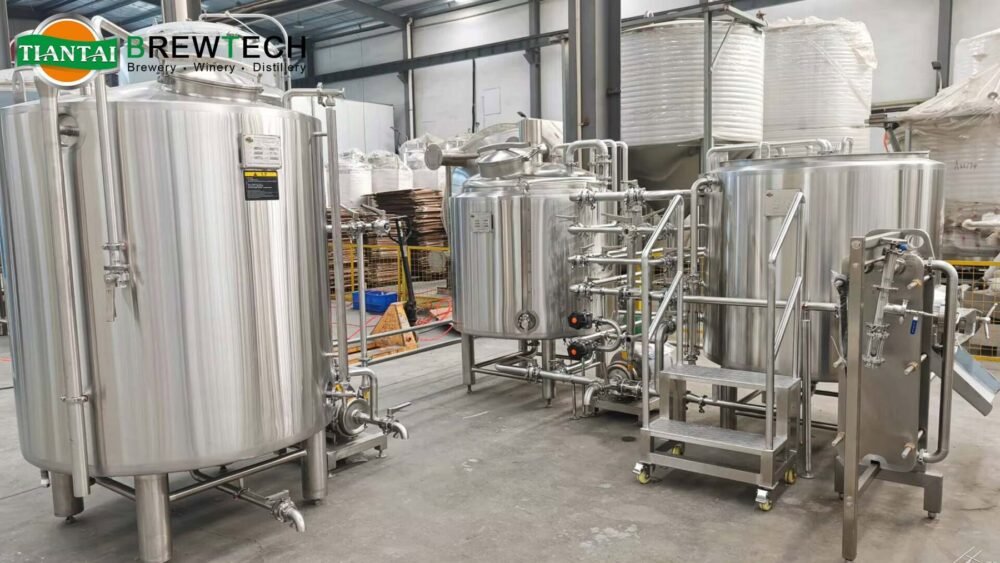
Two Major Advantages of Using a Hot Water Liquor Tank (HLT)
1. Better Control of Your Brewing Water Profile
One major advantage of using a Hot Liquor Tank is the ability to treat and prepare all of your brewing water before mash-in, helping you achieve the ideal water profile for the beer you are brewing.
Incorporating an HLT into your brewhouse gives you greater control over your water profile. This level of control is not always possible with a hot water on-demand system.
With a Hot Water on Demand system, you may also be limited to pre-filtering your water with a charcoal-type filtration system rather than using a Reverse Osmosis (RO) system. By utilizing a Hot Liquor Tank, you can enjoy the benefits of both approaches: you can use an RO filtration system and then adjust the water profile for each brew in the HLT.
2. The Ability to Recapture Water from the Heat Exchanger
As the saying goes in the brewing industry, you can never have too much hot water.
Another major advantage of a brewery hot water tank is the ability to recapture hot water from the heat exchanger instead of sending it down the drain. This can improve water utilization and help reduce waste during the brewing process.
Our HLTs are designed to be slightly oversized, ensuring that you have enough hot water for your brewing process while still having enough hot water left over for cleaning.
What Type of Heating System Do You Need for Your HLT?
Your HLT can be heated by the same or a different method from your brew kettle, depending on your brewery design and utility conditions.
For example, the HLT can be heated by steam, indirect fire, or electric heating. In some cases, it may also have no independent heat source at all.
The most suitable heating method depends on your brewing process, production schedule, available utilities, and the size of your hot water tank.
What Size Hot Water Tank Should You Choose?
Choosing the right brewery hot water tank size depends largely on your brewing capacity and production plans.
A double-sized HLT can benefit brewers who are planning or forecasting double-brew days. In this case, the HLT will require sufficient heating capacity, such as steam heating, indirect fire, or multiple electric immersion elements.
You can recapture hot water from the heat exchanger after the first brew, but this may not provide enough hot water for the second brew. Therefore, the ability to reheat water in the HLT becomes particularly important when using a double-sized hot water tank.
On the other hand, if you have a Hot Water on Demand system that can adequately supply the remaining water required for a second brew, a single-sized HLT may be sufficient.
Planning Your Brewery Hot Water System?
Choosing the right brewery hot water tank depends on your brewhouse size, brewing schedule, water demand, heating method, and future production plans. A properly designed HLT can help improve brewing efficiency, support water treatment and reuse, and ensure that enough hot water is available for both brewing and cleaning.
If you are planning a new brewery or upgrading your existing brewing system, the TIANTAI team can help you select a suitable hot water tank and design a complete brewery system based on your production requirements.
We provide complete brewery solutions, from malt milling and brewhouse systems to fermentation, bright beer tanks, packaging equipment, and auxiliary systems.
Feel free to contact us to discuss your brewery project and equipment requirements.
👤 Cassie
📧 [email protected]