
Wort Filtration: A Vital Stage In Mashing Process
After mashing, mash liquor flows into the lauter tun to separate clear wort from grain husks. The performance of the lauter tun directly affects wort clarity, extraction rate and batch-to-batch flavor consistency of beer. Tiantai Lauter Tun is built for craft breweries and commercial brewing plants. With well-designed tank structure, optimized raking system and sieve plate, it achieves efficient wort separation and thorough sparging.
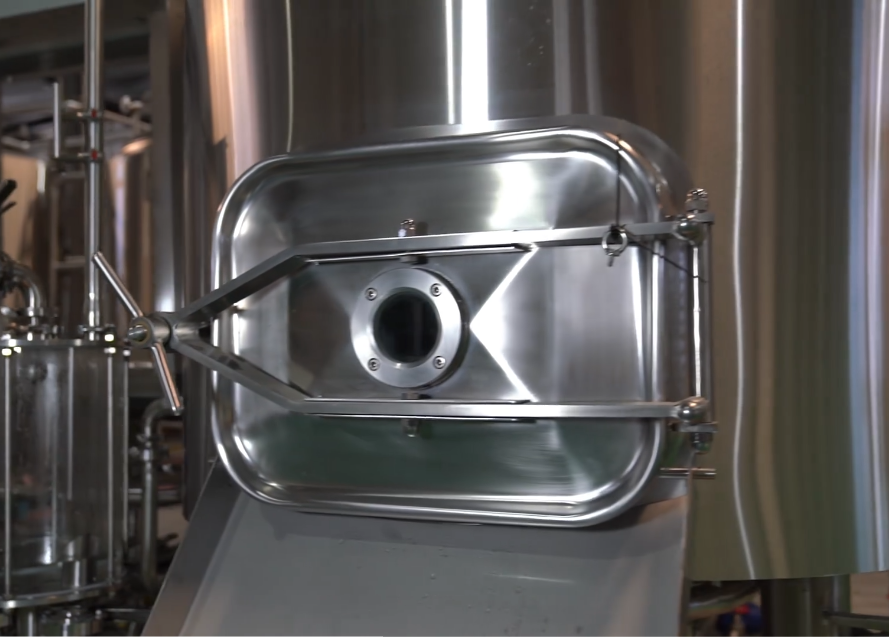
The tank is fabricated from food-grade SUS304 stainless steel with thermal insulation layer, to prevent temperature drop and avoid process fluctuation. A large side grain discharge door is installed on the front for grain removal and maintenance. Sanitary EPDM gaskets ensure tight sealing, preventing leakage and contamination. A sight glass manhole on tank top allows brewers to observe the grain bed condition and monitor filtration in real time.
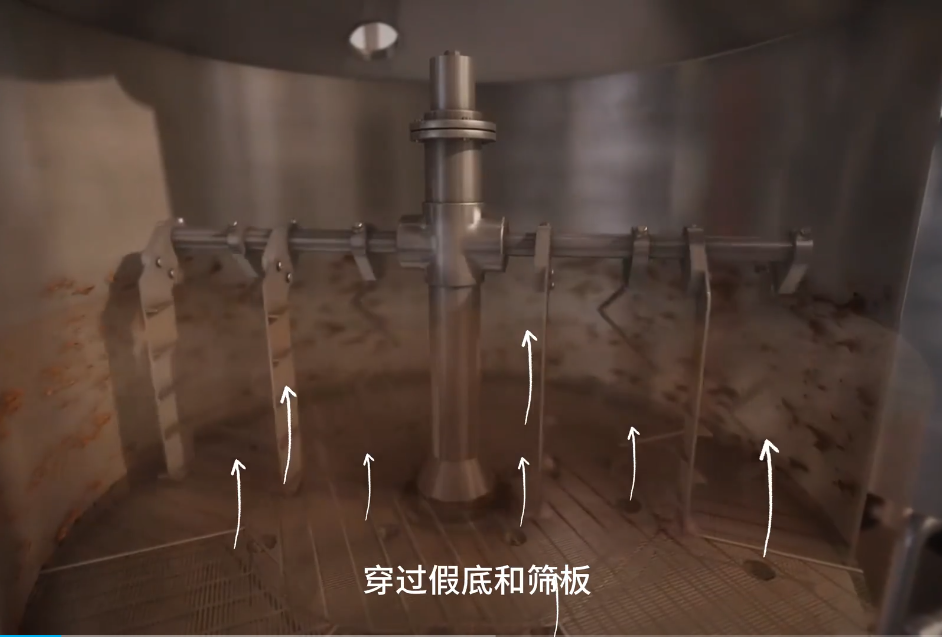
Bottom Mash Inlet Design: Fast and Even Grain Bed Formation
Tiantai lauter tun adopts bottom feeding design. The mash inlet runs through the false bottom and sieve plate. Mash is pumped from the mash tun into the lauter tun. 2-6 adjustable mash inlet valves are evenly arranged on tank bottom, and the whole mashing-in process can be finished within 10 minutes. Bottom feeding reduces impact on grain bed, helping form uniform grain bed steadily for stable filtration.
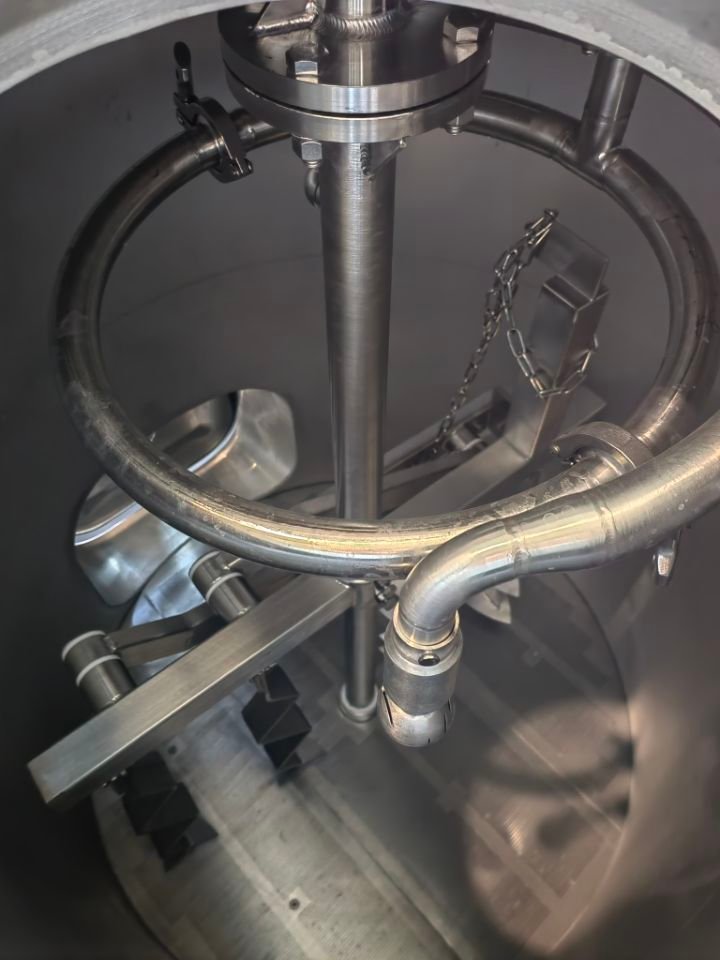
One-piece Sparging Ring for Full Coverage Washing
The tank top is equipped with CIP spray ball and food-grade stainless steel sparging ring. The sparging ring is bent from one single stainless steel tube with no welding seams, eliminating sanitary dead zones at welds. Multi-angle holes are drilled on the tube. Spraying water fully covers the grain bed for even and fine sparging, recovering as much sugar as possible from spent grains and improving raw material utilization.
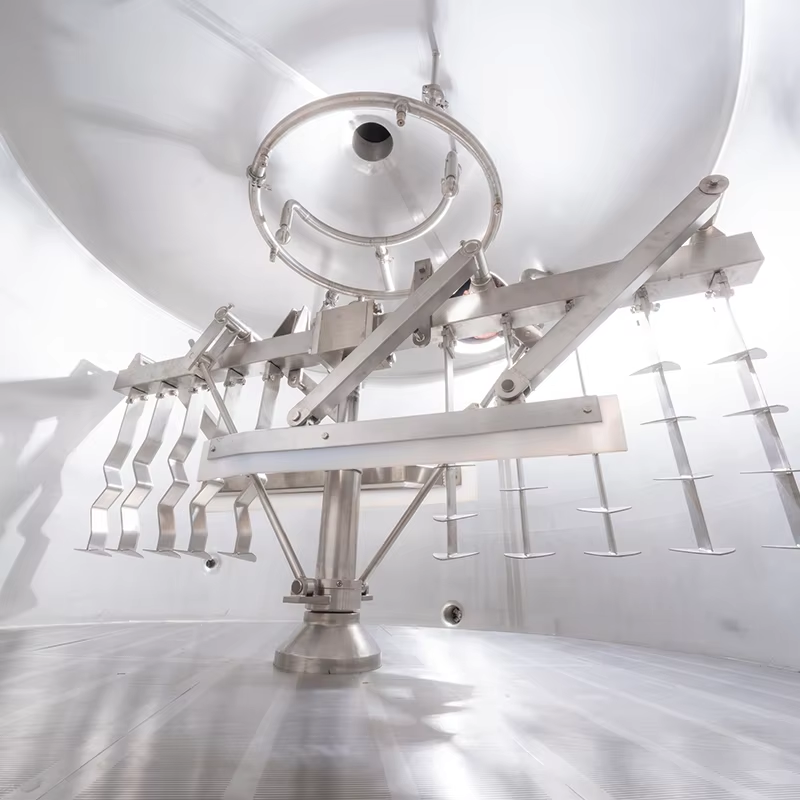
Central Rake Machine: Loosen Grain Bed and Avoid Blind Zones
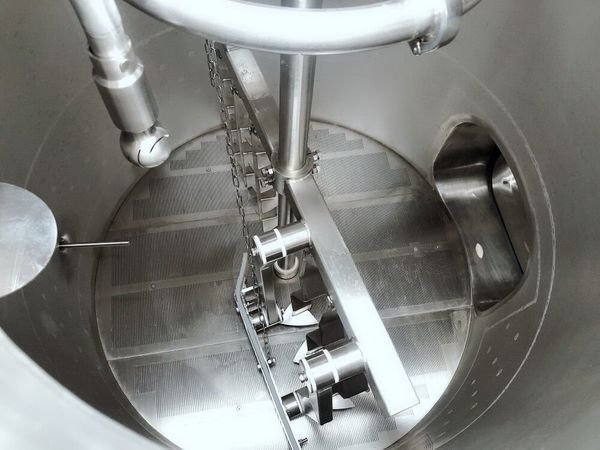
The raking machine is the heart of lauter tun. After first wort collection, grain bed gets compacted, filtration resistance rises and wort flow slows down. The rake arm rotates and loosens the pressed grain bed, creating new flow paths for thorough sparging. The number of raking arms can be customized from 2 to 6 based on tank volume. Tiantai mostly uses single-leg raking knives. The movement tracks do not overlap. Rake arms are arranged asymmetrically. The complementary movement eliminates raking blind areas and ensures uniform loosening. The rake height is adjustable for different grain bed thickness during sparging.
Inclined Milled Sieve Plate: Anti-blocking and Stable Filtration
The grain bed together with sieve plate forms the filter medium. Tiantai uses inclined milled sieve plate with 13% opening ratio. The inclined structure stops fine grain particles from sticking into gaps, greatly reducing blocking risk, maintaining steady flow and better wort clarity. Wort collecting pipes are evenly distributed at tank bottom, connecting to central wort manifold with conical outlets. This design enables smooth wort outflow and prevents pulling grain bed by negative pressure. Multiple cleaning nozzles are installed on tank bottom for high-pressure washing under sieve plate after filtration.
Optional Automatic Grain Discharge
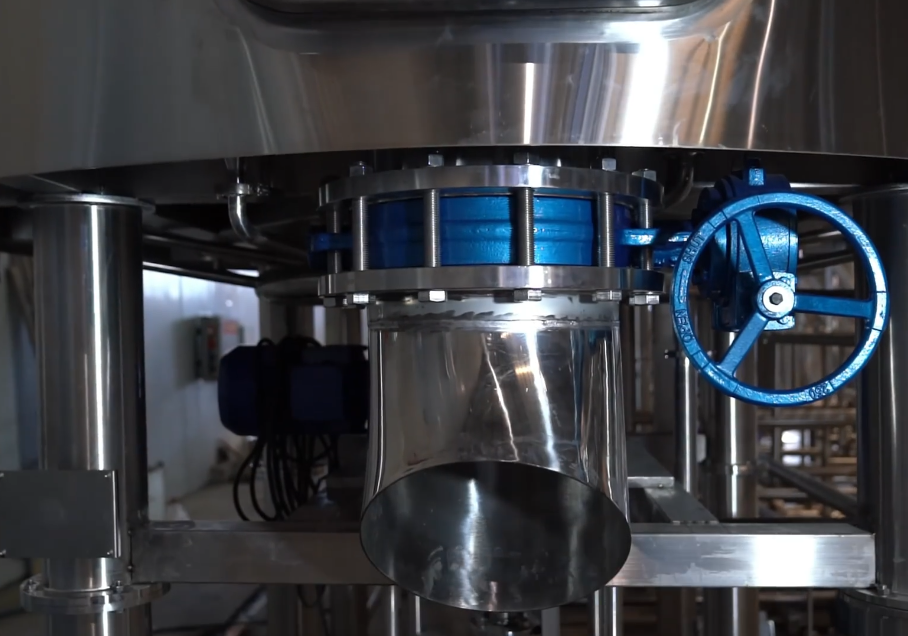
Bottom grain outlet can be equipped according to tank size and client requirement. Linked with raking machine and controlled by pneumatic valve, it realizes automatic grain discharge and cuts manual work. All pipe fittings are sanitary and compatible with CIP cleaning, no dead corners and fully meeting brewing hygiene standards. Every tank passes strict pressure and leakage test before delivery for long-term reliable operation.
Matched With Various Brewhouse Projects
Tiantai lauter tun can be matched with different brewhouse systems, from pilot brewing to large commercial production. Integrated functions for mash feeding, sparging, filtration and grain discharge reduce batch variation and raise malt extraction efficiency. A well-designed lauter tun improves brewhouse productivity and stabilizes wort quality. It is an essential core unit of beer brewhouse.