
Sour beer is different from conventional beer in many ways. The use of wild yeast, Lactobacillus, Pediococcus, and other microorganisms can create complex acidity, aroma, and flavor.
Because of this unique fermentation process, some breweries use a Coolship Open Fermentation Tank as part of their sour beer production process.
Unlike a conventional closed fermenter, a Coolship Open Fermentation Tank provides a large open surface where hot wort can cool while being exposed to the surrounding environment. This traditional approach is particularly associated with spontaneous fermentation and Belgian-style sour beers, but it can also be used by modern craft breweries for experimental and mixed-culture brewing.
However, using a Coolship Open Fermentation Tank is not simply a matter of leaving wort in an open tank. The process requires careful control of temperature, exposure time, hygiene, brewery environment, and cross-contamination.
What Is a Coolship Open Fermentation Tank?
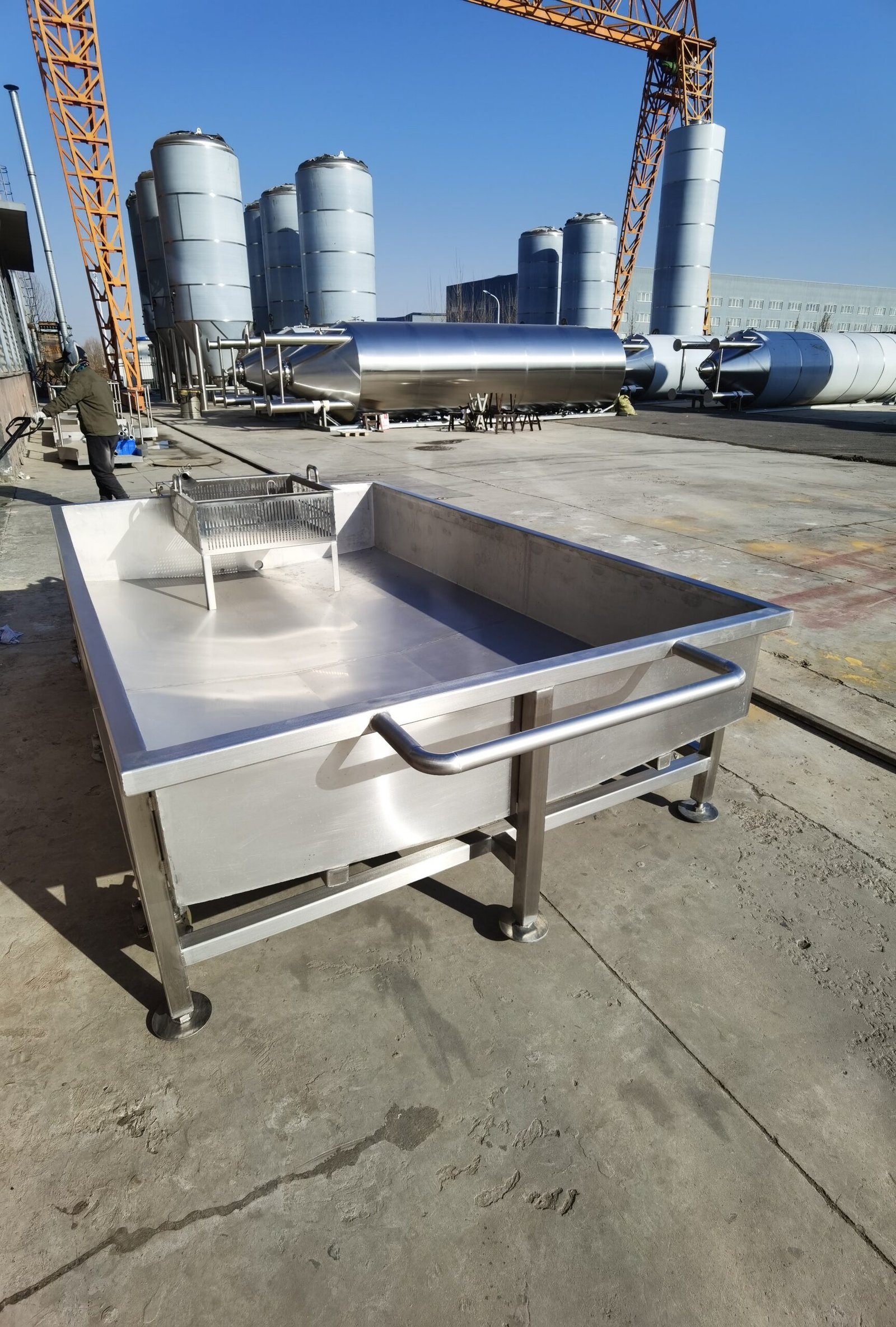
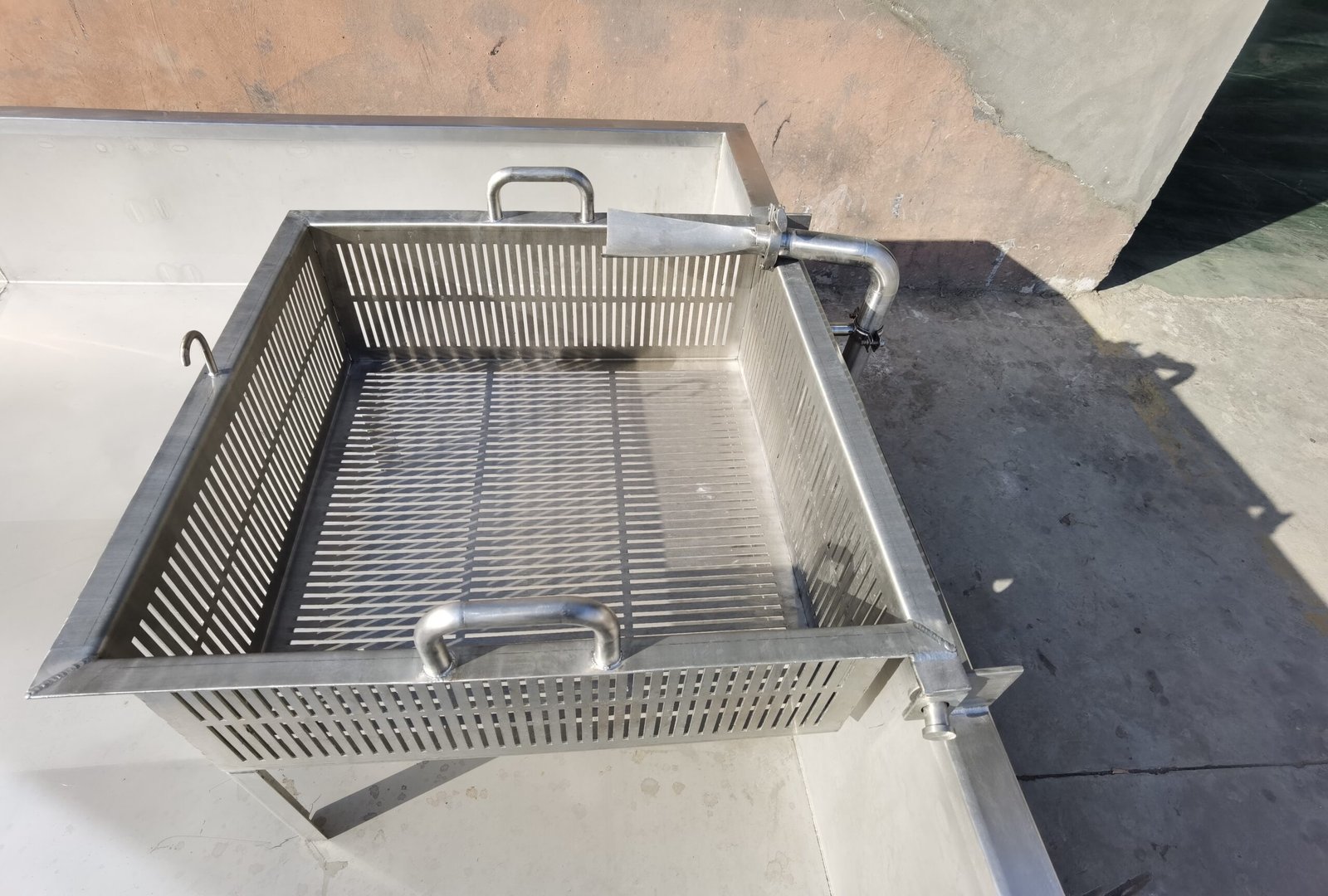
A Coolship Open Fermentation Tank is a shallow, open-top stainless steel vessel designed primarily for cooling wort and allowing controlled exposure to the surrounding environment.
Unlike a conventional cylindroconical fermenter, a coolship usually has a relatively large surface area compared with its depth. This design helps hot wort release heat efficiently after boiling.
During the cooling process, microorganisms naturally present in the surrounding environment may come into contact with the wort. Depending on the brewery’s location, process, and fermentation method, wild yeast and bacteria can become part of the subsequent fermentation.
Traditionally, coolships have been used in spontaneous beer production. Today, some craft breweries also use them as part of controlled experimental fermentation programs.
A modern Coolship Open Fermentation Tank can be manufactured from food-grade stainless steel and customized with cooling jackets, temperature sensors, drain outlets, sanitary fittings, and other features according to the brewery’s process.
Why Use a Coolship for Sour Beer?
The main reason is to introduce a different fermentation approach compared with conventional closed fermentation.
Traditional sour beer can involve multiple microorganisms rather than a single commercial yeast strain. Yeast, lactic acid bacteria, and other microorganisms can interact during fermentation and contribute to the beer’s acidity, aroma, and flavor.
A Coolship Open Fermentation Tank provides an environment where the freshly boiled wort can cool while having controlled contact with the surrounding atmosphere.
This can be especially interesting for breweries producing spontaneous or mixed-culture sour beers.
The process also gives brewers an opportunity to explore how local environmental conditions and different microbial cultures influence the final beer.
1. Suitable for Spontaneous and Mixed Fermentation
One of the most important applications of a Coolship Open Fermentation Tank is spontaneous or mixed-culture fermentation.
Unlike standard beer production, where a selected yeast strain is normally pitched after wort cooling, spontaneous fermentation relies on microorganisms that naturally enter the wort during the cooling and exposure process.
These microorganisms may include wild yeast as well as bacteria such as Lactobacillus and Pediococcus.
Their activity can contribute to the development of acidity and complex flavor characteristics over an extended fermentation and maturation period.
Not every sour beer requires spontaneous fermentation, but a coolship provides breweries with an additional option for exploring traditional fermentation techniques.
2. Large Surface Area for Wort Cooling
The design of a coolship is closely related to its original purpose: cooling hot wort.
A Coolship Open Fermentation Tank is generally wider and shallower than a conventional fermentation vessel. The larger surface area allows heat to escape more efficiently from the wort.
This was particularly important before modern wort cooling technologies such as plate heat exchangers became widely available.
Although modern breweries can cool wort much faster using dedicated heat exchangers, some breweries continue to use coolships because the cooling process itself is part of their brewing method.
The large surface area also allows the wort to interact with the surrounding environment during cooling.
3. Natural Microbial Exposure
Another characteristic of a Coolship Open Fermentation Tank is environmental exposure.
As the wort cools, microorganisms present in the surrounding environment can come into contact with the wort. These microorganisms may later contribute to spontaneous fermentation.
The exact microbial population can vary according to the brewery environment, season, location, and production conditions.
This variation is one of the reasons why spontaneous sour beers can develop distinctive characteristics.
For breweries interested in creating beers with a strong connection to traditional brewing methods or local environments, this can be an attractive feature.
However, natural exposure should not be confused with uncontrolled production. Breweries still need to establish suitable procedures for hygiene, temperature, exposure time, and subsequent fermentation.
4. Easy Access During the Brewing Process
The open design also makes the vessel easy to access.
Brewers can visually inspect the wort, take samples, and perform certain operations without working through a small sealed process port.
This can be useful for experimental brewing programs where recipes and fermentation methods may change from batch to batch.
For example, a brewery may use the coolship for traditional spontaneous fermentation in one production program while using controlled mixed-culture fermentation in another.
The flexibility of the design allows the brewery to adapt the vessel to different brewing approaches.
5. Temperature Control Can Still Be Included
Although traditional coolships rely heavily on natural cooling, modern designs can incorporate temperature control where required.
A Coolship Open Fermentation Tank can be equipped with cooling jackets connected to a glycol cooling system. This can provide greater control over the cooling or fermentation conditions.
The actual cooling configuration depends on the brewery’s process.
Some breweries may prefer a more traditional approach, while others may want additional temperature control to make the process more repeatable.
Combining an open vessel with modern cooling technology can therefore provide a balance between traditional brewing methods and modern brewery equipment.
Hygiene and Cross-Contamination
Hygiene is one of the most important considerations when using a Coolship Open Fermentation Tank.
Because the vessel is intentionally open during part of the process, the brewery environment needs to be carefully considered.
Sour beer microorganisms can also spread to other production areas through hoses, pumps, pipelines, tools, or operators.
For this reason, breweries should consider:
- Dedicated sour beer equipment
- Proper cleaning and sanitation procedures
- Separate hoses and pumps where necessary
- Controlled fermentation areas
- Appropriate CIP or manual cleaning methods
- Careful handling of mixed cultures
This becomes especially important when the same brewery produces both sour and conventional beers.
Cross-contamination can affect the flavor and fermentation performance of non-sour beers, so equipment layout and production planning should be considered before installing a coolship.
Coolship vs. Conventional Fermentation
A coolship and a conventional closed fermenter serve different purposes.
Closed cylindroconical fermenters are designed for controlled fermentation. They can provide pressure control, temperature control, carbonation management, and reduced exposure to the surrounding environment.
A Coolship Open Fermentation Tank, on the other hand, is designed around open cooling and environmental exposure.
Therefore, neither system is universally better.
A brewery producing standard lagers or ales may have little need for a coolship. However, breweries focusing on spontaneous sour beer, traditional Belgian-style fermentation, or experimental mixed cultures may find it particularly useful.
Some breweries may also use both systems, allowing conventional beer and sour beer production to follow different fermentation processes.
What Should You Consider When Choosing a Coolship?
The design of the Coolship Open Fermentation Tank should be based on the brewery’s actual production process.
Tank Capacity
The vessel should match the brewery’s wort production volume while providing enough space for safe operation and cooling.
Surface Area
Surface area is an important consideration because it directly affects the cooling characteristics of the vessel.
Cooling System
If temperature control is required, the cooling jacket and glycol system should be properly matched to the tank volume and process requirements.
Material and Surface Finish
Food-grade stainless steel is commonly used because it is durable, hygienic, and suitable for brewery applications.
Cleaning and Drainage
The vessel should be designed for effective drainage and thorough cleaning after use.
Brewery Environment
The location of the coolship can influence the fermentation process. Airflow, room temperature, cleanliness, and separation from other brewing operations should all be considered.
Is a Coolship Open Fermentation Tank Right for Your Sour Beer?
A Coolship Open Fermentation Tank can be an interesting choice for breweries producing traditional sour beer, spontaneous fermentation beers, and experimental mixed-culture products.
Its main advantages include a large surface area for wort cooling, controlled environmental exposure, easy access, and compatibility with traditional fermentation methods.
At the same time, using a coolship requires careful process management. The brewery needs to consider hygiene, microbial control, temperature, exposure time, cleaning, and cross-contamination.
The right solution ultimately depends on the beer style, fermentation method, production capacity, brewery environment, and desired flavor profile.
For breweries that want to explore the relationship between traditional brewing and natural fermentation, a coolship can become an important part of the brewing process.
Customized Brewery Equipment from TIANTAI
At TIANTAI, we manufacture customized brewery equipment for different beer styles and fermentation processes.
Our stainless steel Coolship Open Fermentation Tank can be customized according to the brewery’s required capacity, dimensions, surface area, cooling system, fittings, temperature control, and cleaning method.
Whether you are producing traditional sour beer, spontaneous fermentation beer, mixed-culture beer, or developing an experimental brewing process, our engineering team can help design a suitable coolship solution around your production requirements.
Email: [email protected]
Edit by Jane