
When choosing winery equipment, wineries need to consider not only tank capacity and material but also how effectively the tank can protect wine during storage and aging.
One design that is particularly useful for flexible wine production is the Floating Lid Tank.
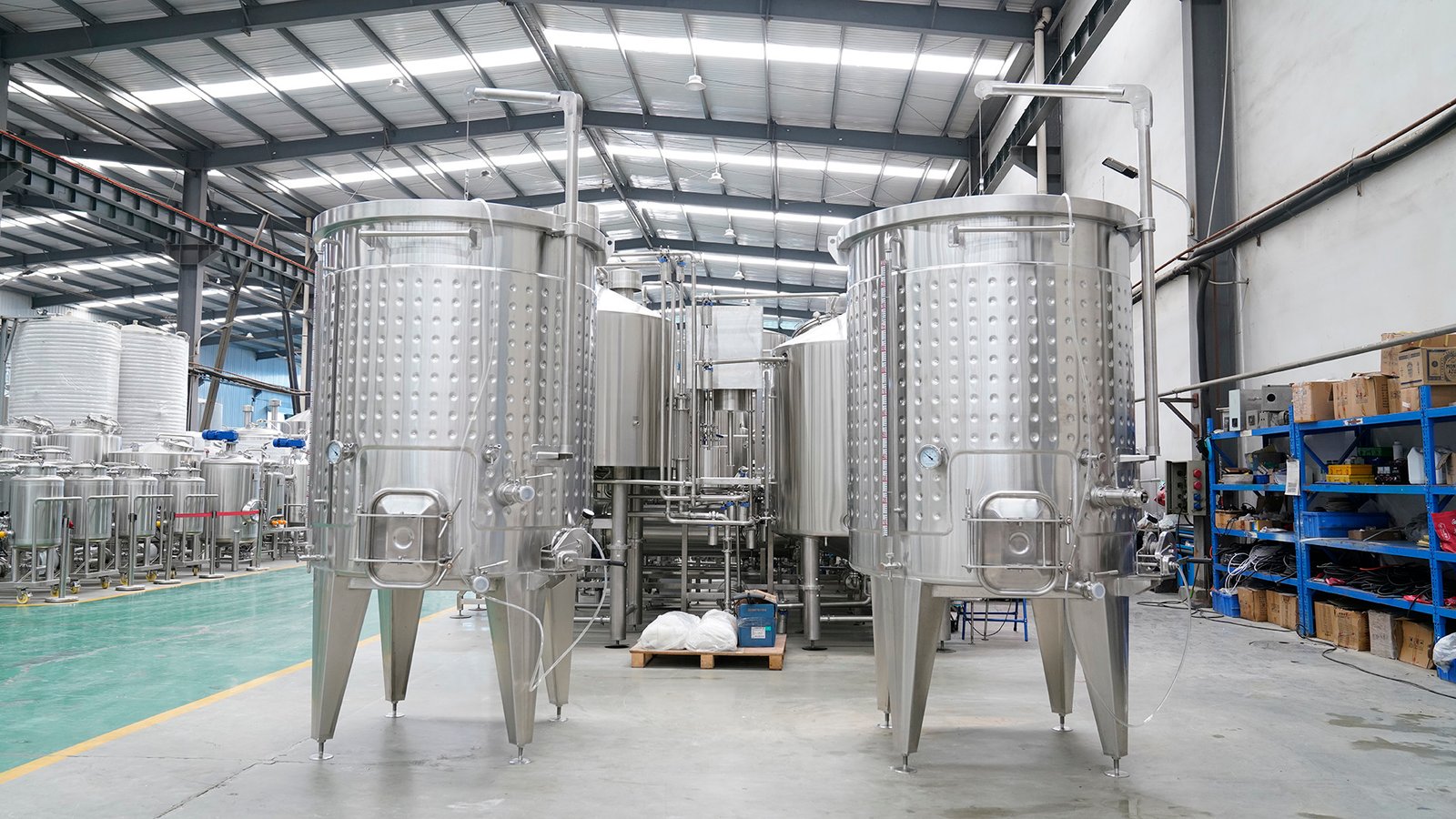
Unlike a conventional fixed-lid wine tank, the lid of a Floating Lid Tank can move according to the wine level inside the vessel. This allows wineries to minimize headspace and reduce unnecessary contact between the wine and air. For wineries handling different batch sizes, this simple but practical design can provide greater flexibility during daily production.
What Is a Floating Lid Tank?
A Floating Lid Tank is a stainless steel wine tank equipped with an adjustable lid that rests directly on the surface of the wine.
As the wine level changes, the lid can be raised or lowered accordingly. An inflatable gasket around the edge of the lid creates a seal against the inner wall of the tank, helping to isolate the wine from the surrounding air.
This design is commonly used for wine storage, maturation, blending, and other applications where controlling headspace is important.
Why Is Headspace Important in Winemaking?
Headspace refers to the empty space between the surface of the wine and the top of the tank.
When a conventional tank is only partially filled, a relatively large amount of air may remain above the wine. Excessive exposure to oxygen can affect wine quality over time, particularly during storage.
A Floating Lid Tank addresses this issue by allowing the lid to follow the wine level. As the volume decreases, the lid moves downward and maintains a small headspace.
This makes the tank especially useful for wineries that frequently work with different wine volumes.
How Does the Floating Lid Work?
The operating principle is relatively simple.
First, wine is transferred into the stainless steel tank. The floating lid is then positioned on the wine surface. Once the desired position is reached, the inflatable gasket is filled with air to create a sanitary seal between the lid and the tank wall.
When wine is added or removed, the lid can be adjusted to match the new liquid level.
Some systems can also be equipped with an inert gas connection. Nitrogen or another suitable inert gas can be introduced above the wine when additional protection against oxygen exposure is required.
1. Minimize Unnecessary Headspace
One of the main advantages of a Floating Lid Tank is its ability to minimize headspace.
With a fixed-top tank, the headspace remains determined by the tank’s physical dimensions. If the tank is only partially filled, the unused volume can be significant.
The adjustable lid provides a more flexible solution. It follows the wine level rather than remaining fixed at the top of the vessel.
For wineries producing different quantities of wine throughout the year, this can make storage management much easier.
2. Flexible for Different Batch Sizes
Wine production does not always involve the same batch volume.
A winery may have a large harvest batch during the harvest season but only smaller batches during other periods. Using a fixed-capacity tank for every batch can create unnecessary empty space.
A Floating Lid Tank can accommodate different filling levels within the same vessel.
This flexibility is particularly valuable for:
- Small and medium-sized wineries
- Craft wine producers
- Wineries producing multiple wine varieties
- Small-batch wine production
- Blending operations
Instead of purchasing multiple tanks for every possible batch size, wineries can use adjustable-volume tanks for greater flexibility.
3. Suitable for Wine Storage and Maturation
A Floating Lid Tank can be used for several stages of the winemaking process.
Typical applications include:
- Wine storage
- Wine maturation
- Blending
- Pre-bottling storage
- Small-batch production
- Temporary wine holding
The tank provides a controlled and hygienic environment while allowing the winery to adjust the internal volume according to production needs.
4. Hygienic Stainless Steel Construction
Professional winery equipment is generally manufactured from food-grade stainless steel because wine is acidic and requires a hygienic processing environment.
SUS304 stainless steel is commonly selected for wine tanks, while SUS316 can be used where additional corrosion resistance is required.
A sanitary stainless steel tank provides:
- Good corrosion resistance
- Smooth internal surfaces
- Easy cleaning
- Long service life
- Reliable performance
The tank can also be equipped with sanitary valves, sampling ports, temperature sensors, CIP spray devices, and other accessories according to the production process.
5. Easy Operation and Maintenance
Another advantage of a Floating Lid Tank is its relatively simple operating principle.
The lid can be adjusted according to the wine level, while the inflatable gasket provides a reliable seal during storage.
For daily winery operations, easy access to the tank and its fittings is also important. Properly designed manways, sampling valves, outlets, and cleaning connections can make routine inspection and sanitation more convenient.
The final configuration should always be selected according to the winery’s cleaning method and production requirements.
Floating Lid Tank vs. Fixed-Lid Wine Tank
Both tank designs have their own applications.
A fixed-lid tank is often suitable for wineries that regularly fill tanks to a consistent level or require a closed vessel for a specific process.
A Floating Lid Tank, on the other hand, is more flexible when wine volumes change from batch to batch.
The choice should therefore be based on the winery’s production process, typical batch sizes, storage requirements, and desired level of oxygen control.
What Should You Consider When Choosing One?
Before purchasing a Floating Lid Tank, wineries should consider several factors.
Tank Capacity
The tank capacity should match the winery’s normal production volume. A very large tank may not be the most practical choice if it will frequently be used with only a small quantity of wine.
Lid Sealing System
The inflatable gasket should provide a reliable seal while allowing the lid to move smoothly with changes in wine level.
Tank Configuration
Depending on the application, the tank can be customized with cooling jackets, sampling valves, temperature sensors, bottom outlets, level indicators, and CIP connections.
Building Layout
Tank diameter, height, access space, and piping should all be considered during the winery layout stage to ensure convenient operation and maintenance.
Customized Wine Tanks from TIANTAI
At TIANTAI, we manufacture customized winery equipment and stainless steel wine tanks for wineries with different production requirements.
Our Floating Lid Tank solutions can be customized in capacity, dimensions, lid configuration, sealing system, fittings, cooling options, and other details according to the customer’s winemaking process.
Whether you need flexible storage for small-batch wine or are developing a complete commercial winery, our engineering team can help you select and configure suitable winemaking equipment for your facility.
A well-designed tank is not only a storage vessel. It should fit naturally into the winery’s production process, cleaning system, available space, and future development plans.
Contact TIANTAI to discuss your wine tank requirements and find a suitable solution for your winery.
Email: [email protected]
Edit by Jane