
When you customize stainless steel fermentation tanks, brewhouse systems, and bright beer tanks for your craft brewery, you will always encounter a professional manufacturing term: TIG argon arc welding. Many new brewers wonder why brewery equipment strictly adopts TIG welding instead of ordinary MIG welding or manual arc welding. Based on professional brewery equipment manufacturing and export experience, we explain the working principle, industry requirements, and core advantages of TIG welding for brewing applications.
Basic Principle of TIG Argon Arc Welding
TIG welding, also named GTAW (Gas Tungsten Arc Welding), is a high-precision food-grade welding process. It uses argon gas to isolate air and protect the welding molten pool. The tungsten electrode does not melt during operation, and only the stainless steel base material melts to form precise weld seams.
In the metal processing industry, MIG welding and manual arc welding are widely used for common structural parts. However, these two processes are almost abandoned for the inner wall welding of food-grade brewery tanks due to hygiene and corrosion risks.
Core Reasons Why Brewery Equipment Adopts TIG Welding
1. Smooth Weld Seam, Easy Polishing for Sanitary Standard
Beer fermentation tanks and brewhouse vessels require mirror or matte interior polishing for regular CIP cleaning. Residues of wort, yeast, and protein must not hide in weld gaps.
TIG welding produces narrow, flat, and spatter-free weld lines. After fine polishing, the tank interior has no dead corners, ensuring complete cleaning and avoiding bacterial growth. In contrast, MIG welding creates rough, uneven welds with obvious pits and gaps that cannot be fully polished, failing food-grade sanitation requirements.
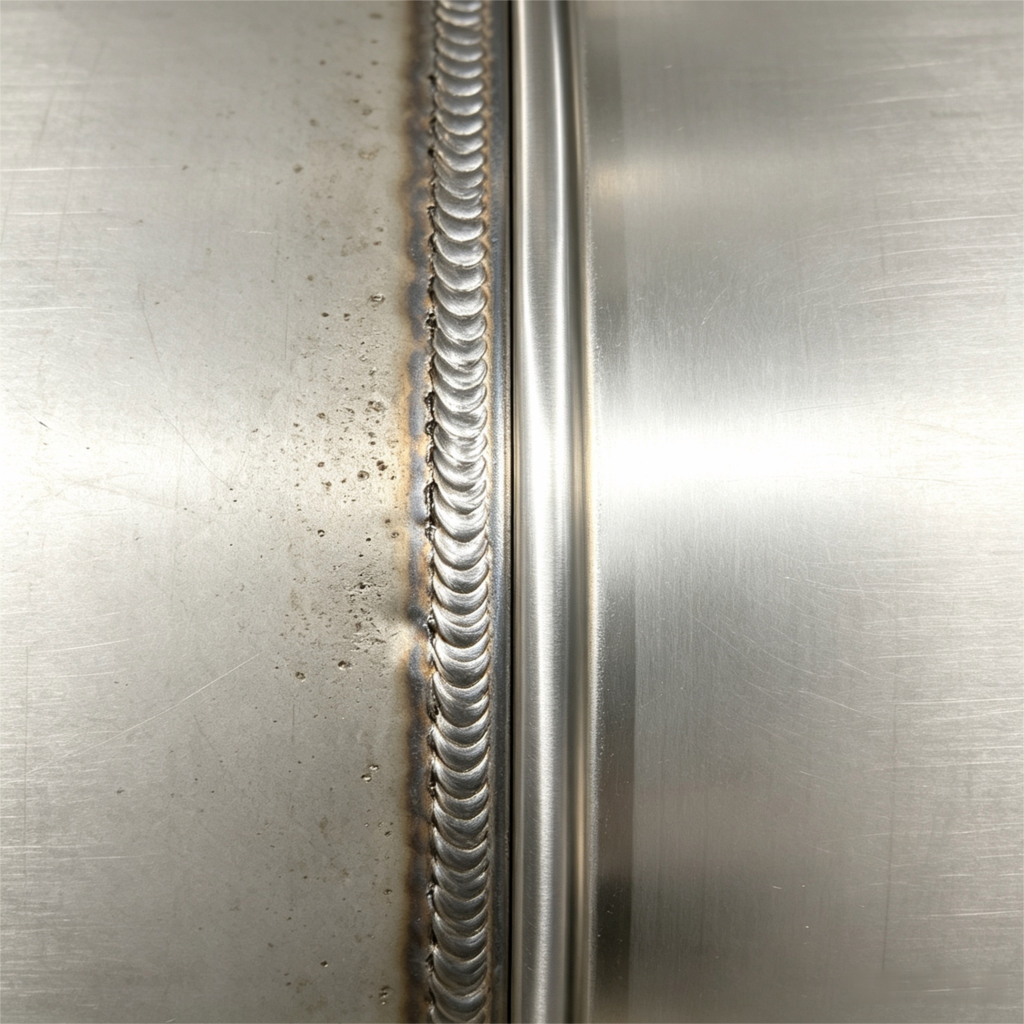
2. Argon Protection Prevents Weld Oxidation and Pitting Corrosion
Stainless steel is prone to high-temperature oxidation when exposed to air during welding. Ordinary welding forms blue-black oxidized layers on welds, causing chromium depletion and carbon precipitation. Oxidized weld areas lose original anti-corrosion performance and are easily eroded by wort, acidic beer liquid, and CIP acid-base detergents.
TIG welding uses full argon isolation to avoid air contact. The finished weld remains silvery white, with corrosion resistance completely consistent with 304 and 316L stainless steel base materials. Most overseas brewery buyers specifically check weld quality to avoid later leakage and corrosion problems.
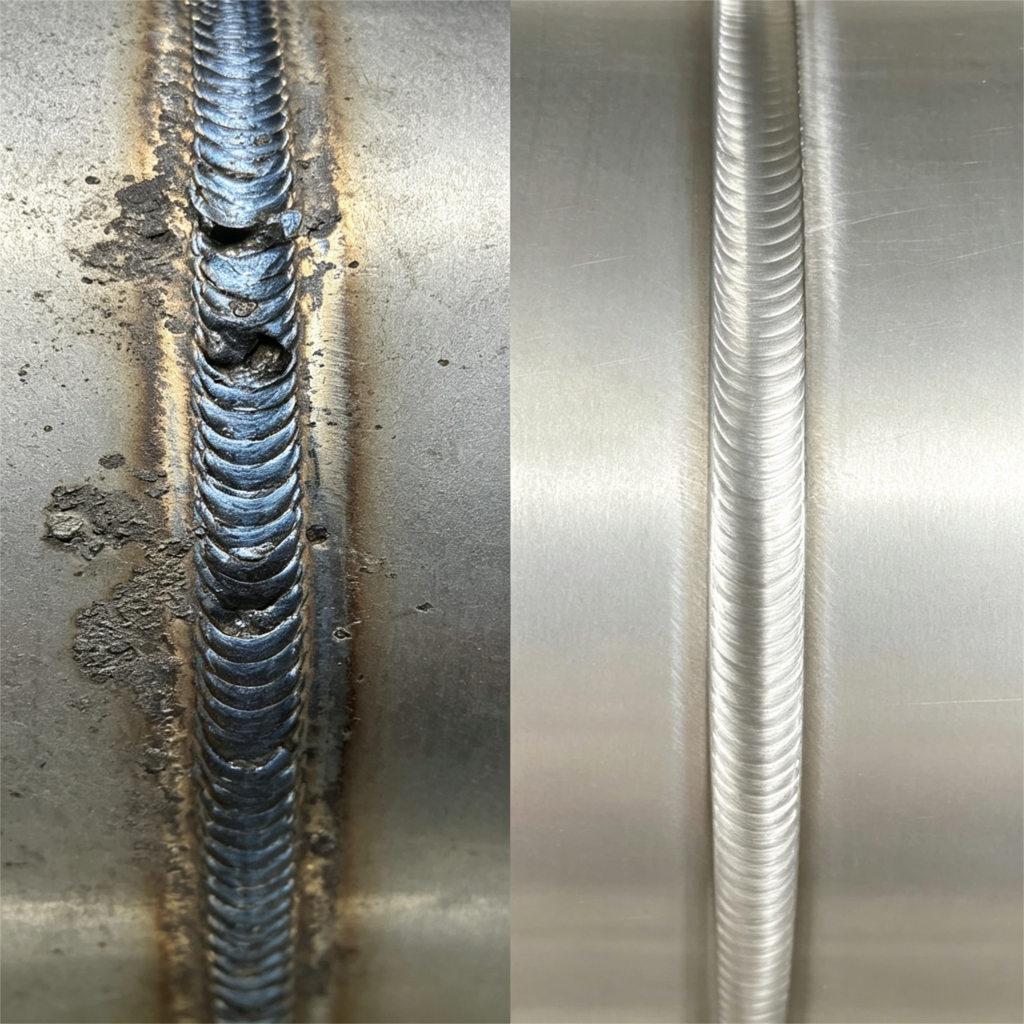
3. Concentrated Heat Reduces Deformation and Intergranular Corrosion
Brewery tanks are thin-walled stainless steel vessels with poor thermal conductivity. Long-time high-temperature welding will cause intergranular corrosion and structural deformation, greatly weakening tank durability.
TIG welding features concentrated heat input and a small heat-affected zone. It realizes low-temperature precise welding, effectively preventing tank body deformation and retaining the original mechanical and anti-corrosion properties of stainless steel plates.
4. Complies with International Food and Brewing Standards
European and American craft brewery standards, as well as FDA food equipment specifications, clearly recommend TIG welding for all sanitary tank inner walls. Overseas buyers often ask: “Are the fermentation tanks welded by TIG process?” It has become a key judgment standard for evaluating professional brewery equipment quality.
TIG Welding vs Ordinary Welding Process Comparison
TIG Argon Arc Welding (Brewery Standard Configuration)
No welding spatter, smooth weld surface, easy polishing, no oxidation, strong corrosion resistance, fully suitable for sanitary fermentation and brewhouse tanks.
MIG / Manual Arc Welding (Not for Medium Contact Surface)
Large welding spatter, rough weld lines, easy oxidation and blackening, hidden cleaning dead corners, prone to bacterial contamination and weld corrosion.
Professional Welding Rules for Brewery Equipment
First, all inner walls contacting beer, wort, and fermentation liquid must adopt TIG welding to ensure sanitation and corrosion resistance.
Second, non-contact auxiliary structures such as external brackets and bases can use conventional welding to control costs without affecting equipment performance.
Third, 316L stainless steel for sour beer and kombucha tanks requires stricter TIG welding standards. Unqualified welding will completely lose chloride corrosion resistance.
Post-Welding Pickling and Passivation
After TIG welding, all our brewery tanks undergo professional pickling and passivation treatment. This process repairs the stainless steel passivation layer, restores weld anti-corrosion ability, and unifies the performance of welds and tank body.
TIG argon arc welding is not only a manufacturing process but also the basic guarantee of sanitary, durable, and high-quality craft beer equipment.