
Many craft brewers, especially new brewery owners and brewpub operators, often encounter troublesome fermentation issues in daily production. Slow fermentation speed, incomplete sugar attenuation, poor yeast flocculation, strange off‑flavors and inconsistent beer quality between batches are common headaches. After checking temperature, pH value and wort gravity repeatedly, many people still cannot find the root cause. In most cases, these problems are closely linked to one critical and easy‑to‑ignore procedure: wort aeration.
Yeast is the soul of beer brewing. The activity and quantity of yeast directly decide fermentation efficiency, beer aroma, taste and long‑term batch stability. Even if you use premium malt, high-quality hops and precise temperature control during mashing and boiling, your final beer will fail to meet expectations without proper wort aeration. Understanding the biological characteristics of yeast and mastering the principle of wort aeration, as well as choosing the right aeration equipment, is essential for every brewery to achieve standardized and reliable beer production. This article will explain why wort aeration matters, how it works, and introduce the most popular aeration device used in modern craft breweries.
The Yeast Principle Behind Wort Aeration
Beer yeast belongs to facultative anaerobic microorganisms. This means yeast has two completely different metabolic modes according to oxygen levels in the environment. When oxygen exists, yeast focuses on vegetative growth and rapid cell reproduction. When oxygen runs out, yeast stops multiplying and switches to anaerobic metabolism to produce alcohol, carbon dioxide and various flavor compounds for beer.
A successful beer fermentation needs a large enough population of healthy and active yeast cells. However, the yeast we pitch into the fermenter is only a starting inoculum. The volume of pitched yeast is far from sufficient to finish the whole fermentation task. If we directly transfer cold wort into the fermenter and start anaerobic fermentation without oxygen, yeast cells cannot multiply in large numbers. Insufficient yeast will lead to sluggish fermentation, incomplete sugar consumption, weak flavor expression and higher risk of bacterial contamination.
That is why brewers must inject enough oxygen into cold wort before it enters the fermenter and before alcoholic fermentation begins. The dissolved oxygen provides energy and nutrients for yeast cell division and reproduction. In this aerobic stage, yeast multiplies rapidly until the cell count reaches the target level required for full wort fermentation.
To keep production costs under control, most breweries do not use pure oxygen. Instead, sterile compressed air is the standard choice for wort aeration. Many new brewers worry that adding oxygen to wort will oxidize the wort and spoil beer flavor. This concern is understandable, but it is unnecessary for standard operation. The oxygen dissolved in cold wort will be consumed completely by yeast within several hours. Oxygen only serves for yeast propagation in this short window. It will not stay in the wort for a long time to trigger unwanted oxidation that ruins beer taste and color.

It is worth noting that aeration only works effectively on cooled wort. Hot wort must never be aerated. High temperature will make oxygen react with polyphenols and malt substances, causing permanent wort browning, stale flavor and serious oxidation damage. Therefore, aeration must take place after wort cooling, right at the outlet of plate heat exchangers.
Popular Aeration Device: Venturi Tube
There are multiple types of wort aeration devices available on the market, including sparging stones, aeration nozzles and venturi tubes. Among all these options, the Venturi tube is the most widely adopted aeration component for craft brewhouse systems, favored by small brewpubs and mid-sized breweries worldwide.
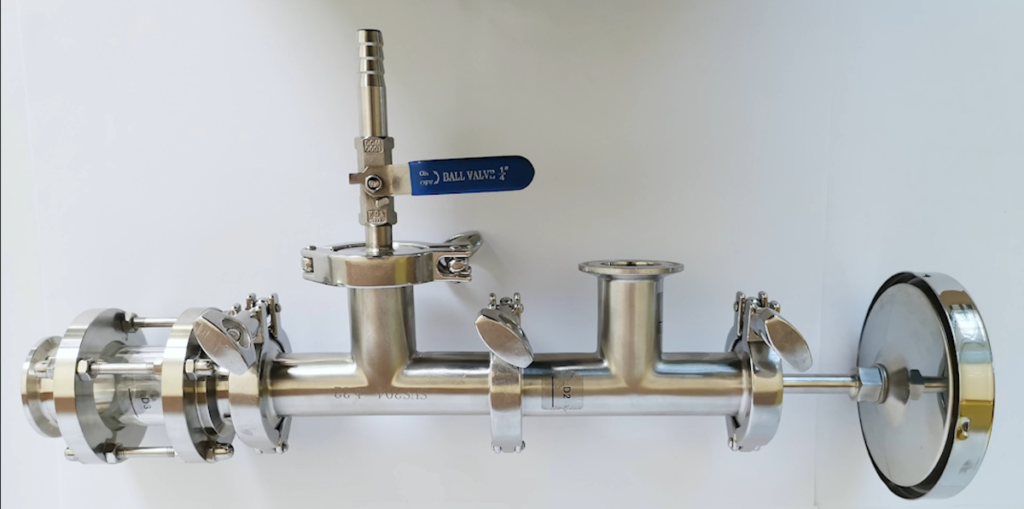
A Venturi tube has a special geometric structure: large cross-sections at both inlet and outlet ends, and a narrow contracted throat in the middle section. This simple physical structure uses fluid dynamics to realize gas-liquid mixing without extra high-speed mixing motors. It is normally installed at the cold wort outlet of the plate heat exchanger. After boiling, whirlpool separation and cooling, cold wort flows directly through the venturi tube and finishes aeration instantly before entering the fermenter.
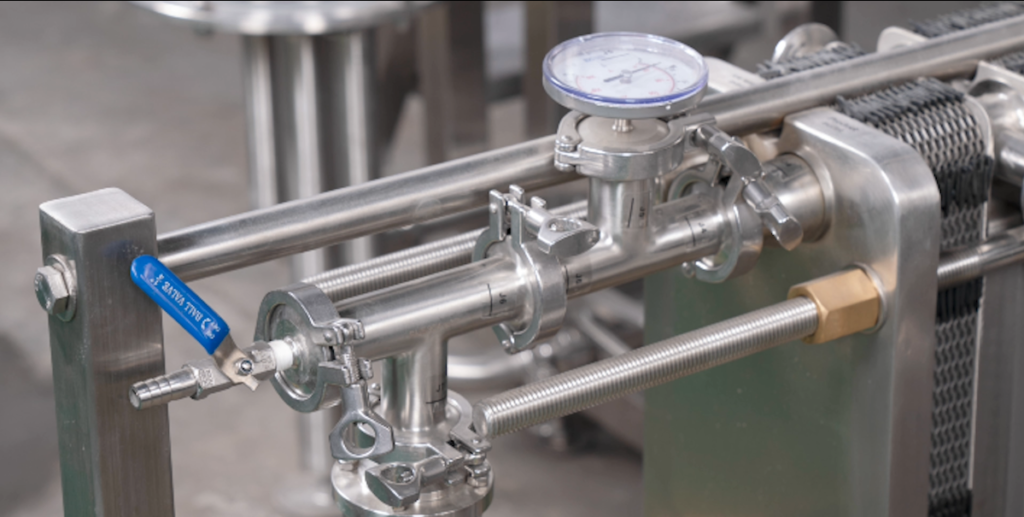
The working principle of the venturi aerator is straightforward. Cold wort flows at high speed into the tube and passes through the narrow throat. Fluid velocity rises sharply while local pressure drops. The low-pressure zone at the throat creates suction, drawing sterile air into the wort pipeline. The fast-flowing wort cuts the incoming air stream into countless tiny micro bubbles. These fine bubbles disperse evenly inside the flowing wort.
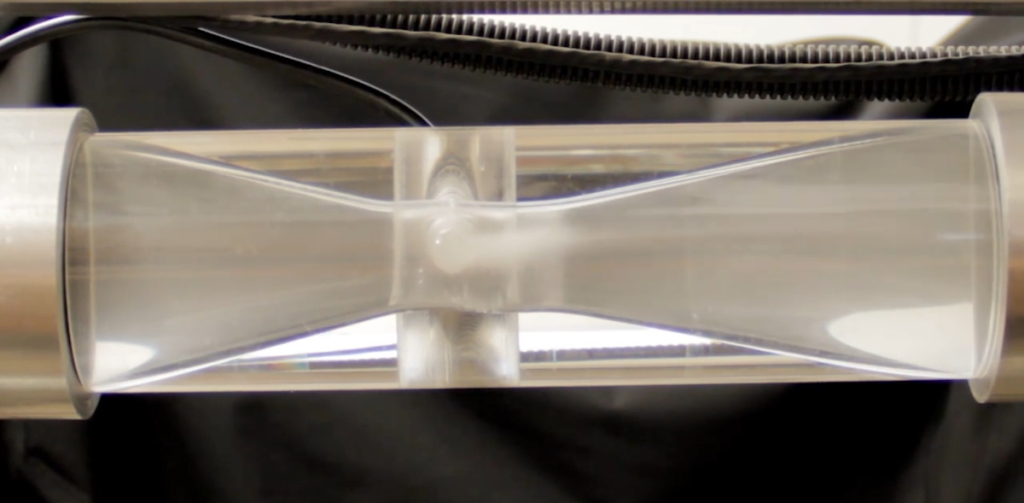
When the wort and bubble mixture moves forward to the rear section where the pipe cross-section expands again, flow speed slows down and local pressure recovers. This change creates strong turbulent vortex inside the pipeline. The vortex keeps stirring wort and micro bubbles, pushing air to fully dissolve into the wort instead of escaping quickly. Compared with simple air stones, venturi tubes produce much smaller bubbles and achieve higher dissolved oxygen efficiency. The whole mixing process happens continuously inline, matching the steady wort transfer flow from heat exchanger to fermenter.
After aerated wort flows into the fermenter, yeast starts its aerobic growth phase immediately. Yeast absorbs dissolved oxygen, amino acids and sugar from wort to replicate cell structures and multiply rapidly. Once all dissolved oxygen is fully consumed, the environment inside the fermenter becomes anaerobic automatically. The large, newly multiplied yeast population then shifts to anaerobic alcoholic fermentation. Yeast converts malt sugar into alcohol and CO₂, and produces esters and other flavor compounds that create unique beer characteristics.
If aeration is insufficient, yeast cannot multiply enough. Fermentation will drag on, and the beer may taste thin or produce unwanted off-flavors. On the opposite side, excessive aeration is also harmful. Too much dissolved oxygen can lead to overgrowth of yeast, generating extra unwanted by-products and increasing the risk of later beer oxidation after fermentation completes. Stable, controlled aeration is the key target.
Tiantai Venturi Wort Aerator Recommendation
Tiantai complete brewhouse system is equipped with high-quality stainless steel venturi wort aerator, pre-designed to mount on cold wort pipelines after plate heat exchangers. Our venturi aerators are made of food-grade stainless steel with smooth internal surfaces. The polished inner wall avoids dead zones and residue buildup, supporting full CIP cleaning together with the whole brewhouse pipeline. No manual disassembly is required for routine sanitation, saving operating time and lowering contamination risks.
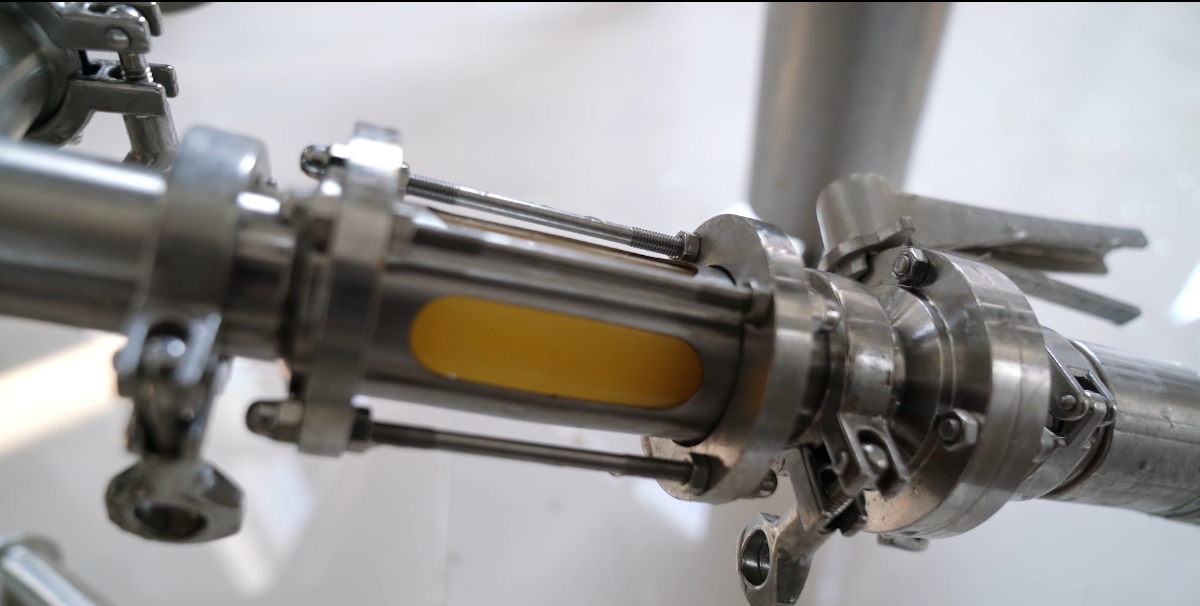
This venturi aeration assembly delivers stable and uniform dissolved oxygen under continuous wort flow. It works well for small 200L brewpub setups, pilot brewing lines, as well as mid-sized commercial breweries. When matched with proper sterile air supply, it maintains ideal dissolved oxygen levels for ale and lager production. Reliable aeration helps brewers keep consistent yeast vitality batch after batch. It greatly reduces common production troubles such as slow fermentation, incomplete attenuation and unpleasant off-flavors. For startup brewery investors, this simple inline aeration unit is a cost-effective upgrade to secure stable fermentation results.
Many small brewery owners choose Tiantai integrated brewhouse. Our design fully considers the whole brewing workflow from mashing, boiling, cooling, aeration to fermentation. The venturi aerator is not an afterthought add-on, but a standard part of the whole cold wort transfer system. We also provide guidance on matching air filters and pressure settings for customers, helping operators get proper dissolved oxygen without over-aeration.
Conclusion
Wort aeration is not an optional extra step in beer production. It is an indispensable core process to guarantee yeast activity, support yeast reproduction and achieve stable and predictable fermentation. Many new brewers underestimate its importance and pay the price with unstable beer quality.
A well-designed Venturi aerator mixes sterile air evenly into cold wort, supplying suitable dissolved oxygen for yeast propagation. After yeast uses up oxygen, smooth anaerobic alcoholic fermentation begins. Controlling aeration dosage, using sterile air and installing the aerator at the correct position are all key operational rules.
Choosing reliable brewing equipment helps standardize every brewing step. Tiantai stainless steel venturi wort aerator fits perfectly into craft brewhouse systems for consistent oxygen mixing.