
The plate heat exchanger plays a vital role during wort cooling in the brewhouse. Hot wort flows through corrugated plates and exchanges heat with cooling water or glycol fluid to reach the target temperature quickly. Many breweries only focus on cooling performance but overlook routine cleaning. They usually notice problems only when cooling slows down or pressure readings become abnormal. Regular cleaning is essential to keep stable cooling performance, preserve beer flavour and extend equipment service life.
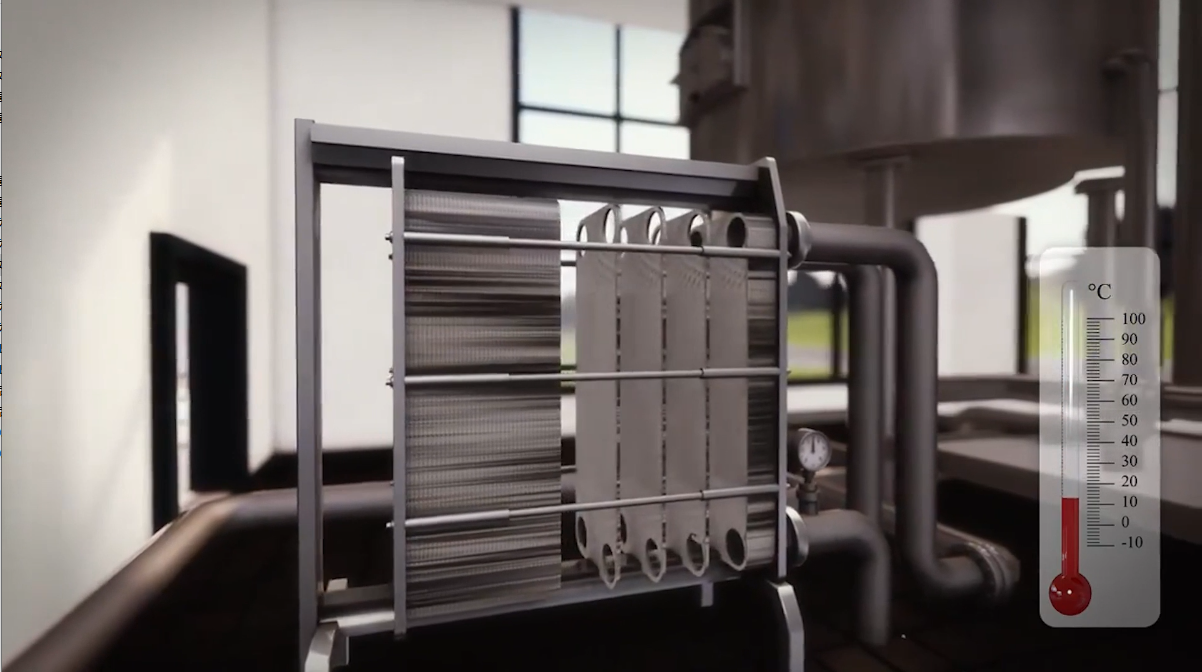
Wort contains proteins, polyphenols, sugars and hot trub. While heat transfer takes place, fine solids stick to the corrugated surface of plates and gradually build up a fouling layer. This fouling layer has poor thermal conductivity, acting like an insulation barrier on the heat exchange surface. As deposits thicken, heat transfer efficiency drops continuously. For the same wort flow rate, cooling becomes slower. Extra cooling capacity is required to hit the target outlet temperature, which increases the load on chillers and raises energy consumption. In severe cases, insufficient cooling will hold up the whole mashing schedule and slow down production, which is troublesome for breweries running tight daily brewing plans.
Apart from reduced heat transfer efficiency, fouling on plates creates ideal conditions for unwanted microbes. Wort is rich in nutrients. Trapped sugars and proteins can easily breed harmful bacteria such as lactic acid bacteria and acetic acid bacteria. When the next batch of wort passes through, these contaminants are carried into the wort and then transferred to the fermenter. This may lead to sour beer, off-flavours and unwanted haze, even ruining an entire batch. Craft beer is highly sensitive to flavour changes, and minor bacterial contamination can destroy its original flavour profile, hurting the brand’s reputation among regular customers.
Built-up fouling also changes flow conditions inside the exchanger. The gaps between plates are narrow by design. Sediments reduce the flow passage and raise pressure difference between the inlet and outlet. The wort pump has to work harder to maintain the original flow rate, which increases pump wear and failure risk. Uneven fouling can also cause flow maldistribution. Some wort cools too fast while some does not reach the required temperature, resulting in poor process consistency batch by batch. Long-term fouling also accelerates ageing of plates and sealing gaskets. Gaskets lose elasticity faster under dirty and high-pressure conditions, which is one of the most common causes of leakage.
Furthermore, leftover wort residue can caramelise and harden over time, forming stubborn scale. Once this scale sticks firmly on plates, cleaning becomes far more difficult. The exchanger may need to be disassembled for manual scrubbing. Frequent disassembly squeezes and deforms sealing gaskets, which raises leakage risks and brings extra costs for spare parts and production downtime.
CIP circulation cleaning is the common method for regular maintenance, without disassembling the unit. Acid and alkaline cleaning solutions circulate inside flow channels to dissolve proteins, sugars and mineral deposits. The cleaning interval depends on brewery capacity and wort clarity. Cleaner filtered wort carries fewer solids, so the interval can be longer. If wort contains a large amount of trub, cleaning needs to be done more frequently.
Cleaning cannot be treated as a simple routine check. Cleaning results must be monitored. Improper CIP settings, insufficient flow speed, wrong concentration or temperature of cleaning liquid will leave residual dirt in dead zones. Most plate heat exchangers supplied with brewhouses are designed with dedicated CIP ports, making circulation cleaning convenient and helping maintain consistent heat transfer performance.
In summary, regular cleaning of the plate heat exchanger maintains heat transfer efficiency and controls energy costs. It eliminates bacterial contamination risks, ensures stable wort cooling, protects plates and gaskets, reduces leakage and spare part consumption, and supports continuous and reliable brewhouse operation.