
Mashing is one of the most fundamental and temperature-sensitive stages in beer brewing. The conversion of starch from malt and the performance of different enzymes all rely on stable temperature ranges. Some brewers may regard the insulation layer on the mash tun as an optional extra, yet it is an essential structure that keeps the mashing process on track.
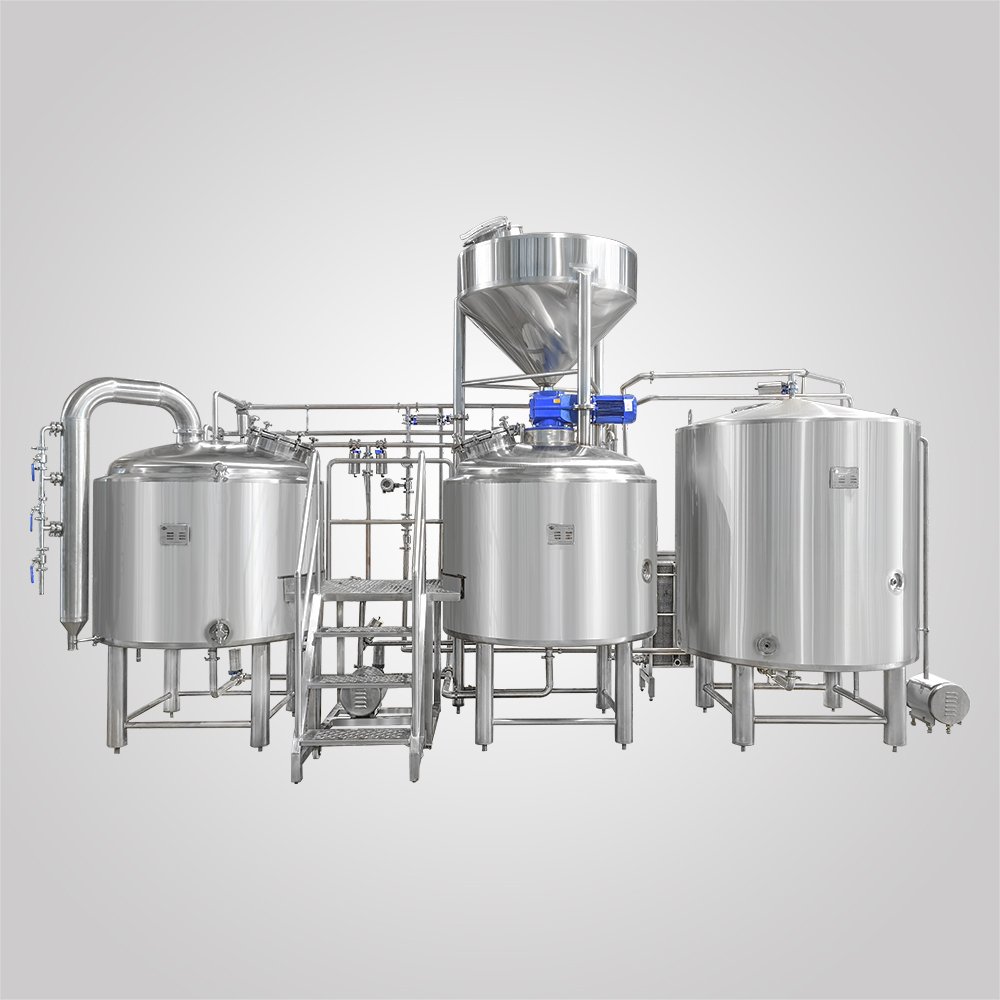
The mashing procedure consists of several temperature rests. Protein rest and saccharification rest each require a steady temperature held for a set duration. Without proper insulation, heat escapes continuously through the tank wall, and the temperature of the mash drops gradually. Once the temperature drifts away from the target range, enzyme activity changes accordingly. Starch conversion will be incomplete, and the original gravity of wort will fail to meet design expectations. As a result, the alcohol content, mouthfeel and body of the final beer will vary, making it hard to keep consistent flavour batch after batch.
Even with a heating system installed, an uninsulated mash tun creates extra troubles. To hold the target temperature, the heater has to cycle on frequently to compensate for heat loss. This pushes up energy consumption significantly. Repeated heating may also cause local overheating of the wort, introducing burnt or off-flavours that ruin the clean profile of the wort. The insulation layer locks heat inside the tank. Only minimal supplementary heating is needed to maintain a constant temperature, cutting running energy costs over long-term production.
Besides heat retention, insulation brings safety benefits. The mash inside runs at high temperatures. If there is no insulation, the outer surface of the tank becomes extremely hot. Brewers working nearby for inspection, sampling or valve operation face a high risk of burns. With insulation fitted, the outer shell stays close to ambient temperature, greatly lowering safety hazards in the brewhouse.
Insulation also protects the stainless steel tank itself. A large temperature difference between the hot wort inside and the cooler workshop air causes repeated thermal expansion and contraction of the tank plate. Continuous thermal stress over time accelerates metal fatigue, and weld seams become more prone to leakage. Insulation reduces the temperature gap across the tank wall, easing thermal stress and extending the service life of the mash tun.
Many small brewers wonder whether insulation can be skipped for short mashing cycles. It might work for occasional single batches, but problems such as temperature drift, high energy use and inconsistent flavour will emerge with continuous brewing. For craft breweries that pursue strict process control, precise temperature holding during mashing is non-negotiable, and insulation is a simple and reliable solution.
Insulation is not just a layer of wrapping material. Insulation for brewing equipment has clear requirements. The insulation material must offer good thermal resistance, resist water absorption and carry no strange odours. A protective outer cladding is fitted on top to stop moisture from getting into the insulation. Wet insulation loses its thermal performance and may grow mould, which compromises sanitation in the brewhouse.
To sum up, the core value of mash tun insulation is stabilising mashing temperature, protecting enzyme activity and ensuring consistent wort quality. Meanwhile, it reduces energy consumption, prevents burn injuries and protects the tank structure. For craft breweries aiming to deliver reliable, uniform beer flavour, well-designed insulation on the mash tun is indispensable.