
Yeast plays a crucial role in beer brewing. It converts fermentable sugars into alcohol and carbon dioxide, contributing to the beer’s flavor, aroma, and overall character.
But how should yeast be added to wort? Are there different methods depending on the brewery size and fermentation process?
Here we will introduce several common methods of yeast addition used in breweries.
1. Direct Yeast Addition
Direct addition is one of the simplest methods, particularly suitable for small craft breweries and homebrewing.
For dry yeast, the brewer can sprinkle the yeast directly onto the wort surface or rehydrate it in clean, sanitized water according to the yeast manufacturer’s instructions before pitching.
For liquid yeast, the culture can be transferred directly into the fermentation tank under sanitary conditions.
Advantages:
- Simple operation
- No complicated equipment required
- Suitable for small-scale brewing
However, proper yeast handling and pitching rates are important to ensure healthy fermentation.
2. Yeast Addition Through a Dedicated Yeast Pitching Port
For breweries using conical fermentation tanks, yeast can be introduced through a dedicated yeast pitching port or sanitary connection.
The yeast is prepared in a sanitized container and transferred into the fermenter through a closed connection. Depending on the system design, a sanitary hose, pump, or pressure-assisted transfer can be used.
Advantages:
- More hygienic closed transfer
- Convenient operation
- Suitable for medium-sized and commercial breweries
This method helps reduce exposure to air and the risk of contamination.
3. Yeast Addition Using a Yeast Propagation Tank
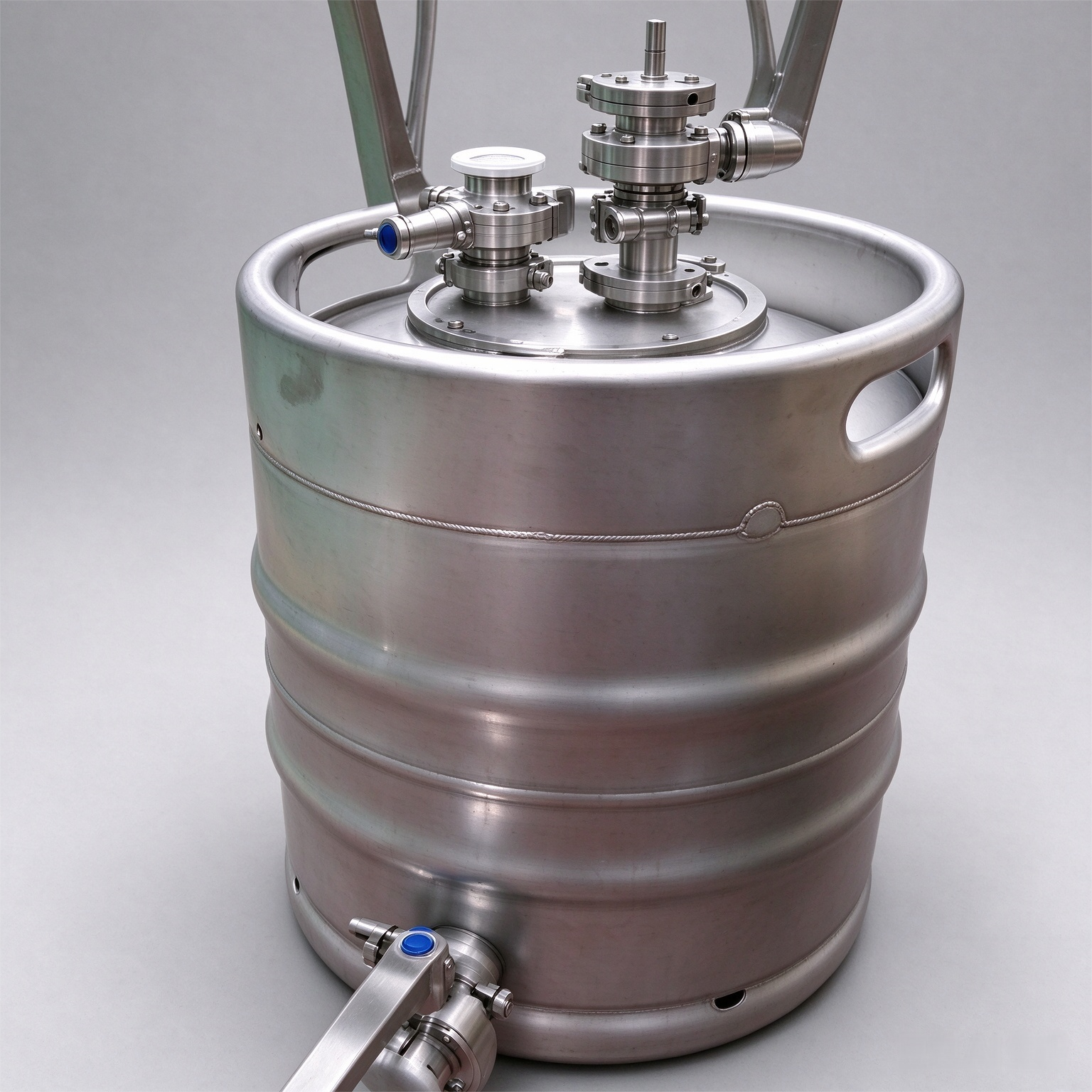
For larger breweries, a dedicated yeast propagation tank is often used to cultivate and prepare yeast before pitching.
The process generally includes:
- Prepare and sterilize the propagation vessel and relevant pipelines.
- Transfer sterile wort into the propagation tank.
- Inoculate with a suitable yeast culture.
- Allow the yeast to grow under controlled conditions.
- Transfer the prepared yeast culture into the fermentation tank.
Advantages:
- Supports larger yeast pitching requirements
- Allows better control over yeast propagation
- Helps maintain a consistent yeast supply for continuous production
This method is particularly useful for commercial breweries with multiple fermentation tanks and frequent brewing schedules.

4. Yeast Addition Through a Yeast Dosing System
Some breweries use a dedicated yeast dosing or pitching system to transfer a measured quantity of yeast into fermentation tanks.
The system may include a yeast holding vessel, sanitary pump, pipelines, valves, and flow or dosing controls.
It is especially useful when accurate yeast quantities, repeatable operation, and closed transfer are required.
5. Which Yeast Addition Method Is Right for Your Brewery?
The most suitable method depends on several factors:
- Brewery production capacity
- Dry yeast or liquid yeast
- Number and size of fermentation tanks
- Brewing frequency
- Level of automation
- Yeast reuse and propagation requirements
For a small craft brewery, direct yeast addition may be sufficient. For larger commercial breweries, a dedicated yeast propagation and dosing system can provide better process control and operational efficiency.
Looking for a Suitable Yeast Addition Solution?
Tiantai provides brewery equipment and customized fermentation systems for breweries of different production capacities.
From simple yeast pitching connections to dedicated yeast propagation tanks and automated transfer systems, we can help design a solution based on your brewing process.
Feel free to contact us to discuss your brewery project!
👤 Cassie
📧 [email protected]