
Recently, a customer asked what kind of copper material should be selected for distillation equipment. Maybe you will have such a question.
There are usually two types of copper to choose from, CU1100 and CU1220. As a distillation equipment manufacturer, we generally choose CU1220 copper to produce distillation equipment.
Can we choose CU1100 copper to produce distillation equipment? We would be more than happy to discuss this with you below.
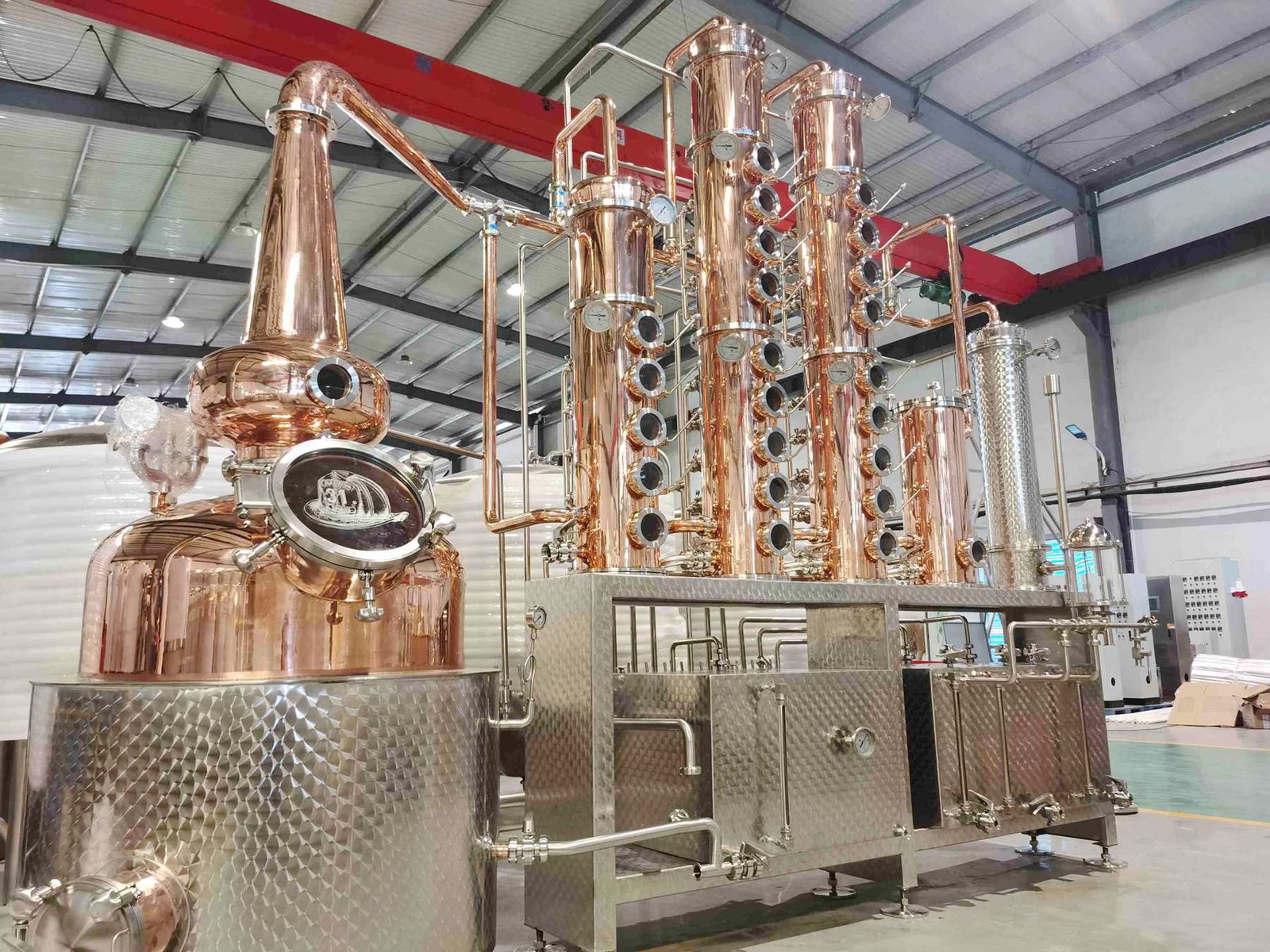
1. CU1100 Copper for Distillation Equipment
CU1100 (C11000, Electrolytic Tough Pitch Copper) is mainly used in electrical and electronic equipment that require high conductivity due to its high purity and excellent electrical properties. However, in distillation equipment, choosing CU1100 also has its advantages and disadvantages.
Advantages
Thermal Conductivity
CU1100 has very high thermal conductivity, which helps with uniform heating and cooling, which is very important for temperature control during the distillation process.
Corrosion Resistance
High-purity copper has good corrosion resistance in many environments and is suitable for handling liquids and vapors generated during the distillation process.
Non-Toxicity
The high-purity copper in CU1100 is a food-grade material and is suitable for the food and beverage processing industry, including distillation equipment.
Disadvantages
Weldability
CU1100 contains a small amount of oxygen, which may cause oxide inclusion problems during welding, thereby affecting the quality of the weld. This may be a problem in distillation equipment that requires high-quality welding.
Mechanical Properties
CU1100 may not be as mechanically strong and hard as some copper alloys, such as phosphorus-containing deoxidized copper (such as CU1220), which may limit its use in certain high-stress or high-temperature applications.
2. CU1220 – An Alternative for Distillation Equipment
CU1220 (C12200, Deoxidized High Phosphorus Copper) is often a better choice for distillation equipment for the following reasons:
Good Weldability
CU1220 contains a small amount of phosphorus, has good weldability and resistance to hydrogen embrittlement, and is well suited for the manufacture of complex distillation equipment.
Adequate Electrical and Thermal Conductivity
Although CU1220 has slightly lower electrical conductivity than CU1100, its thermal conductivity is still very high and suitable for distillation applications.
Corrosion Resistance and Mechanical Properties
CU1220 has good corrosion resistance and mechanical properties, and is able to withstand high temperatures and pressures during distillation.
3. Conclusion
Although CU1100 has excellent electrical and thermal conductivity, its disadvantages in weldability and mechanical properties limit its use in distillation equipment.
CU1220 is often a better choice for distillation equipment due to its excellent weldability and adequate thermal conductivity.
But if you have special needs here, we can also use CU1100 copper to produce distillation equipment for you. 🙂
👤 Cassie
📧 [email protected]