
After boiling, hot wort carries plenty of fine suspended solids known as hot trub. Many brewers know that wort cannot be sent directly to plate coolers or fermenters after boiling, and whirlpool is a necessary step. Still, some brewers only follow this routine without understanding the separation mechanism, or underestimating the negative impacts once hot trub flows into fermenters.
The whirlpool tank is a dedicated brewhouse vessel for hot trub separation, critical for consistent wort quality.
Centrifugal Sedimentation: Core Principle of Whirlpool
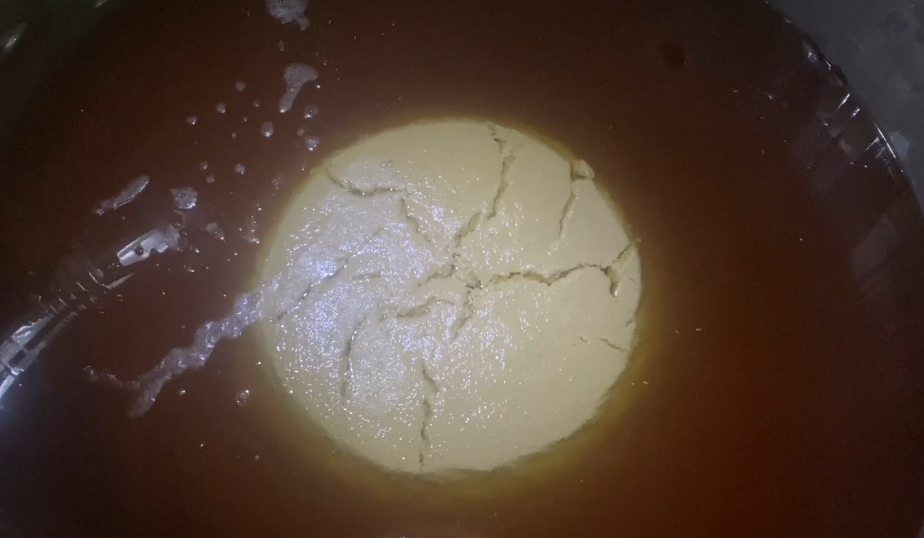
Hot wort after boiling enters the tank tangentially at a controlled flow rate. The tangential inlet pushes wort to spin along the tank wall and builds a steady vortex, similar to the vortex when water drains out of a sink. During rotation, dense hot trub particles are driven toward the tank center by centrifugal force. Particles collide and clump together, gaining weight continuously.
When gravity overcomes the buoyancy of wort, they settle down to the center of the tank bottom and stack into a compact sediment cone, also called trub cone. Clear wort is drawn from the upper outlet away from the sediment zone and transferred to plate heat exchangers for cooling. No filter media is required in this process. Solid-liquid separation is achieved by fluid mechanics. It works fast and gently, preserving delicate wort aromas without excessive loss.
What is Hot Trub?
Hot trub is suspended solids generated during wort boiling, mainly composed of denatured protein, polyphenol complexes, fine hop debris and tiny malt particles. Under long-time high-temperature boiling, soluble protein in wort denatures and binds with polyphenols, forming countless tiny floating particles. These particles are so fine that natural settling takes hours with poor separation results.
Hazy wort after natural settling cannot fit the schedule of multiple brews per day. It is important to distinguish hot trub from cold trub. Hot trub forms at high temperature after boiling, while cold trub precipitates when wort is chilled. They differ in composition, formation stage and treatment methods.
Problems Caused by Trub in Fermenters
To save brewing time, some new breweries shorten whirlpool holding time or skip whirlpool completely, sending hazy wort straight to cooling and fermentation. This is a common and costly pitfall.
First, hot trub can wrap yeast cells and block contact between yeast and fermentable sugar. Yeast growth and metabolism become unstable. Fermentation speed varies, diacetyl reduction slows down, maturation time extends, and incomplete fermentation with high residual sugar may occur.
Second, trub settled at the cone decomposes slowly and releases grassy, astringent off-flavours. It ruins the clean flavour profile of wort and brings rough, lingering harshness to finished beer.
Third, trub residue sticks to fermenter walls and cone bottoms, making cleaning far harder. If CIP cleaning fails to remove it fully, leftover trub will spoil and introduce bacteria, raising the risk of full-batch contamination.
Fourth, wort loaded with trub burdens downstream filtration. Trub clogs filter cloth, filter plates or filter membranes quickly. It shortens filter service life, increases consumable cost and slows down filtration speed.
Key Process Tips for Good Whirlpool Performance
Stable whirlpool results depend on both tank structure and process parameters. Wort inlet flow must match tank volume. Too low flow cannot build a strong vortex for trub collection. Too high flow creates violent turbulence, stirring settled trub back into clear wort. After full wort transfer, sufficient holding time is required before drawing clear wort, to give fine particles time to clump and settle.
The clear wort outlet is positioned carefully to avoid disturbing the trub cone during transfer. Industrial whirlpool tanks are built from food-grade SUS304 stainless steel. Interior surfaces are sanitary polished with smooth welds to eliminate dead zones. CIP ports are reserved for integrated cleaning. After each brew, acid, alkaline and hot water cycles flush out residual trub thoroughly to avoid cross-contamination between batches. Tanks are also equipped with temperature sensors, manholes and sampling ports for observation and testing.
Whirlpool vs Filtration: Different Jobs
Many new brewers mix up whirlpool and filtration. They perform different tasks in sequence inside the brewhouse. Lauter tun or membrane filter press separates spent grain husks from wort before boiling. Whirlpool runs after boiling, targeting hot trub formed under high heat. Whirlpool only removes hot trub instead of cold trub. Cold trub is usually settled in fermenters during cold conditioning and removed by beer filters later. The two steps work together to guarantee clean wort.
Whirlpool is a vital fluid separation step in brewing. Simply put, tangential inlet creates a stable vortex, and centrifugal force gathers scattered hot trub for sedimentation. A well-designed whirlpool tank separates trub reliably, reduces flavour defects and fermentation troubles, and keeps wort quality consistent from batch to batch.