
Introduction
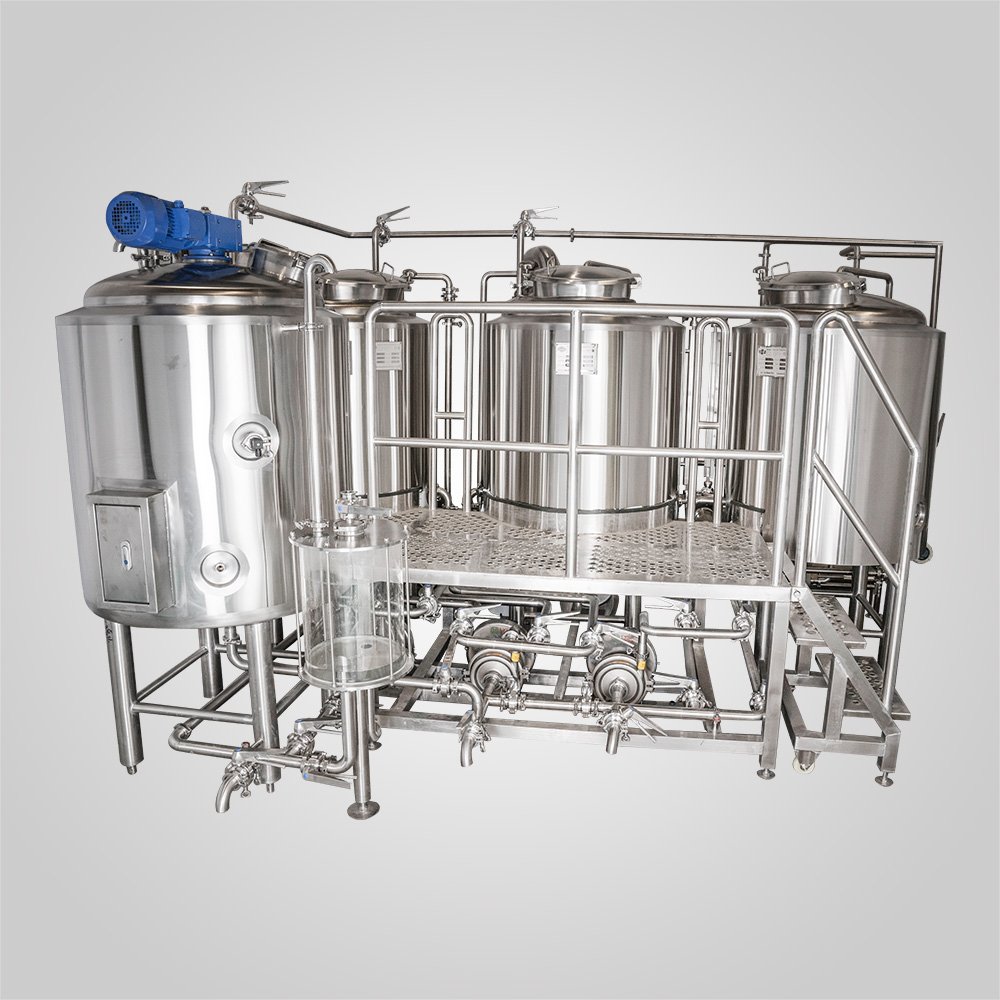
Two‑vessel and three‑vessel brewhouse systems are commonly equipped with an optional auxiliary device named the wort grant, also referred to as a glass wort balance tank. Most new brewery investors tend to pay attention only to core brewing vessels, including the lauter tun, mash kettle and whirlpool tank, while overlooking this compact but vital component. The wort grant is an atmospheric buffer tank installed between the lauter tun and boiling kettle. It does not participate in mashing or boiling reactions, but it solves critical technical problems caused by pump suction during the lautering process. For commercial craft breweries pursuing stable and consistent brewing results, a wort grant is a highly cost-effective upgrade for standardized production.
Core Function: Eliminate Negative Pressure & Protect Grain Bed
The most valuable and irreplaceable function of a wort grant is eliminating negative pressure inside the lauter tun during wort transfer.
In brewhouse systems without a wort grant, the wort pump directly extracts liquid from the bottom of the lauter tun. When the pump’s delivery flow rate exceeds the natural percolation speed of wort through the grain bed, a vacuum negative pressure will form underneath the false bottom. This hidden issue brings multiple brewing risks and equipment damage.
Common problems caused by negative pressure:
-
Compress the loose grain bed tightly, causing stuck mash, slow runoff and lautering interruption
-
Generate strong upward suction that deforms or damages the lauter tun false bottom and support structure
-
Cause the wort pump to run dry due to insufficient liquid supply, resulting in mechanical wear and pump failure
With a standard wort grant installation, wort flows freely into the grant by gravity under normal atmospheric pressure. The wort pump only draws liquid from the grant tank instead of directly from the lauter tun. This physical isolation completely blocks negative pressure feedback, keeps the grain bed loose and uniform, and ensures continuous and stable lautering.
Transparent Glass Body for Intuitive Wort Monitoring
Most commercial wort grants adopt high-transparency tempered glass material, providing brewers with a real-time visual observation window for wort quality. This visual feature is irreplaceable in standardized craft brewing operations.
Brewers can clearly observe the wort clarity, color and flow status at all times. If the initial wort is turbid with suspended particles, operators can perform vorlauf recirculation, sending the unclear wort back to the lauter tun. The recirculation process repeats until the wort becomes completely clear before transferring to the boiling kettle.
In addition, the glass tank supports convenient on-site sampling. Brewers can test wort gravity, pH value and concentration in real time to adjust brewing parameters timely, effectively improving batch-to-batch consistency.
Flow Buffer for Stable Wort Transfer
During actual brewing, the outflow speed of wort from the lauter tun is not constant and is easily affected by grain bed density, sparging pressure and pipeline resistance. The wort grant acts as an intermediate buffer container to balance the flow difference between natural outflow and pump forced delivery.
It maintains a stable liquid level to avoid sudden flow fluctuations, making pump operation smoother and reducing pipeline water hammer and impact. For multi-outlet lauter tuns, brewers can also judge the uniformity of each outlet and quickly locate local grain bed blockage problems.
Effectively Prevent Wort Pump Dry-Run Damage
The wort grant reserves a stable minimum liquid level during the entire lautering process. Since the pump always extracts wort from the grant tank, it avoids dry-running caused by intermittent liquid supply. Although it cannot replace professional electronic liquid level sensors, it provides essential mechanical protection and greatly reduces manual operation risks and equipment failure rates.
Suitable Brewing Systems for Wort Grant Installation
To achieve the best brewing effect, the wort grant has clear applicable scenarios:
Highly recommended:
-
All pump-type commercial brewhouse systems
-
500L to 5000L medium and large craft breweries with continuous production demands
-
Breweries that often encounter stuck mash and unstable lautering quality
Professional Selection and Installation Tips
Standard wort grants adopt food-grade tempered glass for high visibility and pressure resistance. Some full-stainless steel versions are available but lack visual detection functions. The tank must keep open to the atmosphere to maintain normal pressure and cannot work as a pressure vessel. The installation height should match the lauter tun outlet to ensure smooth gravity flow. Normally, the volume ranges from 15L to 30L, designed only for buffering rather than wort storage.
Conclusion
A wort grant is a practical and indispensable auxiliary component for modern commercial brewhouses. It isolates pump-induced negative pressure, protects the grain bed and lauter tun structure, prevents stuck mash, stabilizes wort transfer, and supports real-time wort quality observation. Installing a glass wort grant is a low-cost, high-return upgrade to improve brewing stability and batch consistency for craft beer production.