
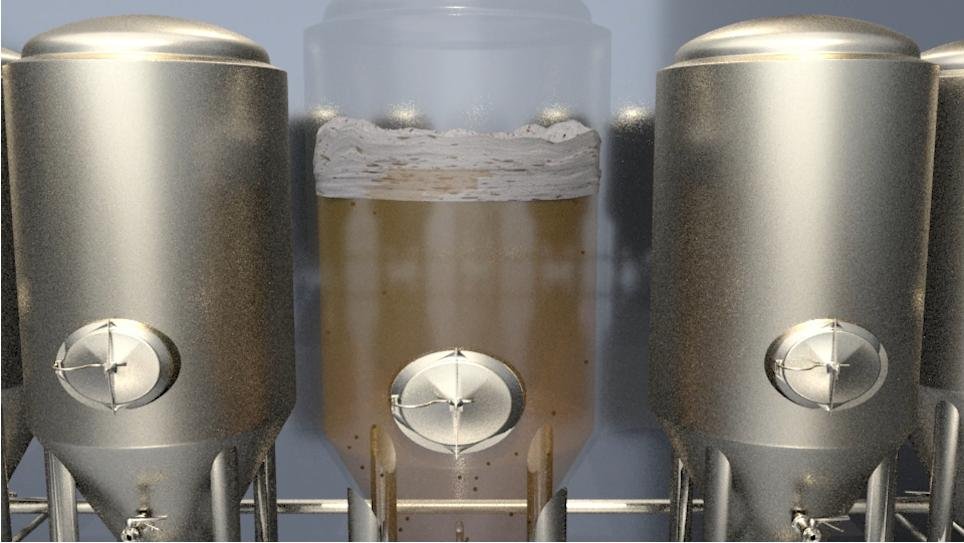
The type of yeast we choose to use, the concentration of wort to ferment and the final alcohol concentration we expect to achieve all affect the beer fermentation process.
Sugar Content
Sugar is the source of alcohol. No sugar, no fermentation, no alcohol. So, the more sugar the better. To some extent this is true. But two aspects of yeast selection play an important role here: sugar tolerance and alcohol tolerance. Alcohol tolerance is the percentage of ABV at which yeast is killed by excess alcohol, while sugar tolerance is the percentage of Brix at which yeast is killed by excess sugar. The high concentration of sugar acts as a desiccant, “absorbing water” from the yeast cells, and in the process, the yeast cells dehydrate and die.
Therefore, the best solution to adjust the sugar content of the wort during the brewing process is to increase the initial wort concentration (OG), rather than adding sugar to the wort.
Yeast Used
As mentioned in the previous step, yeast affects two aspects of the fermentation process early on: alcohol tolerance and sugar tolerance. When brewing light beers, there is only enough sugar in the wort to produce a 9% ABV beer without the need for 18% ABV tolerant yeast. However, when brewing beer or spirits with high alcohol content, the use of yeast with low alcohol tolerance will affect the activity of yeast during fermentation, resulting in failure or insufficient fermentation.
PH Of The Wort
As with sugar tolerance and alcohol tolerance, each type of yeast has an optimal pH environment for effectiveness, although this is usually related to the ingredients. When the pH value of the wort of beer before fermentation is usually 5.2-5.6, as the fermentation progresses, the pH continues to drop. So check the cold wort pH before fermentation starts to make sure it doesn’t affect the fermentation process.
Oxygen
Yeast produces energy through its metabolism during the fermentation process through aerobic and anaerobic stages. In an aerobic environment, yeast respires and reproduces. This allows us to use small amounts of yeast in large batches. So, for a beer with insufficient oxygen content, it is necessary to perform wort oxygenation before the fermentation process. But the fermentation of most beer is isolated from the air, that is, in closed fermenters. Because this allows the yeast to force fermentation after all the oxygen in the tank has been consumed, creating a carbon dioxide-rich environment.
Fermentation Temperature
In general, ales (18°C-22°C) are almost always fermented at higher temperatures than lagers (7°C-16°C).
In a sense, the heat acts as a catalyst, causing the particles in the beer to become more active and move faster. The hotter the beer, the faster the yeast can consume the sugar and convert it into alcohol and CO2.But high temperatures can also create a number of problems.
Therefore, in the process of beer fermentation, attention should be paid to the above mentioned problems to satisfy better alcohol yield and better beer flavor.
Brewery Equipment for Controlled Beer Fermentation
Successful beer fermentation depends not only on yeast selection and wort conditions, but also on maintaining stable and appropriate fermentation conditions throughout the process. Proper fermentation temperature control, hygienic design, cooling capacity, and accurate monitoring all play an important role in achieving consistent brewing results.
Tiantai provides complete brewery equipment for different brewing capacities and beer styles, including brewhouses, beer fermenters, bright beer tanks, glycol cooling systems, CIP systems, control systems, and other supporting equipment.
We can develop the fermentation system according to your beer style, production capacity, fermentation temperature, available space, and specific project requirements. From equipment selection and process design to manufacturing, installation, and after-sales service, Tiantai can support your brewery project throughout the entire process.
If you are planning a new brewery or would like to discuss your fermentation requirements, feel free to contact Tiantai and tell us about your brewing plans.
👤 Cassie
📧 [email protected]