
A hot water tank is used to maintain a specific temperature while soaking the grains. This is usually done by using heat exchange coils placed in the tank. In the brewing world, it’s known as a heat exchange recirculating mash system.
Mash thickness is considered a very important factor in the brewing world and I see many brewers paying a lot of attention to this.
Brewing beer in a consistent manner should always involve a procedure that can be repeated. Several factors should be considered throughout the brewing process, as they play an important role in the taste and quality of the beer. These factors include the amount and temperature of the grain, the amount and temperature of the impingement water, the air temperature, the temperature and size of the container used, and finally the degree of temperature loss due to poor mixing and insulation.
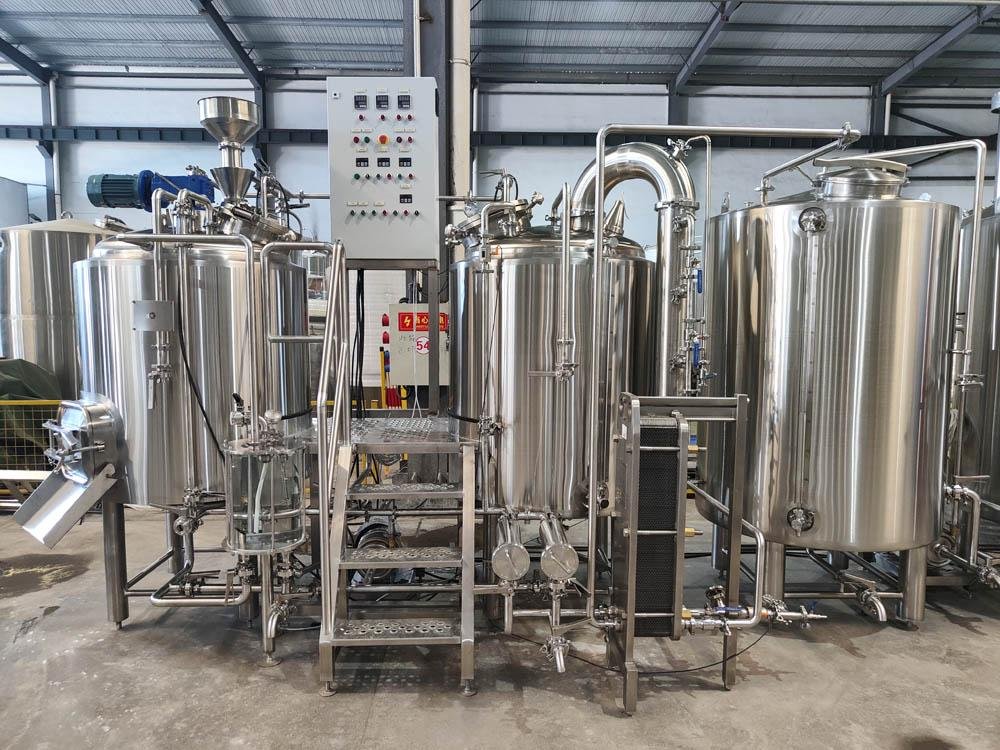
Does A Brewery Need A Hot Water Tank?
If the brewer brews once a day, budget considerations may make it ok without a hot water tank. We can then recycle the hot water into the saccharification/filtration tank (the tank needs to be cleaned in advance). Hot water is available for use the next day. It will be cooler and colder after one night, but at least we saved water.
If the brewer brews twice a day, to save mashing time and turn cans, it is best to have a hot liquid tank to circulate hot water to start the second mashing of the day. Hot water can also be used for spraying.
Tiantai’s hot liquid tanks come standard with the same capacity as the brewery. Additionally, most brewmasters now prefer larger capacity hydrothermal tanks for breweries. It can usually be 1.5-2 times larger than a brewery. Using a hot water tank is a good thing in the long run.
Why Do Brewery Equipment Need Larger Capacity Hot Water Tanks?
Larger capacity hot water tanks (HLTs) in breweries can provide a variety of advantages, depending on the size of your brewing operation and your specific brewing process. HLT is a key component in the brewing process, used to heat and store hot water for various purposes, for mashing and sparging.
Batch size: If you are brewing larger quantities of beer, you need more hot water to mash and squirt the grains . A larger HLT ensures you have enough hot water to cover the entire batch.
Mashing and sparging efficiency: A larger HLT helps maintain consistent temperatures during mashing and sparging, which is crucial for obtaining high-quality wort. It ensures you have enough hot water to reach your target mashing temperature and volume, converting starch into sugar more .
Versatility: The water-to-grain ratio can be adjusted and different mash configurations achieved to create a wider range of beer styles.
Consistency: With a larger HLT, the same brewing process and recipes can be repeated batch-to-batch, resulting in consistent beer quality.
Time efficiency: Larger HLT can save time during the brewing process. Water can be heated and held in the HLT while other brewing tasks are performed, reducing downtime and brewing time.
Energy efficiency: Reduces the need to reheat water during brewing. By heating large amounts of water and maintaining it at a constant temperature, you reduce heat loss and save energy costs.
Brewery expansion: If the brewery capacity is expected to be expanded in the future, investing in a larger HLT as early as possible can save you the trouble of upgrading later.
Water treatment: Some breweries must treated water for brewing. Larger HLTs can store larger volumes of process water, ensuring adequate water volume for each batch.
Cut Thermal Shock: A larger HLT helps prevent rapid temperature swings during the brewing process. Rapid temperature changes can affect enzymes and the quality of your beer.
Project Manager: Abby Wang
Email: [email protected]