
For craft distilleries producing premium whisky, rum, brandy, and other traditional spirits, batch distillation remains one of the most trusted production methods. Among the various distillation systems available today, the two-pot distillation system is widely recognized for producing spirits with exceptional flavor, aroma, and character.
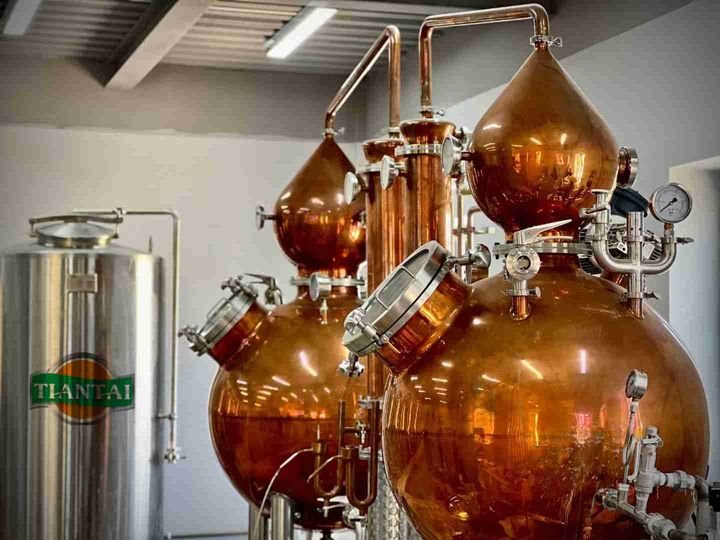
A traditional two-pot distillation system consists of a Wash Still (also called a Wash Pot) and a Spirit Still (Spirit Pot). Each still performs a different task, and together they create a cleaner, smoother, and more refined spirit.
What Is a Two-Pot Distillation System?
A two-pot distillation system uses two separate copper pot stills to complete the distillation process in two stages.
The first still, known as the Wash Still, performs the initial distillation by separating alcohol from the fermented wash.
The resulting low wines are then transferred to the Spirit Still, where a second distillation further purifies the alcohol and allows the distiller to make precise cuts between the heads, hearts, and tails.
This traditional process has been used for centuries in the production of premium whisky and other high-quality spirits.
Stage One: Wash Still
The Wash Still is the starting point of the distillation process.
Fermented wash, typically containing 7–10% alcohol by volume, is heated inside the pot. As the temperature rises, alcohol vapor is generated before water because of its lower boiling point.
The vapor passes through the lyne arm and condenser, where it becomes liquid again. This first distillation produces low wines, usually with an alcohol concentration of approximately 20–30% ABV.
Although low wines contain much more alcohol than the original wash, they still include many volatile compounds and are not yet suitable for final spirit production.
The primary purpose of the Wash Still is to recover alcohol efficiently while preserving the natural flavors created during fermentation.
Stage Two: Spirit Still
The low wines are transferred into the Spirit Still for a second distillation.
During this stage, the distiller carefully separates the spirit into three fractions:
- Heads (Foreshots)
- Hearts
- Tails (Feints)
Only the heart cut is collected as the final spirit, while the heads and tails are either discarded or recycled into future distillation runs.
This second distillation significantly improves alcohol purity while allowing the distiller to retain the desired flavor compounds that give each spirit its unique character.
The Spirit Still is where craftsmanship truly influences the quality and style of the finished product.
Why Use Two Separate Pot Stills?
Compared with single-stage distillation, a two-pot distillation system offers several important advantages.
Better Flavor Development
Using separate Wash and Spirit Stills allows more desirable flavor compounds to remain in the final product while removing unwanted impurities.
This creates richer, smoother, and more complex spirits.
Greater Distillation Control
Because the two distillation stages are independent, distillers can adjust heating rates, reflux characteristics, and spirit cuts more precisely.
This flexibility is especially valuable for premium craft spirits.
Higher Spirit Quality
The second distillation removes additional impurities while maintaining the balance between purity and flavor.
This is why many world-famous whisky distilleries continue to use traditional two-pot distillation systems.
Suitable for Various Spirits
Although commonly associated with whisky production, the same configuration is widely used for:
- Single Malt Whisky
- Bourbon Whiskey
- Rum
- Brandy
- Fruit Spirits
- Specialty Craft Spirits
Different recipes and operating methods allow distillers to produce a wide range of spirit styles using the same equipment.
Copper Plays an Important Role
Most professional distillery equipment uses copper contact surfaces inside the pot still.
Copper reacts with sulfur compounds generated during fermentation, reducing undesirable aromas while promoting cleaner and softer spirit characteristics.
For this reason, many craft distilleries choose full copper stills or hybrid stainless steel stills with copper helmets, columns, and lyne arms.
Is a Two-Pot Distillation System Right for Your Distillery?
A two-pot distillation system is ideal for distilleries that prioritize product quality over maximum production speed.
It is particularly suitable for:
- Craft whisky distilleries
- Premium rum producers
- Brandy distilleries
- Small and medium-sized distilleries
- Premium spirit brands focusing on traditional production methods
While continuous distillation systems offer higher output, two-pot batch distillation provides greater flexibility and produces spirits with richer character and complexity.
TIANTAI Two-Pot Distillation Equipment
At TIANTAI, we design and manufacture customized two-pot distillation systems for craft and commercial distilleries worldwide.
Our distillery equipment can be configured with copper or stainless steel construction, steam, electric, or direct-fire heating, and customized column designs to match different spirit styles and production capacities.
Whether you are producing whisky, rum, brandy, or other premium spirits, our engineering team can help you select the right Wash Still and Spirit Still configuration for your distillery.
Contact us today to learn more about our customized distillery equipment and complete turnkey distillery solutions.
Email: [email protected]
Edit by Jane