
Cooling runs through the whole beer brewing process. Different brewing stages have different cooling targets, media and equipment. Generally, it can be divided into three main parts: wort cooling, fermentation temperature control, and bright beer cooling for maturation and storage.
Wort Cooling – The Critical Step After Boiling
Wort stays at a high temperature after boiling. It cannot be sent directly into fermenters and must be rapidly cooled down to fermentation temperature. Plate heat exchangers are the standard equipment here, which include one-stage cooling and two-stage cooling types you have learned before.
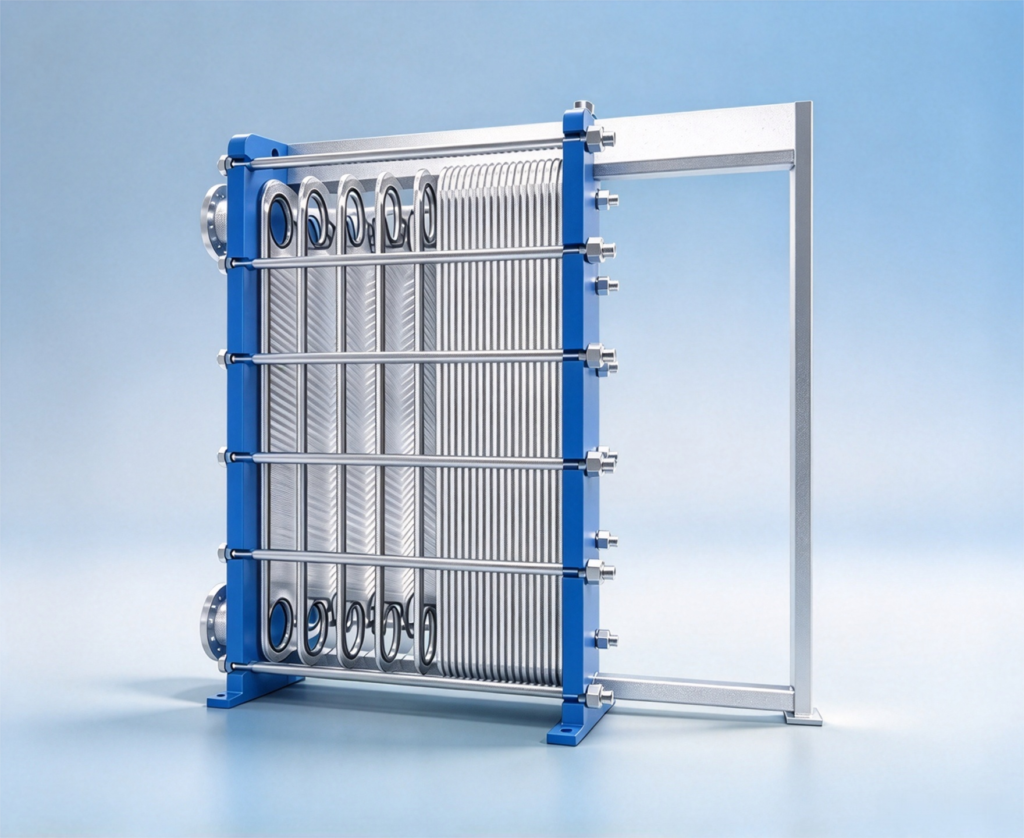
For two-stage cooling, the heat exchange is separated into two sections. In the first section, normal tap water is used for pre-cooling, bringing hot wort down to an intermediate temperature. The tap water absorbs heat and becomes warm, and this recycled hot water can be reused for mashing or sparging, saving plenty of heat energy. In the second section, glycol coolant continues to cool the wort until the target fermentation temperature is reached. After absorbing heat, the glycol flows back to the chiller for re-cooling and recirculation. This solution features excellent heat recovery and lower load on refrigeration units, widely adopted by medium and large breweries.
For one-stage cooling, pre-chilled ice water exchanges heat with hot wort inside the plate heat exchanger, finishing the whole cooling process in a single pass. The heated water after heat exchange can be used directly for sparging. It has a simpler structure with fewer pipelines and easier maintenance, which fits most small and medium craft breweries.
Fast cooling is strongly required for wort. It shortens the holding time at high temperature, reduces wort oxidation, and works together with whirlpool tanks to separate hot trub and cold trub.
Fermenter Cooling & Temperature Control
Once cooled wort is transferred into the fermenter, yeast will generate heat continuously during fermentation. Without effective heat removal, temperature will rise sharply, ruining beer flavor and causing abnormal fermentation.
Conical fermenters are equipped with glycol jackets, usually divided into several independent sections on the cylinder and cone. Low-temperature glycol solution serves as the cooling medium and circulates from the chiller unit. Temperature sensors inside the tank feed real-time data to the control system, which automatically adjusts the valve of glycol flow to realize zoned temperature control.
Heat production is highest during vigorous fermentation, so the cooling demand is heavier. Lower temperature setpoints will be applied for later fermentation and diacetyl reduction. For outdoor fermenters, extra thermal load from sunlight and extreme weather must be considered. Thicker insulation layers are adopted to avoid cold loss.
In most cases, ammonia does not contact wort directly. Ammonia chillers only cool the glycol, and glycol flows into tank jackets for indirect heat exchange, which is safer and keeps the brewing process hygienic.
Post-Fermentation Cooling: Conditioning, Filtration and Bright Beer Tank
After primary fermentation, beer needs low-temperature conditioning and maturation. Under stable cold conditions, yeast and fine trub will settle gradually, making the beer clearer. Jacketed bright beer tanks and storage tanks maintain the required low temperature for this cold conditioning stage.
Many breweries cool the beer again before filtration. Low temperature helps impurities precipitate out, improving filtration efficiency and resulting in brighter beer. Before filling, cooling is also applied to keep carbon dioxide stable inside the beer and avoid excessive CO₂ escape.
Core Refrigeration Support for the Whole System
All cooling sections rely on glycol chiller units as the cold source. Based on vapor compression refrigeration principle, the chiller cools the glycol coolant. Chilled glycol is delivered through insulated pipelines to plate heat exchangers, fermenter jackets and bright tank jackets. After absorbing heat, the warmed glycol returns to the chiller for re-cooling in a closed loop.
Brief Comparison of Common Cooling Media
Tap water is only used for pre-heat exchange and cannot maintain low temperature for fermentation. Ice water is mainly used for one-stage wort cooling. Glycol solution is the most popular coolant in breweries, with a low freezing point. It works reliably at sub-zero temperatures and is perfect for long-term fermenter temperature control.
Simple Workflow Summary
Hot wort after boiling → Plate heat exchanger (water + glycol heat exchange) → Cooled to fermentation temperature and transferred to fermenters Heat released during fermentation → Glycol in tank jackets removes excess heat → Stable fermentation temperature End of fermentation → Jacket cooling on storage tanks for cold maturation and sedimentation → Cooled beer for filtration and filling