
Mashing relies on stable water temperature to activate enzymes from malt and extract sugar. The hot water tank is far more than a simple water storage vessel. It is an essential supporting unit that stabilizes brewing parameters, cuts energy consumption and maintains sanitary conditions in the whole brewhouse.
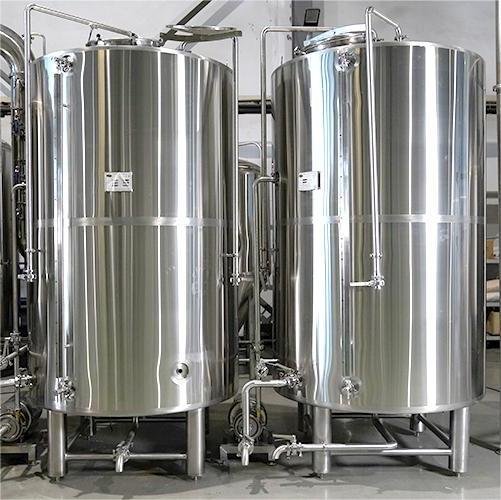
Multiple steps in mashing require hot water, including strike water for mashing, sparging water and cleaning water for CIP. Each process demands a specific temperature. Without a hot water tank, water is heated on demand directly. The temperature will fluctuate sharply. The heating speed often fails to match the mashing schedule. Unstable temperature suppresses the activity of malt amylase, leading to inconsistent extract rates. It further causes variation in wort gravity and flavor batch by batch.
The hot water tank preheats water and keeps it at target temperature with insulation for on-demand supply. During mashing-in, steady water temperature creates ideal conditions for starch conversion. For sparging, evenly heated water rinses residual sugar out of grain beds gently. It prevents excessive tannin release caused by overheated sparge water, which brings unwanted bitter taste to beer.
Heat recovery is another major advantage. Warm water recycled from wort cooling can be stored in the hot water tank instead of being drained. This recovered heat is reused for mashing and sparging, cutting down fuel consumption for the boiler. It helps breweries save running costs in long-term production.
A hot water tank also works as a buffer for continuous brewing. The boiler does not need to run at full load nonstop or start and stop frequently. With sufficient hot water reserve, the next mashing cycle can start right after the previous batch finishes. No waiting time for water heating, and the overall output efficiency of the brewhouse improves.
Built with sanitary design, polished inner surface, vent and drain ports, the hot water tank supplies hot water for CIP cleaning of lauter tun, pipelines and other brewhouse equipment. It supports standard sanitation routines and lowers the risk of microbial contamination.
To sum up, the hot water tank stores and stabilizes hot water to guarantee consistent mashing quality. It captures waste heat for energy saving, buffers water supply for continuous batches, and supports sanitary cleaning for the brewhouse.