
The manhole is an easy‑overlooked but essential part on brewery tanks. Many new breweries get confused: small tanks are too narrow for people to get inside, why do they still need a manhole? A manhole is not only designed for personnel access. Wrong selection will cause seal leakage, poor pressure holding, beer oxidation and contamination.
Manhole is the access opening of tank. For large vessels, workers can go inside for manual cleaning, residue removal and internal inspection. There are two main types for craft brewery: atmospheric manhole and pressure manhole, for different vessels.
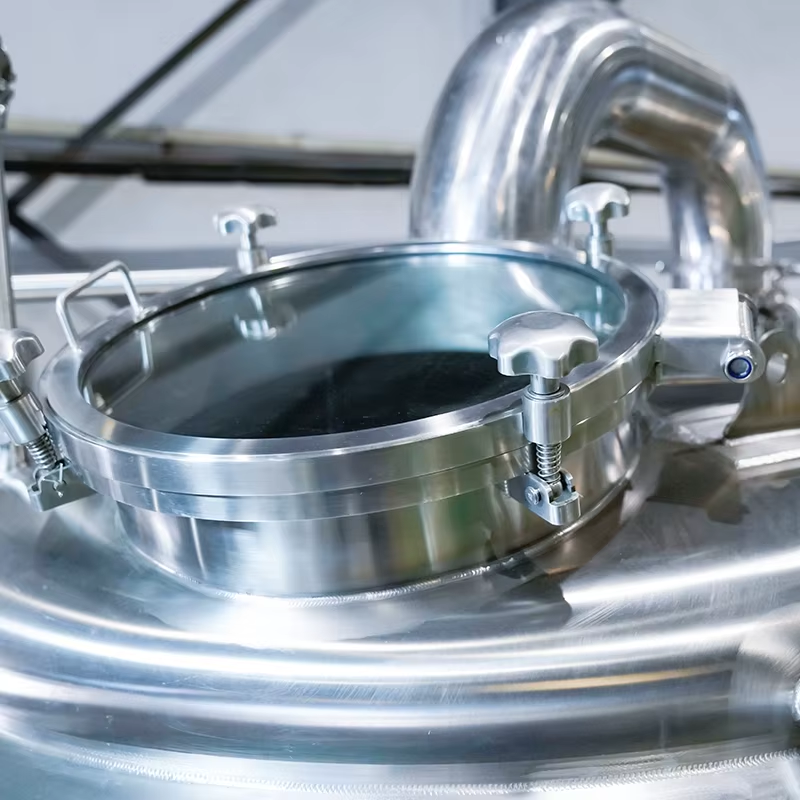
What Is Atmospheric Manhole?
Atmospheric manhole is only for tanks working under zero pressure. It cannot bear internal tank pressure.
Suitable Tanks
Mash tun, lauter tun, whirlpool tank. These vessels work under normal atmospheric pressure.
Main Features
- Simple seal structure with clamps and gaskets, easy to open and close.
- Never use under pressure. It cannot hold tank pressure, may leak or pop open under pressure.
- Food‑grade 304 stainless steel, mirror polished inside for CIP cleaning.
Functions
‑ Large tanks: staff enter to remove spent grain and hot trub, inspect welds
‑ Small tanks: insert tools for component replacement and internal visual check
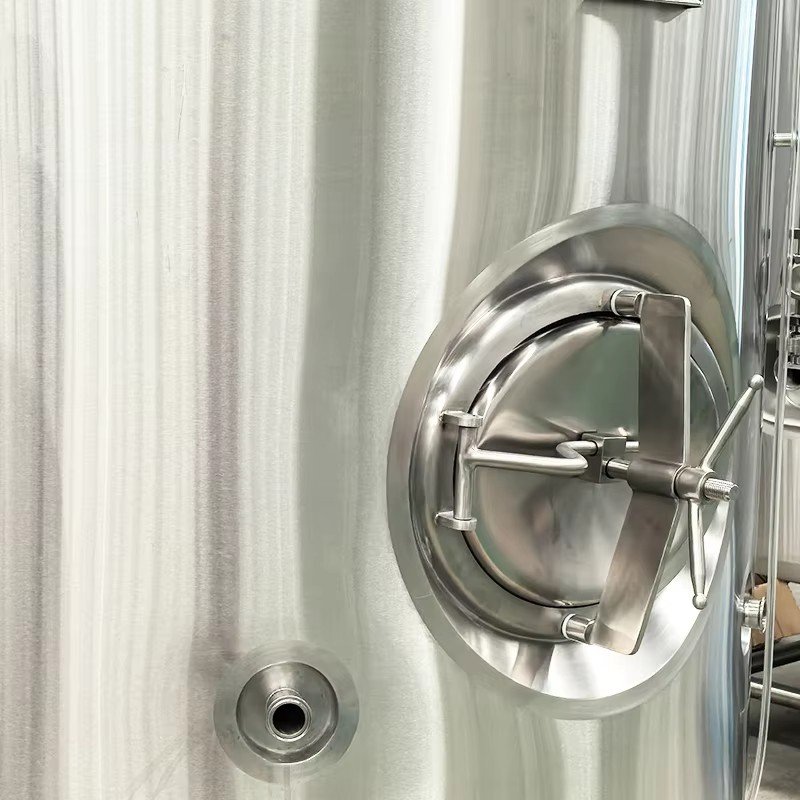
What Is Pressure Manhole?
Pressure manhole is pressure‑resistant component. It keeps tight seal when tank is under working pressure. It is standard for pressure vessels.
Suitable Tanks
Conical fermenter, bright beer tank. These tanks need CO₂ back‑pressure and beer carbonation storage.
Main Features
- Reinforced flange and multiple clamps with heavy‑duty gasket, stand for tank working pressure.
- Mirror polished surface without dead corner, compatible with CIP spray cleaning.
- Quick‑open design, no extra tools for inspection. Keep good sealing after closing for pressure brewing.
- Safety rule: do NOT open manhole while tank is pressurized.
Functions
‑ Large tanks: internal inspection and yeast sludge cleaning
‑ Small tanks: replace inner parts, clean hard deposits with tools, inspect tank condition. Keep full tank pressure after closing.
‑ Work together with closed dry‑hopping device.
What Is Glass Manhole?
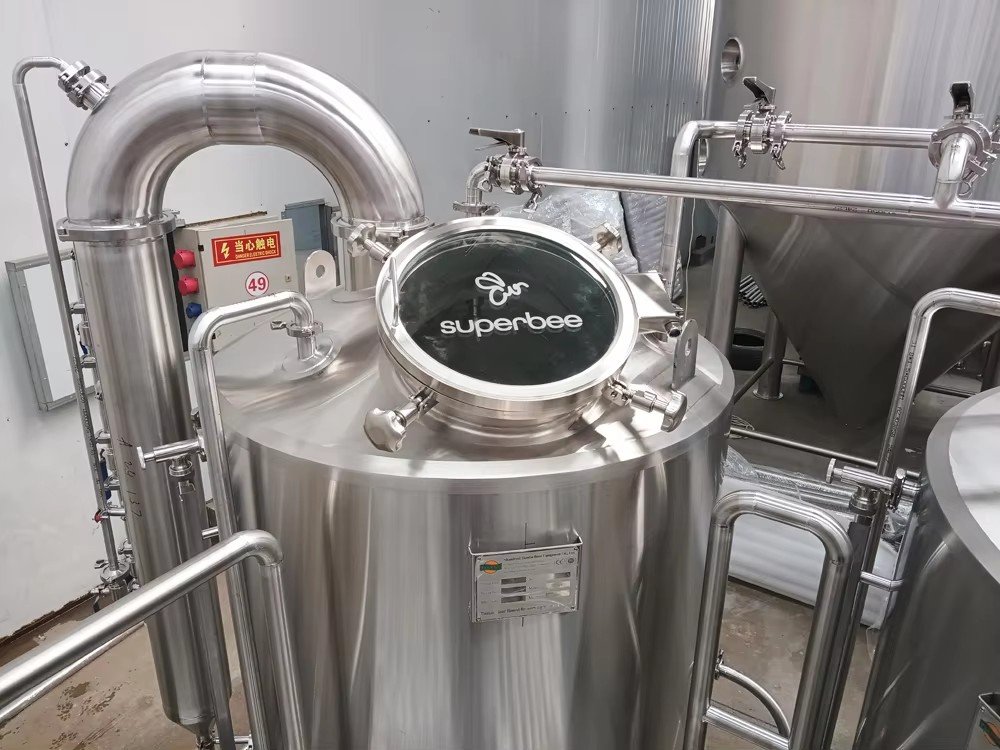
Glass manhole is combined unit. The stainless cover is replaced by thick tempered sight‑glass, while keeping full manhole flange and clamp structure. It is different from small ordinary sight glass.
Suitable Tanks
Mostly used for mash tun and whirlpool tank. Optional for low‑pressure fermenters.
Main Features
- Operators can observe tank contents directly through glass without opening the cover.
- It can withstand limited working pressure. Glass is fragile, avoid hard impact.
- Glass surface needs CIP cleaning, otherwise dirt will block vision.
Functions
‑ Observe wort boiling, whirlpool and fermentation status without opening
‑ Remove glass cover to get large opening for maintenance and cleaning
Limitations
- Higher cost than normal stainless‑steel manhole.
- Risk of breaking under heavy impact. Replace immediately if any crack appears.
- Not recommended for continuous high‑pressure service. High‑pressure BBT prefers stainless pressure manhole plus separate sight glass.
Why Do Small Brewery Tanks Still Need Manholes
Many small‑size tanks under 500L are too compact for people to climb inside. However, manholes are still necessary.
Install and replace internal large parts
Large inner parts such as CIP spray balls can only pass through manhole openings. Without this opening, these parts cannot be replaced after tank production.
Remove tough deposits when CIP cannot clean everything
CIP cleaning handles most dirt, but heavy yeast or hop residue may stick to tank walls. Operators can reach inside with tools for manual cleaning.
Visual inspection for inner surface and welds
Workers can use flashlight through manhole to check polishing condition, welds and residual dirt, for factory acceptance and regular maintenance.
Service sensors and probes
Temperature probes and pressure sensors can be maintained via the manhole opening.
Auxiliary emergency operation
After full pressure release, it can support auxiliary feeding or discharge of caked materials.
Atmospheric Manhole VS Pressure Manhole
- Pressure resistance: Atmospheric manhole: zero pressure only|Pressure manhole: support rated working pressure
- Application: Atmospheric manhole: brewhouse vessels|Pressure manhole: fermenter, bright beer tank
- Seal: Atmospheric manhole: simple seal|Pressure manhole: reinforced flange and multi‑clamp
- Risk: Atmospheric manhole: leak or pop under pressure|Pressure manhole: do not open under pressure
- Cost: Atmospheric manhole: lower cost|Pressure manhole: higher cost
- Small tank usage: Atmospheric manhole: for small atmospheric tanks|Pressure manhole: mandatory for small pressure tanks
Common Manhole Selection Mistakes
- Mistake 1: Use atmospheric manhole on all tanks to cut cost Fermenter and BBT with atmospheric manhole cannot hold CO₂ pressure. Beer will get oxidized and lose carbonation.
- Mistake 2: Remove manhole for small tanks since no one can get in Without manhole, inner parts cannot be replaced and stubborn dirt cannot be cleaned manually. You may choose handhole instead, do not cancel the opening.
- Mistake 3: Fit pressure manhole for all atmospheric brewhouse tanks Pressure manhole is over‑spec for mash system, brings extra unnecessary cost.
- Mistake 4: Ignore manhole maintenance Silicone gasket is wearing part. Scratched or aged gasket will cause gas leak and beer oxidation. Replace gaskets regularly.
Tiantai matches proper manhole or handhole for each tank according to tank volume and working condition. Atmospheric manholes are applied for brewhouse section. Sanitary pressure manholes are equipped for fermenters and bright beer tanks. Handholes are optional for mini vessels below 200L. All parts adopt food‑grade stainless steel with internal polishing for brewing hygiene. Food‑safe gaskets ensure safe and convenient operation. Tiantai provides complete manhole configuration solutions for new brewery projects or old‑plant upgrading.