
Mashing is the core stage of beer brewing. During this process, starch and protein from malt are broken down by enzymes. The wort sugar content, turbidity, flavor base and the smoothness of later lautering are mostly determined in mashing. Many brewers hold the misconception that faster stirring delivers better mixing and uniform temperature, which leads to better mashing results.
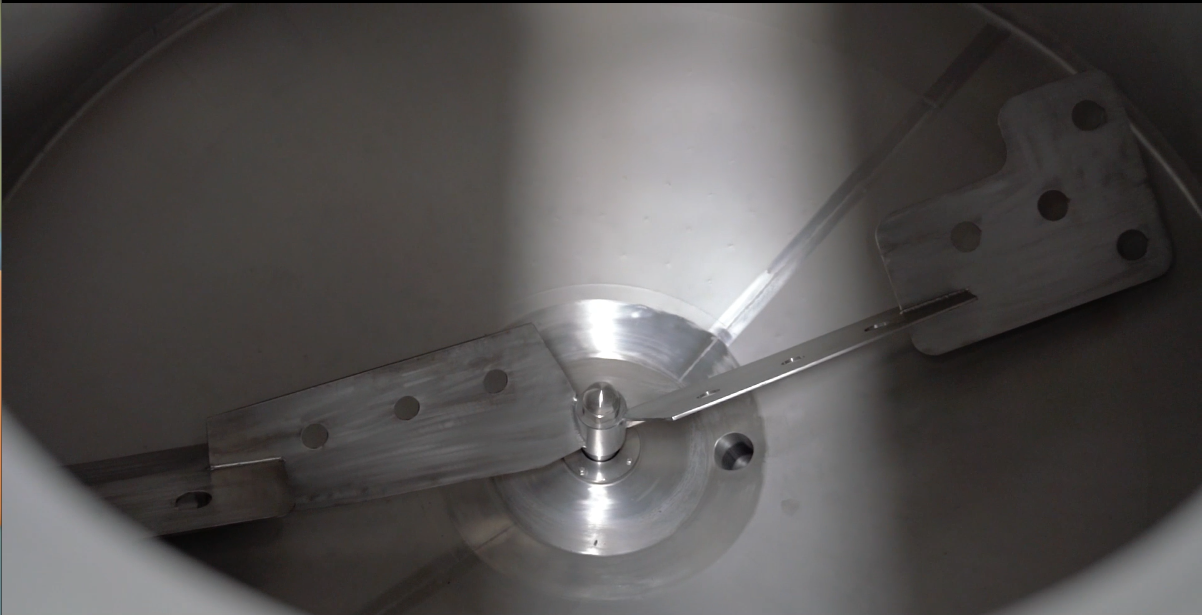
However, gentle and steady circulation is always preferred instead of rapid agitation. Excessive stirring speed brings strong shear force, local scorching and excessive oxygen intake. These hidden problems damage the mash system, affecting extract efficiency, lautering performance, beer flavor and shelf life. Many off-flavors in finished beer originate from improper agitator speed in mashing.
High-speed rotation of the impeller creates fierce turbulence and shear force inside the mash. Key enzymes including amylase, beta-glucanase and protease are protein-based and sensitive to mechanical shear. Intense shear force breaks their spatial structure and causes irreversible deactivation. Once enzymes lose activity, starch conversion becomes insufficient. Less extract is obtained from the same malt, reducing brewhouse efficiency and raising raw material cost.
Shear also re-grinds malt particles into ultra-fine flour. Fine particles release excessive beta-glucan and increase mash viscosity. When the mash is transferred to the lauter tun, these fine grains quickly block the grain bed. Lautering slows down, or even gets stuck completely. Stuck mash requires manual grain bed disturbance, extending batch cycle time, lowering equipment utilization and causing wort loss.
Another overlooked issue of fast stirring is air entrainment. The impeller beats the wort surface and traps large amounts of air into the mash, resulting in unwanted oxygen uptake. Polyphenols and unsaturated fatty acids oxidize rapidly under high temperature with oxygen. Oxidized wort turns darker and develops stale, cardboard or rancid off-flavors. These defects ruin the fresh taste, which is essential for craft beer. Oxidation products also accelerate beer deterioration and shorten shelf life.
Contrary to common belief, high speed increases the risk of scorching. Proper stirring drives slow vertical circulation to move grains away from the heated jacket and eliminate hot spots. At excessive speed, the mash forms a tight vortex along the tank wall instead of even flow. Centrifugal force pushes malt particles toward the inner wall and bottom of the tun. Grains pile up locally against the hot jacket, with poor heat exchange. Trapped malt overheats and gets scorched or carbonized.
Burnt wort carries persistent bitter and char notes, which are hard to remove in later brewing steps. Burnt residues stick firmly to tank walls, impellers and temperature sensors. Standard CIP cleaning cannot fully remove them. Residue buildup leads to cross-contamination between batches, increases cleaning chemical consumption and maintenance work. Severe scorching may even cause the whole batch to be discarded.
The mashing process has different requirements for agitation at different stages, which is why mash tun agitators are normally equipped with variable frequency drives.
When mixing grist and strike water, malt powder tends to form lumps. A slightly higher speed can break clumps, but prolonged high-speed stirring is not allowed.
During the protein rest, gentle or intermittent stirring, even static holding, is recommended to help protein flocs form without being shattered.
Low and steady stirring is used during saccharification rest. It keeps grains suspended, maintains even temperature and protects enzyme activity.
During heating ramps, stirring speed should be further reduced, as enzymes become less heat-stable and oxidation speeds up at higher temperatures.
Low-shear impeller designs such as angled blades and perforated blades are widely adopted. They promote smooth circulation while minimizing cutting impact on the mash.
In short, gentle circulation beats fast stirring in mashing. The goal of agitation is to suspend grains, equalize temperature and enable contact between enzymes and starch. Rapid stirring brings a series of drawbacks: enzyme deactivation, low extract yield, lautering trouble, oxidation and scorching risk.
A variable-frequency low-shear agitator, paired with stage-based speed control, supports consistent mashing quality, stable wort flavor and fewer production failures. Every small detail in mashing shapes the beer in the glass.