
Core Goal of Whirlpool: Remove Hot Trub
Beer brewing is a connected set of production processes. Every single step can directly change the final flavor, appearance and stability of beer. Whirlpool after wort boiling is one of those key steps that brewers cannot ignore. Many new craft brewers often ask a simple question. Why can we not send boiled wort straight to cooling? Why must we go through the whirlpool step? The answer lies in solid impurities created during wort boiling.
During wort boiling, high heat makes large protein molecules change shape and stick together. At the same time, polyphenols from malt and hops keep oxidating under high temperature. These two reactions create lots of visible solid particles, which brewers call hot trub.
Do not underestimate hot trub. If these impurities stay in wort and go into cooling and fermentation, they will cause many quality problems. First, hot trub darkens wort and finished beer. It makes the beer color different from what the brewer wants. Second, it hurts foam performance. The foam will become thin and fade quickly, losing the thick and creamy look. Besides, hot trub brings harsh, sharp bitterness. It covers the natural aroma of malt and hops. The beer will taste cloudy and heavy, and lose clean flavor. In the long run, these particles reduce beer storage stability and shorten shelf life. For all these reasons, brewers must separate hot trub from wort right after boiling.
Four Common Ways to Separate Hot Trub
In the beer industry, there are four main methods to get rid of hot trub: static settling tank, centrifuge, diatomaceous earth filter and whirlpool tank. Each type of equipment fits different production needs. Let us look at their pros and cons.
The static settling tank uses gravity to let solids sink. It costs less to buy, but it takes a very long time to finish separation. Hot wort sits for hours and easily gets oxidized. Its separation efficiency is low. The centrifuge uses high-speed rotation to separate particles quickly. However, centrifuges have high purchase price. They are hard to maintain and use much energy. Small and medium craft breweries usually cannot afford them. Diatomaceous earth filters can catch tiny particles, but they need continuous filter material. This raises running cost, and used filter material brings trouble for waste treatment.
When we compare equipment cost, operation difficulty, energy use, separation result and maintenance work, most craft breweries and large commercial breweries choose whirlpool tanks. Whirlpool tanks have clear advantages over the other machines. They have simple structure without high-speed precise parts, so they rarely break down. Operators can learn to use them after short training. They deliver stable and reliable hot trub separation, and work well for continuous beer production.
Working Principle of Whirlpool Tank
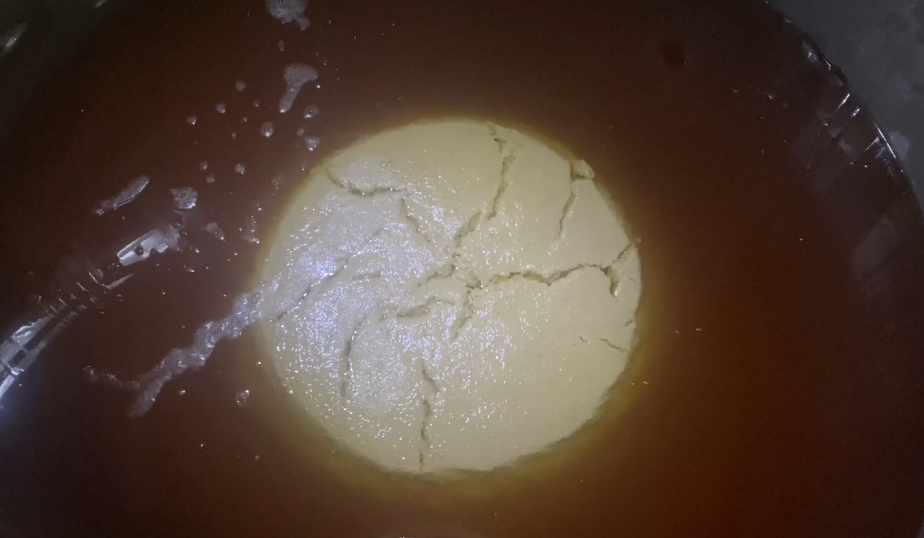
The whirlpool tank works based on fluid rotation effect. Hot boiled wort is pumped into the tank along the tangential direction. The liquid spins and forms a steady rotating flow inside the tank. As wort keeps rotating, heavier hot trub particles move toward the center of the tank bottom under fluid force. After a period of rotation and rest, particles stack up and form a mound at the bottom center. Clear wort and solid trub get separated, and solid-liquid separation is completed.
The whirlpool tank has a practical design detail. The tank bottom is built with a 2% slope. This slope plays an important role. After separation, clear wort flows slowly and smoothly along the slope out of the outlet, and moves to the next step: wort cooling in the plate heat exchanger. Hot trub stays in the central mound. After all clear wort is transferred out, workers drain and clean the trub.
Operation Tips to Protect Wort Quality
Small operation details in whirlpool will affect final wort quality. Brewers need to control the pumping speed carefully. If the flow speed is too high, it breaks the soft flocs of hot trub into tiny pieces, and these small particles will not sink easily. If the flow speed is too low, the liquid cannot create strong enough vortex, so trub will not gather well. During the whole whirlpool stage, brewers should reduce air contact with wort. This prevents wort oxidation and keeps the original delicate flavor.
Tiantai Whirlpool Tanks for Different Brewery Projects
For any craft brewery project, a proper whirlpool tank is basic equipment to make consistent high-quality beer. Tiantai Beer Equipment can customize whirlpool tanks according to brewery capacity. We supply complete brewing systems including mash tun and wort cooling equipment. Our solutions work for small craft brew houses as well as large beer production lines.
If you want to learn more beer brewing knowledge and know how to choose brewery equipment, follow us. We share practical brewing tips regularly.