
Why Pressure Fermentation Needs Spunding Valve
Pressure fermentation has become a popular process to improve beer quality in craft breweries and lager breweries. During fermentation, yeast consumes sugar in wort and continuously produces carbon dioxide. If the fermenter is open, all CO₂ escapes into the air. Brewers have to add extra CO₂ for carbonation after fermentation. It increases operating cost, and manual CO₂ injection often leads to coarse bubbles and inconsistent carbonation.
Pressure fermentation keeps the fermenter sealed. It retains CO₂ generated by yeast and dissolves the gas into beer inside the tank, achieving natural carbonation. To stabilize this process, brewers use the Spunding Valve, also called bunging valve. It gets the common name water seal valve because of its transparent water cup.
Many new brewery owners mix up Spunding Valve and PVRV pressure vacuum relief valve. Both are mounted on the top piping of fermenters, but they serve totally different purposes. PVRV is tank safety equipment with dual protection. It releases gas under overpressure and draws in air under vacuum, protecting the tank from bursting or collapsing. It is the final safety safeguard. In contrast, Spunding Valve is a process control valve. Its main task is to maintain stable positive pressure during fermentation. It only vents positive pressure and cannot compensate vacuum. It cannot replace PVRV for tank safety. The optimal setup for fermenters is to install both valves for separate duties.
Working Principle of Spunding Valve for Natural Carbonation
Spunding Valve is an adjustable one-way pressure relief valve. Brewers can set target working pressure according to beer styles, with an adjustable range from 0.2 bar to 2.2 bar.
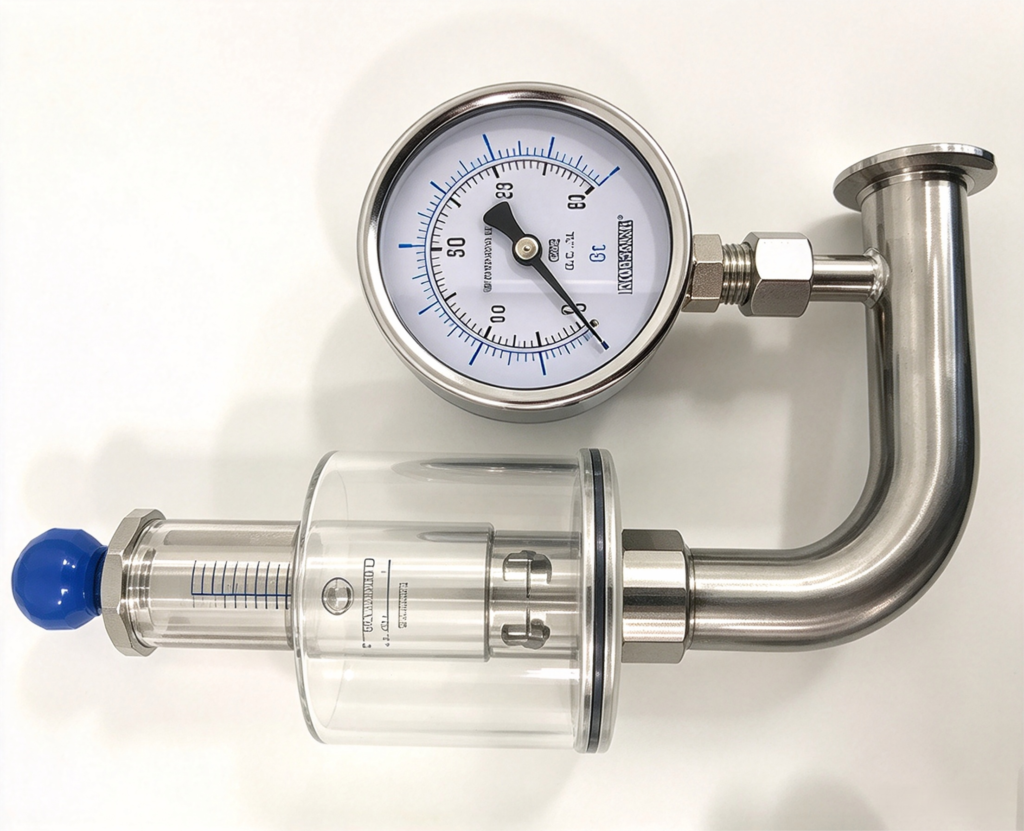
At the early fermentation stage, tank pressure is below the preset value, and the valve stays closed. CO₂ produced by yeast remains in the sealed tank and dissolves slowly into wort to carbonate beer. As fermentation proceeds, tank pressure rises gradually. Once pressure exceeds the setting, extra CO₂ pushes open the valve and passes through the water seal for venting. When pressure drops back to the target range, the valve closes again and locks tank pressure. This cycle keeps stable pressure inside the tank.
With this pressure control mechanism, beer achieves natural carbonation in the tank. Using CO₂ produced by yeast delivers fine, smooth bubbles and long-lasting foam. It preserves original beer aroma without flavor dilution caused by external CO₂ injection. It works well for ales, lagers and hazy IPAs. Pressure fermentation with Spunding Valve ensures consistent taste for every batch.
Two Major Advantages of Water Seal Structure: Visual Monitoring & Sanitary One-way Barrier
The transparent water cup is the signature feature of Spunding Valve. Brewers fill the cup with sterile water or food-grade sanitizer during operation. This liquid seal brings two key benefits.
First, visual fermentation monitoring. When gas discharges during fermentation, bubbles rise through the liquid layer. Brewers can check fermentation activity easily by watching bubbles, instead of checking pressure gauges all the time. Vigorous bubbles mean active yeast and strong fermentation. When bubbles slow down and stop, fermentation is nearly finished, ready for cooling and conditioning. It is a simple and convenient monitoring method for daily brewery operation.
Second, one-way sanitary barrier. Gas can only flow out from fermenter. Outside air, wild yeast, bacteria and insects cannot pass the liquid seal back into the sterile fermenter. It reduces contamination risk, avoids batch loss and maintains sanitary conditions, which is critical for sealed fermentation systems with strict sterile requirements.
Extra Functions to Match Full Brewing Process
Beyond pressure stabilization and natural carbonation, Spunding Valve offers multiple practical benefits for brewery workflows.
As the primary pressure regulating relief device, it buffers rapid pressure build-up caused by CO₂ production. But note again: it is only a process regulating valve. If Spunding Valve fails and tank pressure keeps rising, the PVRV safety valve acts as the last protection line. These two valves cannot substitute for each other.
After fermentation, stable tank pressure supports pressurized beer transfer. CO₂ pressure pushes beer from fermenter to bright beer tank. The whole transfer reduces oxygen contact. It effectively lowers beer oxidation risk, keeps fresh malt and fruit aroma, prevents stale cardboard flavor and extends flavor shelf life.
The valve also supports manual pressure release. Operators can vent pressure manually for sampling, inspection and tank maintenance.
Hygienic Design for CIP Cleaning in Brewery Workshop
Beer brewing equipment requires strict sanitary standards, and valve design must avoid dead zones. This Spunding water seal valve is made of food-grade 304 or 316 stainless steel. All wetted parts comply with food sanitary standards. The inner surface is smoothly polished without gaps, supporting CIP cleaning.
Tri-clamp quick connection enables fast disassembly without special tools. During routine maintenance, operators can take apart the valve easily to inspect gaskets, clean the water cup and calibrate opening pressure, keeping maintenance cost low. A built-in pressure gauge allows brewers to read real-time tank pressure and adjust pressure setting conveniently. Compact in size, it fits small craft breweries and large-scale commercial brewing lines.
Selection & Matching Tips: Spunding Valve VS PVRV
Many new brewery clients wonder how to match these two valves: Spunding Valve (Water Seal): Process valve. Stabilize fermentation pressure and realize natural carbonation. Only positive pressure venting, no vacuum compensation. Controls fermentation process and carbonation effect. PVRV Pressure Vacuum Relief Valve: Tank safety valve. Dual protection, vent overpressure and intake air under vacuum. Prevent tank deformation, collapse and rupture. Mandatory safety fitting.
Recommended configuration for brewery projects: install both valves on fermenters. Spunding Valve manages fermentation pressure to optimize beer flavor and carbonation. PVRV provides reliable safety protection for tank structure. This combination guarantees stable process and equipment safety, which has become the standard setup for mature beer brewing projects.