
Wort boiling serves as a critical connecting step in the mashing process. The stability of boiling directly shapes the beer’s flavour, clarity, shelf life and batch consistency. Many brewers only focus on boiling duration while overlooking numerous easily overlooked details. Even minor fluctuations will be reflected in the final beer.
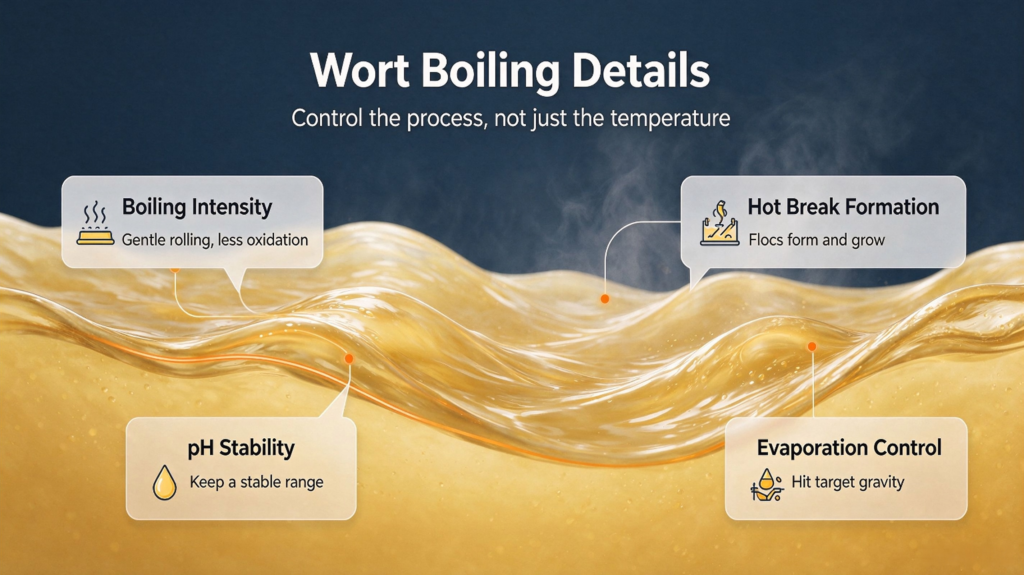
First of all, boiling intensity is the core point. Stronger heating and violent rolling do not equal better results. Vigorous boiling can cause wort overboiling and spillage, leading to material loss. Meanwhile, excessive air entrainment triggers premature wort oxidation, bringing cardboard notes and stale flavours to finished beer later. On the contrary, weak boiling fails to achieve effective evaporation, insufficient hot break formation and poor conversion of hop compounds. The ideal state is gentle and continuous rolling with uniform movement on the wort surface. It maintains steady evaporation while minimising oxygen uptake and splashing loss.
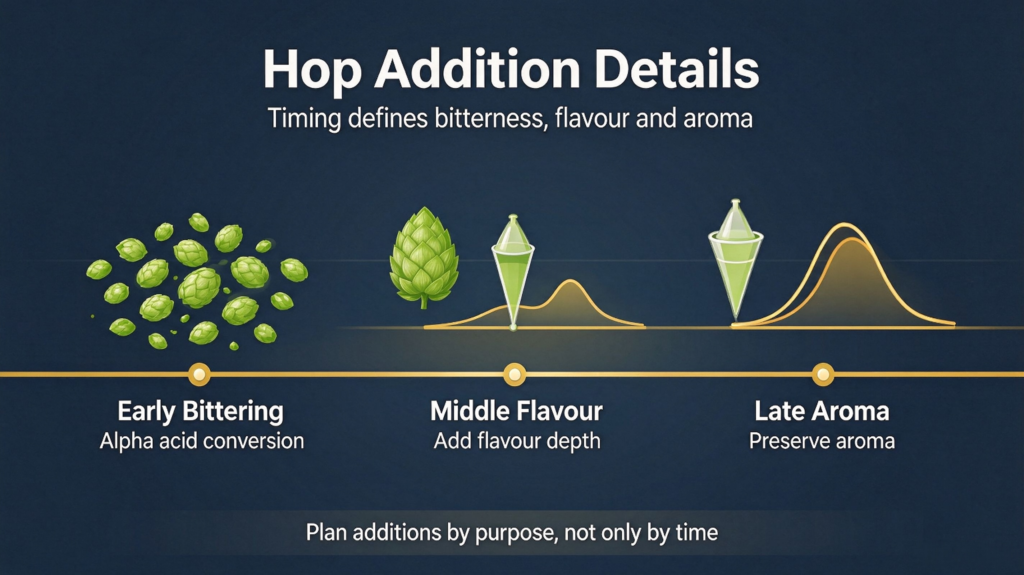
Next is the timing of hop additions. Hops added at different stages carry totally different purposes. Bitter hops are charged at the early boiling stage. Long-time high-temperature boiling converts alpha acids into iso-alpha acids, delivering stable bitterness to beer. Flavour hops and aroma hops are added late in boiling. Short heating preserves delicate fruity and floral aromas. Dry hopping is not part of the boiling stage. Wrong addition order or overlong heating will drive off precious aromas and leave harsh bitterness only.
Then comes the formation and separation of hot break. During boiling, proteins and polyphenols in wort combine to form hot break flocs. Enough time should be given for flocs to grow, and sudden cooling or large cold water addition mid-boiling must be avoided. Well-formed large flocs settle quickly in the whirlpool tank afterwards. Poor control at this stage leaves fine protein particles suspended in wort, resulting in hazy beer, short shelf life and higher risk of microbial contamination.
Sanitation control throughout boiling cannot be ignored. Burnt wort deposits easily build up on the inner wall of the kettle, steam coils and baffles. Under continuous high heat, residual wort carbonises and brings burnt off-flavours to the whole batch. Timely cleaning after each boiling cycle and regular CIP cleaning prevent burnt deposits from accumulating. Smooth ventilation of the kettle is also required. Trapped steam and waste gas should be discharged properly to avoid sulphur off-flavours remaining in the wort.
Pay attention to pH variation of wort. Wort pH drops gradually during boiling. pH level affects bitterness quality and protein flocculation. High pH creates rough, astringent bitterness, while low pH weakens flocculation and hop utilisation. The base pH should be adjusted in mashing. Random acid dosing or water addition during boiling is not recommended to keep stable process parameters.
Evaporation and water make-up need advance planning. Water evaporation increases wort gravity. Evaporation rate must be controlled to hit the target original gravity. Avoid adding large amounts of cold water in the middle or late boiling stage. Rapid temperature drop breaks protein flocs that have already formed. If water make-up is necessary, perform it at early boiling stage or use pre-heated deoxygenated hot water.
The transition after boiling completion matters as well. Once boiling finishes, transfer wort to the whirlpool tank promptly. Long holding inside the kettle makes settled hot break re-disperse, and volatile aroma compounds keep evaporating, causing unpredictable flavour changes. Piping and plate heat exchangers should be pre-sterilised to reduce oxygen exposure and contamination risks during transfer.
These seemingly trivial operational details together build a reliable brewing process. Standardised control over boiling helps maintain consistent bitterness, aroma and clarity batch by batch, cut reject rates and maximise the value of your full brewhouse system.