Water makes up the largest proportion of beer, accounting for well over 90% of the finished beverage. Water hardness refers mainly to the concentration of calcium and magnesium ions dissolved in the water. You may not taste hardness directly on your tongue, yet it strongly influences mashing efficiency, enzyme activity, protein precipitation, bitterness perception and beer body, fundamentally shaping the final sensory profile of beer.
Many classic beer styles were originally defined by the natural hardness of local water sources. The unique mineral makeup of historic brewing cities laid the foundation for iconic styles, a fact that has inspired brewers for generations to learn, test and adjust water profiles carefully to unlock the best flavour each style can offer.
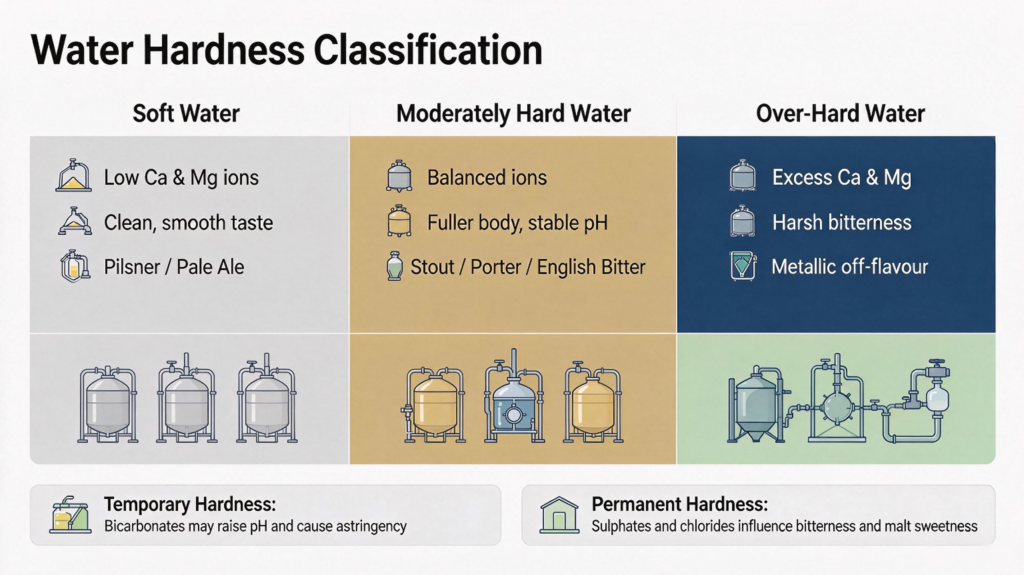
Soft water features low calcium and magnesium levels. Beer brewed with soft water delivers a clean, gentle and smooth flavour, with quick-fading bitterness and less harsh astringency. It works perfectly for crisp, refreshing styles such as Pilsner and pale ale, where delicate, bright flavours and brilliant transparent appearance are prioritised. Nevertheless, soft water has clear limitations.
Insufficient mineral ions weaken protein flocculation and make wort clarification harder during whirlpool separation. Its low buffering capacity leads to unstable pH during mashing. Without enough mineral support, bitterness turns weak and hollow, and the beer body may feel thin and lack satisfying depth on the palate. Brewers working with soft source water often add targeted mineral salts to build the structure that certain beer styles demand.
Moderately hard water contains balanced calcium and magnesium ions. Proper hardness improves the liquid’s buffering capacity and stabilises mashing pH within the ideal range. It promotes flocculation of proteins and polyphenols, helping wort clear faster and reducing fine suspended particles that can shorten shelf life. On the palate, suitably hard water brings fuller, richer body and firm, well-defined bitterness.
It is widely preferred for stout, porter and English bitter, styles that rely on a solid malt backbone and substantial mouthfeel. Excess hardness causes obvious flavour defects. Too much magnesium creates harsh, metallic off-flavours that are hard to cover. Excessive calcium sharpens hop bitterness, leaving lingering astringency on the finish and ruining the overall flavour balance.
It is essential to separate temporary hardness from permanent hardness. Temporary hardness relates to bicarbonates. High bicarbonate levels raise mashing pH, making hop bitterness rough and masking subtle malt aroma. It is the main target for water adjustment in most breweries. Permanent hardness comes from sulphates and chlorides. At suitable levels, sulphates accentuate bright, punchy hop bitterness, ideal for modern IPA styles, while chlorides soften bitterness and enhance sweet malt notes for a rounder, creamier mouthfeel. Mastering these two ion groups gives brewers powerful tools to tune beer character precisely according to their recipe design.
A common mistake for new brewers is using untreated tap water without any adjustment. Hard tap water applied to unsuitable styles will ruin flavour balance. There is no universally good or bad hardness level. The key is matching water profile to your target beer style. Brewers adjust ion contents carefully to balance malt sweetness, hop bitterness and beer body.
Consistent water hardness is also vital for batch-to-batch repeatability. Even with identical malt, hops and yeast, beer can taste dramatically different if water hardness changes. Local raw water often fluctuates with seasons, rainfall and municipal supply cycles, bringing extra uncertainty to brewing. This is why professional craft breweries install reliable water treatment systems.
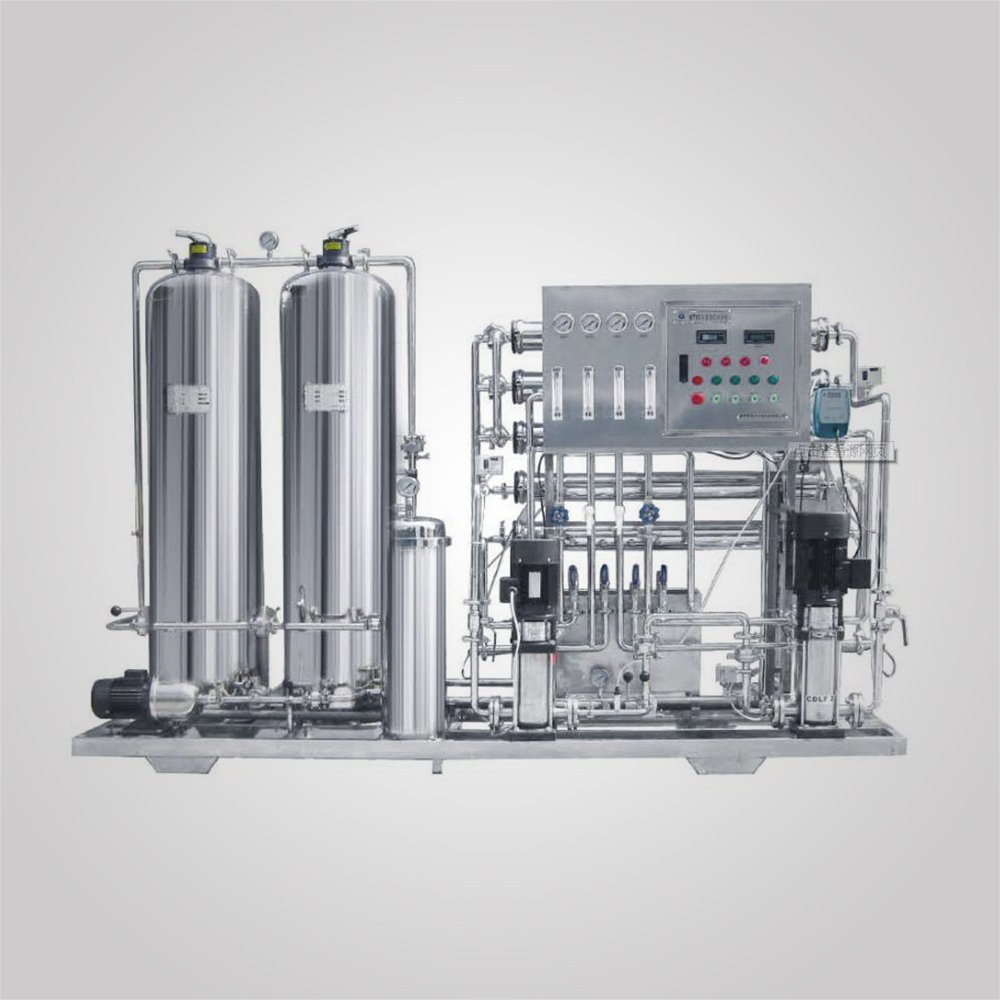
TianTai RO water treatment system allows flexible adjustment of raw water hardness and precise control of various ions. It helps breweries customise water profiles for different beer styles, break the restrictions of local raw water and guarantee consistent flavour batch after batch. It removes the guesswork out of water adjustment and gives brewers full control over one of beer’s most important ingredients, supporting stable production and reliable beer quality year-round. Whether you brew light lagers, fruity ales or heavy dark beers, accurate water control unlocks the true potential of every recipe.