300L Kombucha Brewing Equipment Brief Introduction
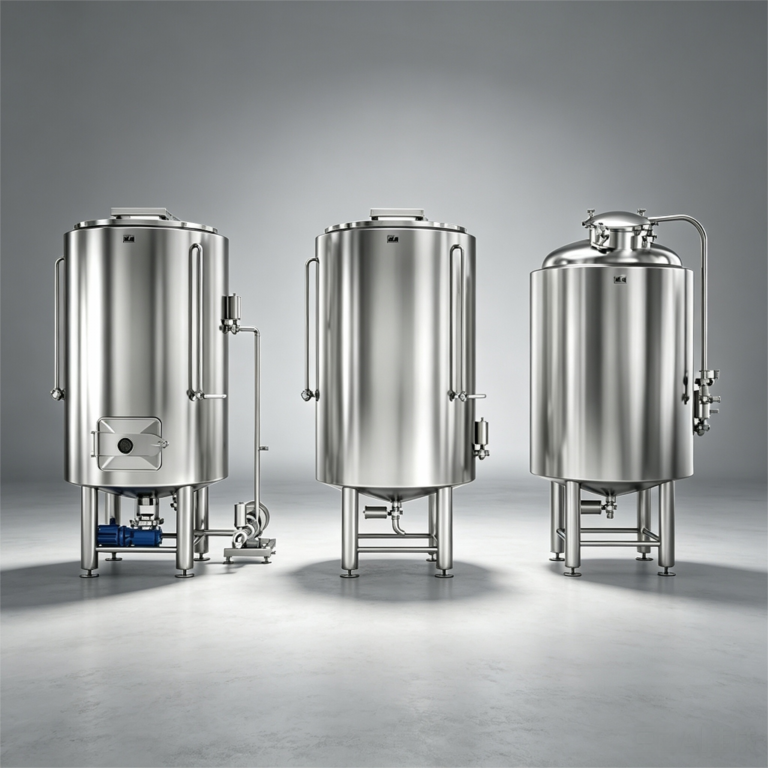
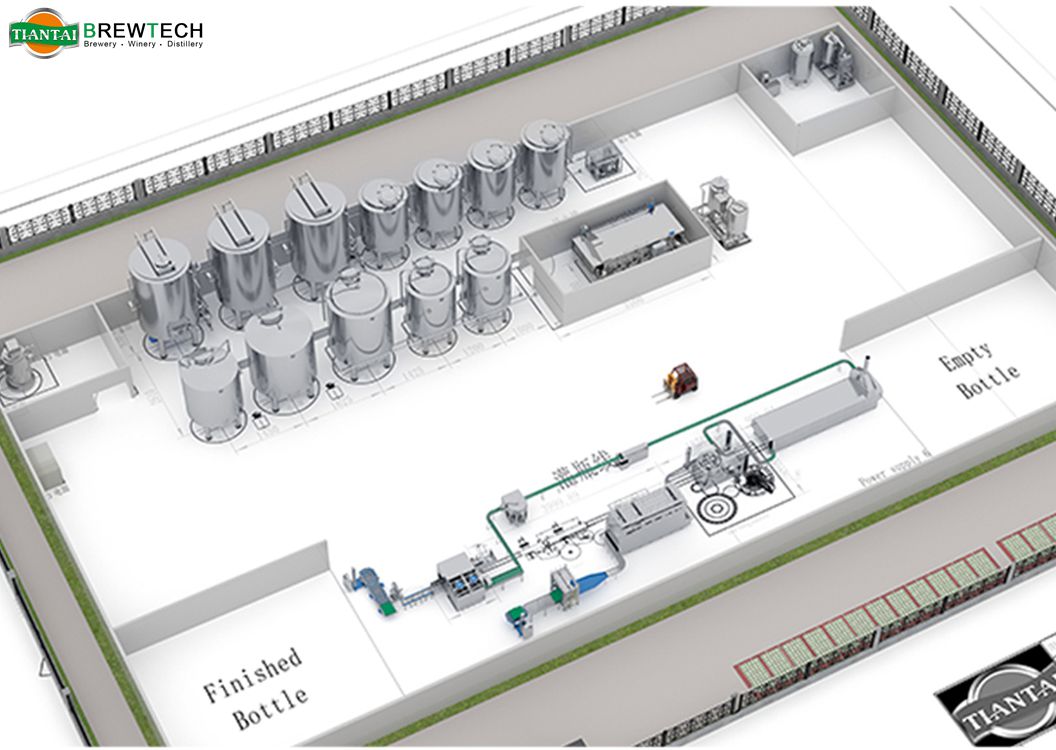
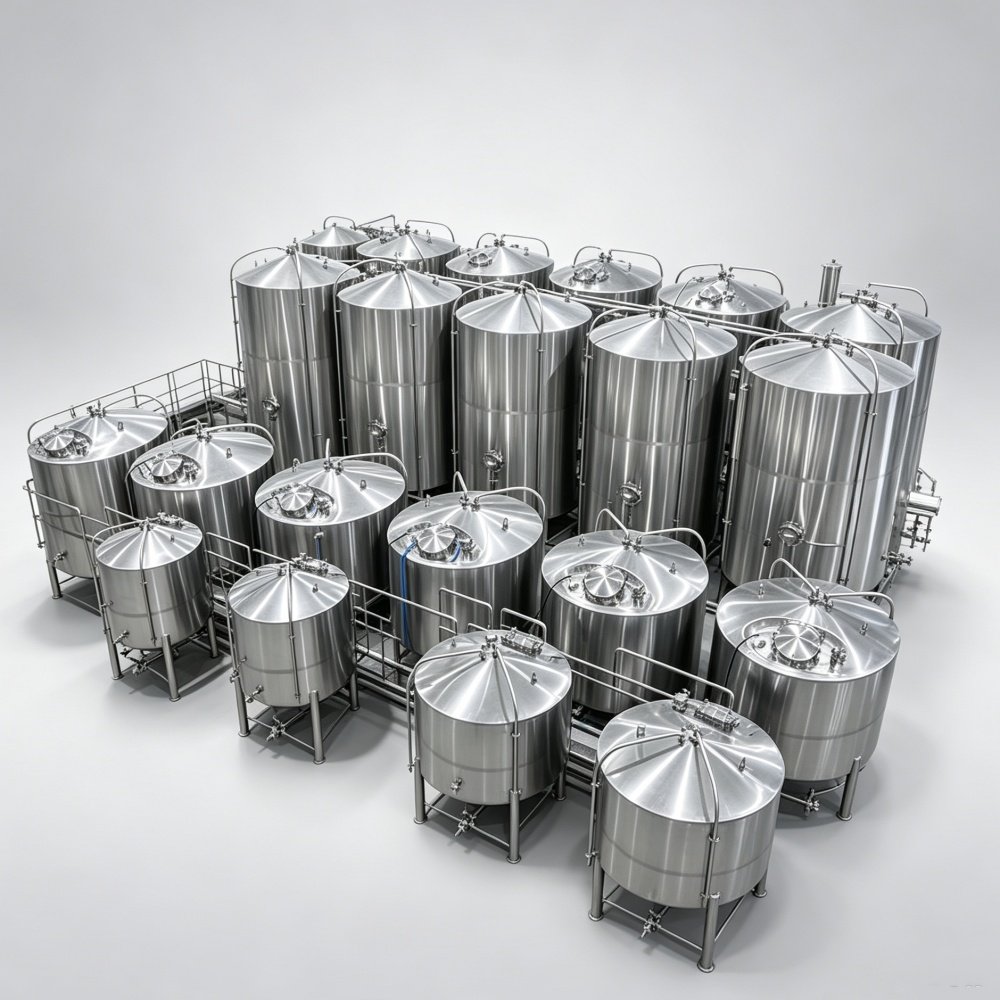
This complete 300L kombucha brewing equipment realizes full-process production from tea boiling, two-stage fermentation, filtration, storage, temperature control, automatic cleaning to bottle filling, perfectly matching the special brewing process of kombucha.
300L Kombucha Brewing Equipment Standard Specifications
| Part 1: Kombucha Brewing Unit | |||
| 1.1 | 300L Brew Kettle With Top Motorized Agitator | ||
| Part 2: Kombucha Fermentation Unit | |||
| 2.1 | 300L 1st Stage Scoby Tank | ||
| 2.2 | 300L 2nd Stage Kombucha Fermentation Tank | ||
| Part 3: Kombucha Storage Unit | |||
| 3.1 | 300L Kombucha Storage Tank | ||
| Part 4: Filtration Unit | |||
| 4.1 | Plate-Frame Filter | ||
| 4.2 | Cartridge Bag Filter | ||
| Part 5: Kombucha Transfer Unit | |||
| 5.1 | Portable Transfer Pump With VFD | ||
| 5.2 | Sanitary Flexible Hose | ||
| 5.3 | Sanitary Flexible Hose | ||
| Part 6: Glycol Cooling Unit | |||
| 6.1 | Glycol Water Chiller | ||
| 6.2 | Glycol Water Pipeline & Fittings | ||
| Part 7: Electric Control Unit | |||
| 7.1 | Brewery Instrumental Control Cabinet | ||
| Part 8: Portable CIP Unit | |||
| 8.1 | Portable CIP Pump | ||
| Part 9: Bottle Filling Unit | |||
| 9.1 | Manual Bottle Filling & Capping Machine | ||
| [Optional] Part 10: Portable Warming Water Unit | |||
| 10.1 | 100L Single Wall Warming Water Tank | ||
| 10.2 | Sanitary Centrifugal Pump With VFD | ||
| 10.3 | Sanitary Piping | ||
| 10.4 | Valves and Fittings | ||
| 10.5 | Portable Trolly | ||
| 10.6 | Control Cabinet | ||
300L Kombucha Brewing Equipment Core Advantages
- Full-process one-stop solution, covering tea boiling, two-stage fermentation, filtration, cooling, cleaning and filling, no extra equipment required for small-scale production.
- Separated open-top primary tanks & sealed isobaric secondary tanks, perfectly matching the two-stage fermentation process of kombucha to balance fungus culture and sparkling flavor development.
- VFD transfer pumps + glycol constant temperature cooling system protect probiotic activity, guarantee stable flavor of every batch.
- Equipped with portable CIP cleaning pump, all tanks and pipelines can be cleaned automatically to avoid mold and miscellaneous bacteria contamination.
- Modular design, compact layout; the optional mobile hot water unit can be added flexibly according to factory’s auxiliary production demands.
- Centralized electric control cabinet for unified parameter management, simple operation and low labor demand.
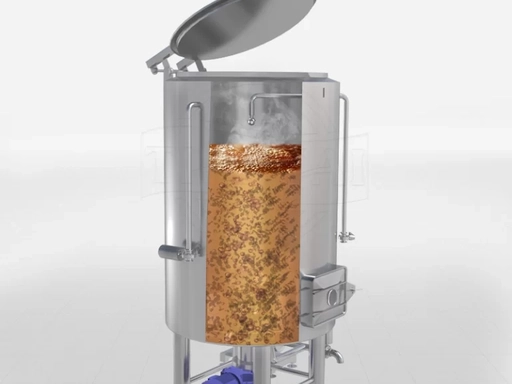
Tea brewing
Tea is typically prepared in a tea brewing tank using raw materials such as tea leaves, sugar and water. The choice of tea is a critical factor in determining the flavor profile of the kombucha. Black, green,white,oolong and blended teas are commonly used. Each tea variety offers dofferent levels of tanning, antioxidants, and other compounds influencing taste and fermentation.
Tea diluting
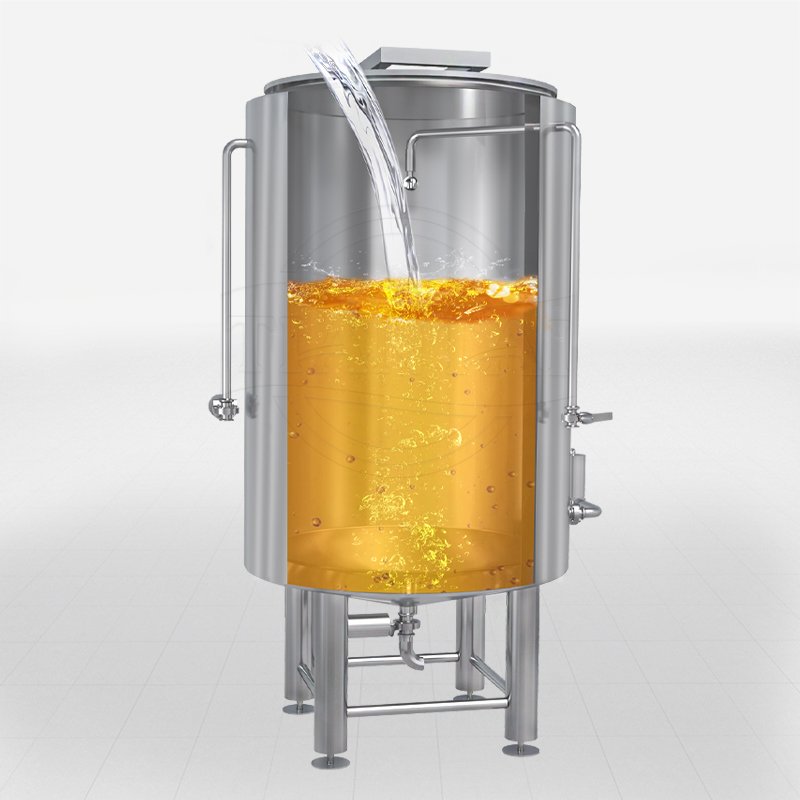
Typically, freshly brewed tea is of higher concentration and temperature, which allows for mixing with brewing water at room temperature in a specific ratio. This not only cools the tea and facilitates subsequent fermentation, but also reduces the concentration and increases yield.
Primary fermentation stage
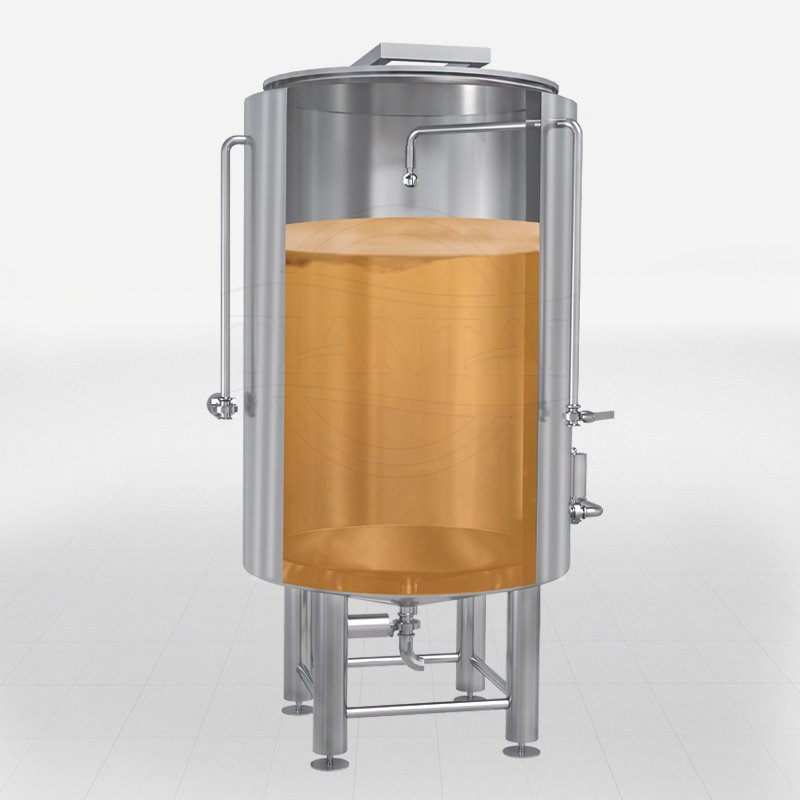
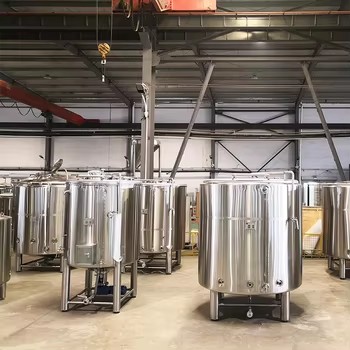
The diluted tea is pumped to the first stage fermenter. Typically, the fermentation tank at first stage in an open, flat-top, atmospheric pressure tank, and the tank body is designed with a large diameter and a low height for easy operation. The recommended fermentation temperature at this stage is 22-28℃, the optimal range for the process, and lasts approximately seven days.
Secondary fermentation stage
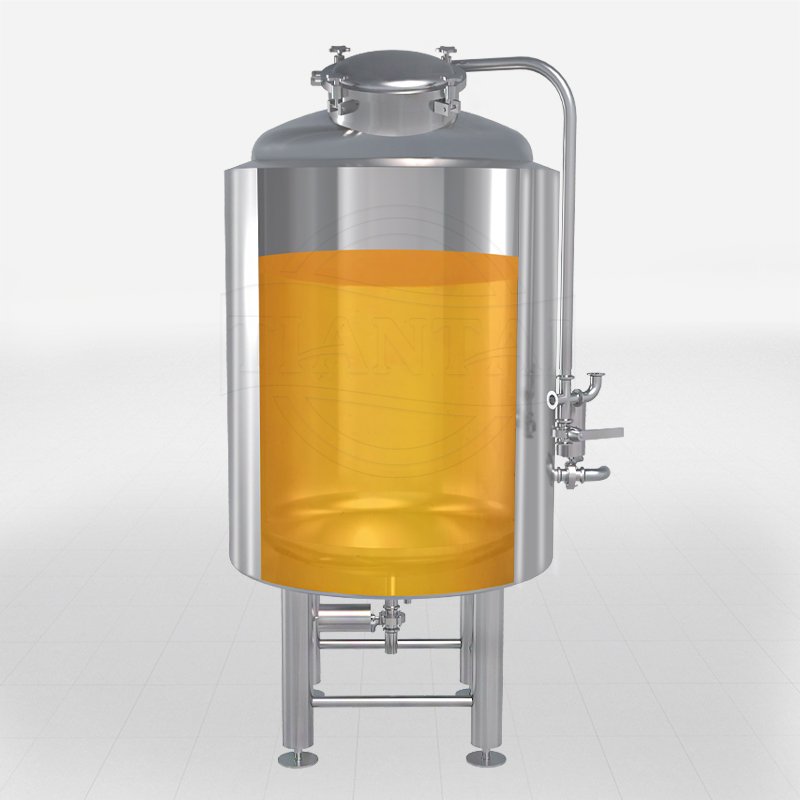
Once the initial fermentation process is complete, the tea is transferred to second-stage fermenters. These tanks are typically closed pressure vessels that look very similar to beer fermenters. Usually, the juice or puree is mixed with tea during the second fermentation stage. The fermentation temperature at this stage is usually around 15℃, and lasts approximately seven days.
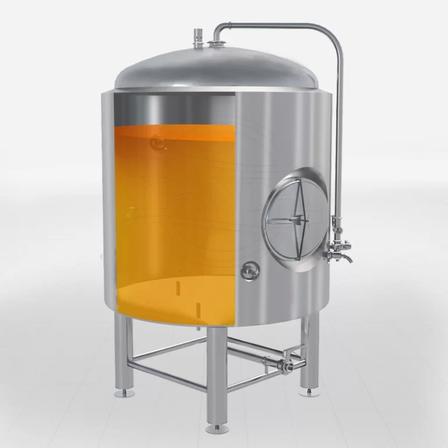
Brite tank
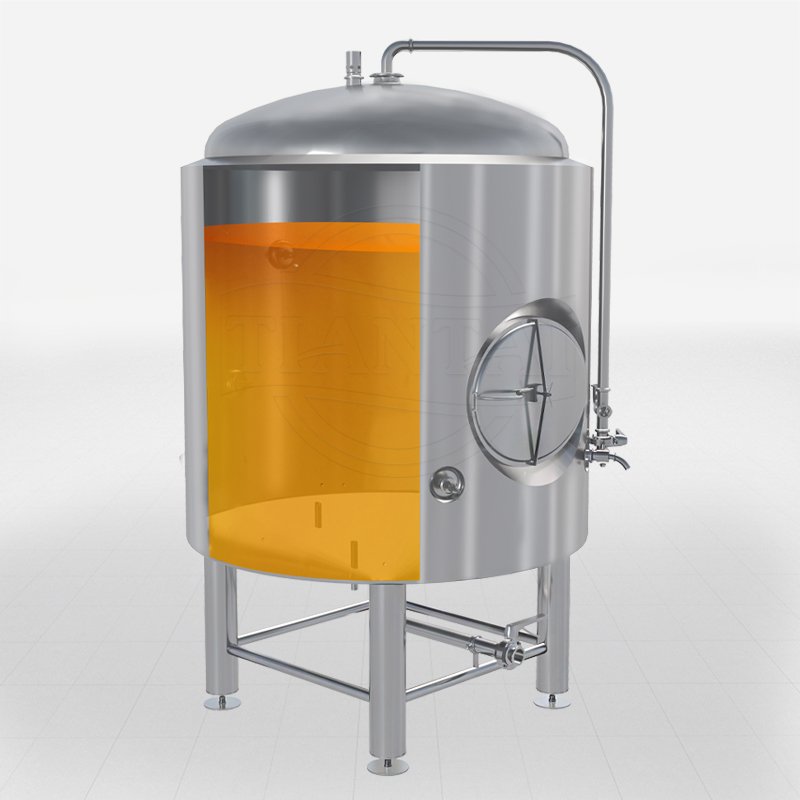
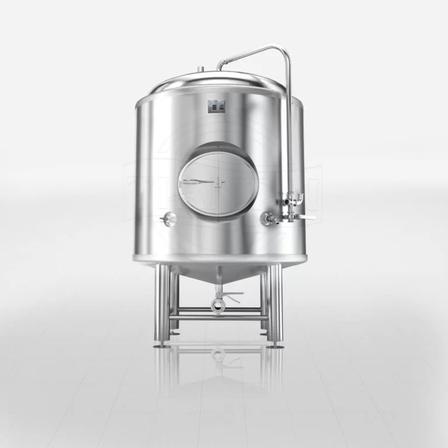
The brite tank is often utilized to mix flavorings, initiate secondary fermentation, and carbonate kombucha before packaging and distribution.