
In the beer production process, how to quickly and effectively achieve wort separation from spent grains after mashing is one of the key steps in ensuring wort quality. If the polyphenols in spent grains remain in contact with the wort for too long, they may contribute bitterness and a bran-like flavor and increase the color of the wort. Therefore, efficient wort separation is essential for producing high-quality wort.
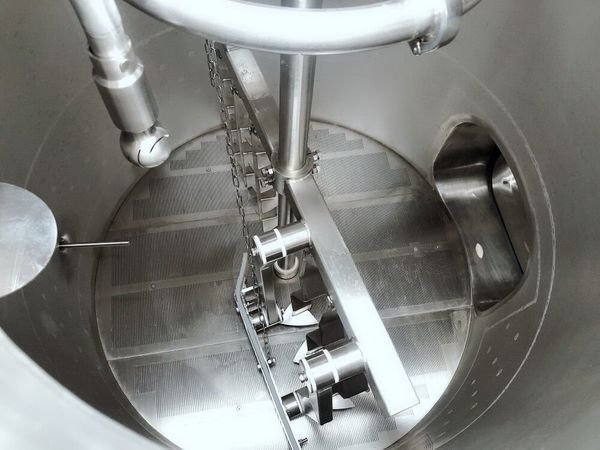
In breweries, there are two main methods used for wort lautering: the lauter tun method and the filter press method. As a traditional lautering process, the lauter tun method is simple to operate and easy to control. The filter press method can achieve faster spent grain separation. Although it has lower requirements for the crushing degree of malt and auxiliary materials, it is more expensive and may affect wort clarity.
To achieve better lautering efficiency and make the most of your wort separation equipment, the following are several key tips:
1. Choose High-Quality Raw Materials
Ensure that the malt has high solubility and an appropriate crushing fineness, which can significantly improve the filtration and wort separation speed.
2. Control the Concentration of Mash
A moderate mash concentration can maintain good fluidity during the lautering process. It is recommended to control the first wort between 16 and 18°P, without exceeding 20°P.
3. Control the Lautering Temperature
Control the lautering temperature at 76 to 78°C. This helps reduce the viscosity of the spent grains, improve the wort separation speed, and maintain stable filtration performance. Proper heat preservation during lautering is also important.
4. Control the Thickness of the Spent Grains Layer
The thickness of the spent grains layer formed after the mash is left to stand should be controlled at 30 to 40 cm. A spent grains layer that is too thick can restrict wort flow and negatively affect mash filtration and lautering efficiency.
5. Maintain a Suitable pH Value
Maintain the mash pH between 5.5 and 5.8, which is a suitable range for efficient filtration. A pH value that is too high or too low may affect the filtration speed and overall lautering process.
In addition to the above operating techniques, details such as controlling the outflow rate of wort, reasonable reflux time, timely loosening of the spent grains layer and spent grains washing process are also equally important. These can help breweries to efficiently separate wort and spent grains after mashing, thereby brewing higher-quality wort that is clearer and has a richer taste.
👤 Cassie
📧 [email protected]