
Wort filtration after mashing is a very important step in craft beer brewing. It affects malt extract rate, wort clarity, aroma and taste of finished beer directly. Many new or upgraded craft breweries face the same question: should the brewhouse use a classic lauter tun, or a high-efficiency membrane filter press with air bladder?
Neither of these two machines is always better. The right choice depends on how many batches you brew per day, your regular grain recipes, the experience of your operators, your budget and the long-term cost target.
Lauter Tun: Classic Gravity Filtration for Craft Brewing
The lauter tun has been widely used in craft breweries for a long time. It uses malt husks to build a natural filter bed and works by gravity. It is the most familiar option for many small breweries and taproom breweries.
Mash is fed into the tank from the bottom inlet. Malt husks settle on the false bottom and form a stable grain bed. Wort flows down through the grain bed by gravity. A grain rake inside the tank loosens packed grain when flow slows down, to keep steady filtration. A sparge ring on the top sprays hot water to wash remaining sugar out from spent grain.
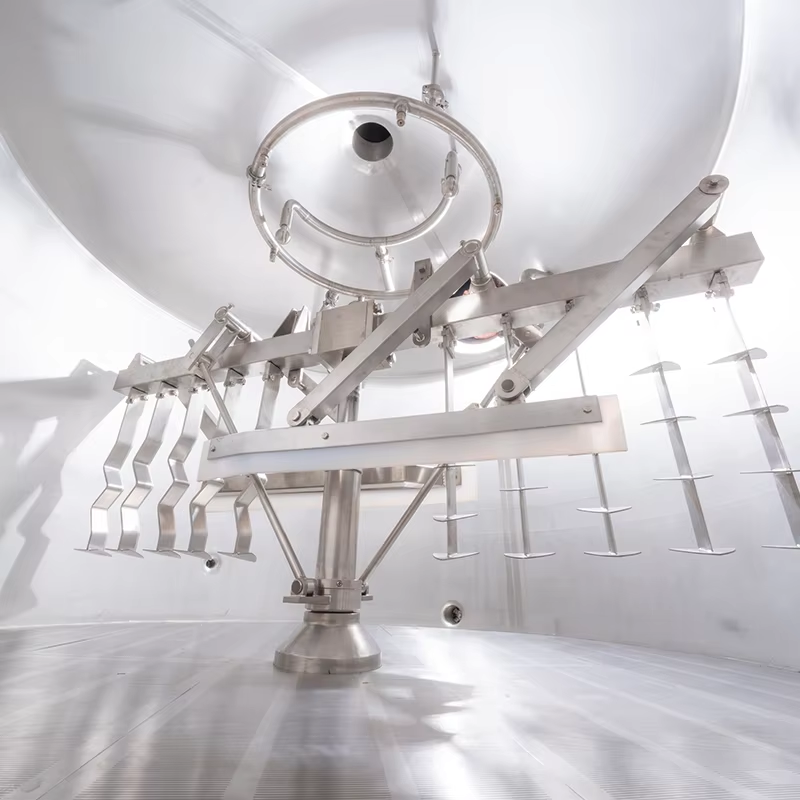
The biggest advantage of a lauter tun is gentle filtration. No high pressure squeezes the grain hard. Less tannins and polyphenols will be released. It works well for traditional ales, hazy IPAs and fruity beers. It keeps soft malt aroma and lowers the risk of bitter and astringent flavor.
It is easy to learn for new brewers, with stable and proven process. Daily maintenance is simple. You mainly check the false bottom, gaskets and rake parts. Spare parts are cheap. It fits perfectly with 2-vessel or 3-vessel brewhouses and has lower upfront cost.
It also has clear weaknesses. Filtration speed depends heavily on malt milling. If malt is crushed too fine and husks are broken, wort may turn cloudy, filtration slows down or even gets blocked. It has a maximum extract limit. Recipes with lots of rice, corn or oats are hard to filter. The lauter tun takes up more floor space, and some sugar always stays in the grain.
Filter Press with Air Bladder: High Pressure for High Efficiency & High Extract
This brewing filter press is equipped with air bladder membranes. It is different from normal chamber filter presses. It uses filter cloth as the filter medium instead of malt husks, and works with thin-cake pressure filtration.
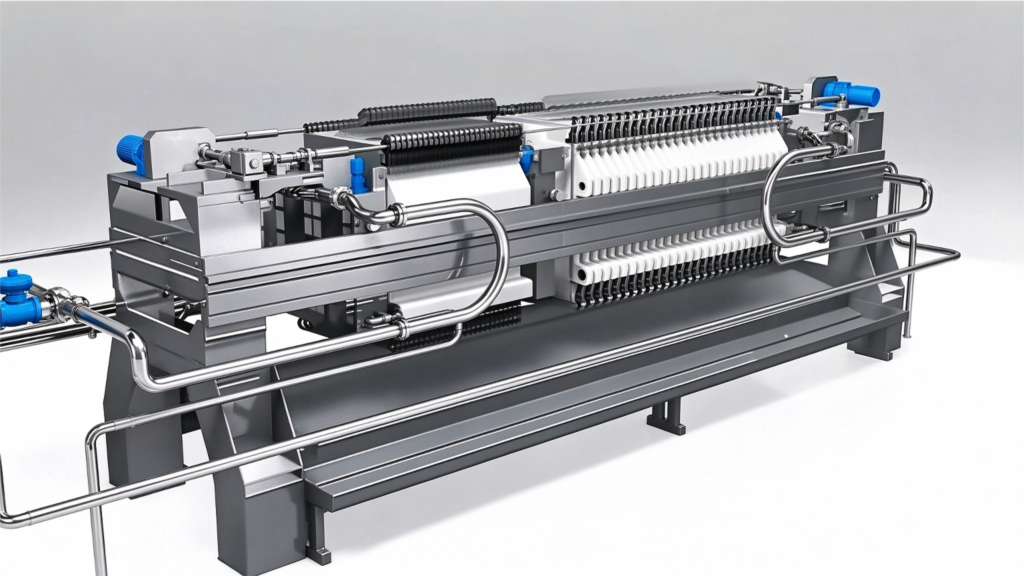
A feed pump sends mash into each filter chamber. Wort passes through filter cloth and flows out, while grain stays between cloths and forms filter cake. After feeding, the air bladder inflates and squeezes the cake tightly, to press out trapped wort. When pressing finishes, the machine pulls plates automatically and discharges spent grain.
This design brings two key benefits. First, you have more freedom on grain recipes. Even with high percentage of oats, rice or corn and limited husks, filtration stays stable. Second, more sugar is extracted from malt. It improves raw material efficiency and cuts malt cost over long production runs.
Filter press works fast with controllable production rhythm. It supports multiple brews every day. It is perfect for breweries with steady orders that want to raise daily output. Filtration happens in a closed system. With proper operation, oxygen pickup can be reduced. The wort is bright and turbidity is easy to control, suitable for large lager batches.
You also need to know its requirements. The machine costs more at the beginning. You need a feed pump, hydraulic station and PLC control cabinet together. Filter cloth is a consumable part and needs replacement after some time. You must clean cloth carefully after each batch, to avoid protein buildup, off-flavor and cross contamination. You need to test and set pressure, feed speed and pressing time properly. Wrong settings will squeeze out too much tannin and make beer bitter.
Four Points to Help You Decide
1. Production capacity and schedule
Small brewery or taproom, only one batch per day, no rush on output → Lauter Tun. Plan expansion, 2–4 batches per day, maximize brewhouse usage → Filter Press.
2. Beer styles and grain recipes
Mainly brew hazy IPA, traditional ale, fruit beer → Lauter Tun. Often brew lager, high-oat stout or high-adjunct beer, pursue high extract → Filter Press.
3. Operation team
Small team with new brewers, prefer simple work and less consumable management → Lauter Tun. Have fixed operators who can test parameters and do regular cloth cleaning & replacement → Filter Press.
4. Workshop space and budget
Limited budget and small workshop → Lauter Tun. Enough budget, focus on long-term malt saving and future capacity growth → Filter Press.
Final Summary
Lauter tun follows traditional brewing logic: simple operation, gentle filtration, priority on stable flavor. It is a reliable pick for small specialty breweries and taprooms.
Filter press is built for large-scale efficient production. It filters fast, raises extract rate and accepts more kinds of grain recipes. It suits breweries with big and steady orders.
Some breweries use both solutions. They keep piping ready for switching. Lauter tun for specialty batches, filter press for lager or high-adjunct batches. There is no one filter for all cases. The best machine matches your beer style, production plan and team condition.