
Whether producing whisky, vodka, gin, rum, or neutral spirits, one of the most important components inside a distillation column is the distillation trays. Although trays are hidden inside the column and rarely visible during operation, they have a significant impact on alcohol purity, reflux, and flavor development.
Choosing the right distillation trays design is essential when selecting distillery equipment, as it directly affects the efficiency of the distillation process and the character of the final spirit.
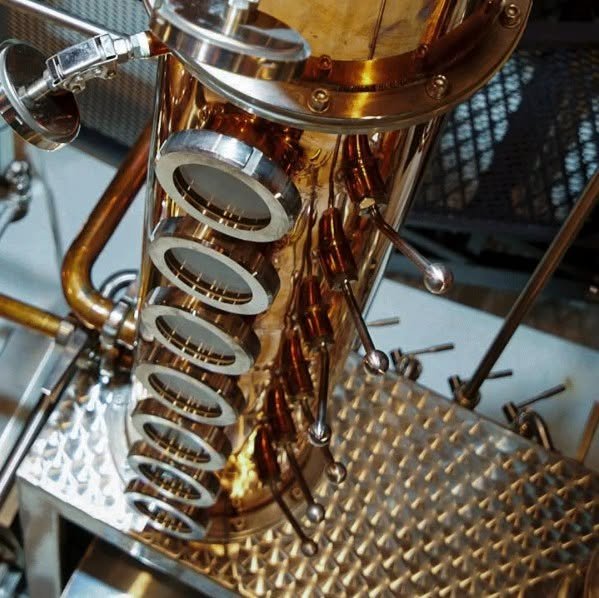
What Are Distillation Trays?
Distillation trays are installed inside the distillation column above the pot still. Their purpose is to increase the contact time between rising alcohol vapor and descending liquid reflux.
Each tray acts as a miniature distillation stage. As vapor passes through the tray, it bubbles through the liquid held on the plate, allowing repeated heat and mass transfer. This continuous interaction improves the separation of alcohol from water and other compounds.
The more effective the vapor-liquid contact, the more efficient the distillation process becomes.
How Do Distillation Trays Work?
During distillation, alcohol vapor rises from the boiler into the column.
As the vapor reaches each tray, it passes through specially designed openings or caps and bubbles through the liquid layer resting on the tray. At the same time, condensed liquid flows downward from the tray above.
This repeated cycle creates multiple separation stages inside a single column.
With every tray the vapor passes, the alcohol concentration gradually increases while heavier compounds remain lower in the column. This process allows distillers to achieve higher purity without sacrificing production efficiency.
Common Types of Distillation Trays
Different spirits and production goals require different tray designs.
Bubble Cap Trays
Bubble cap trays are among the most widely used designs in craft distillery equipment.
Each tray contains several bubble caps that force vapor to flow through slots beneath the caps before entering the liquid.
Advantages include:
- Stable performance over a wide operating range
- Excellent vapor-liquid contact
- Consistent spirit quality
- Ideal for batch distillation
Bubble cap trays are commonly used for whisky, rum, brandy, and premium craft spirits where flavor retention is important.
Sieve Trays
Sieve trays use a series of precisely machined holes instead of bubble caps.
This simple design offers:
- Lower manufacturing cost
- High capacity
- Reduced pressure drop
- Easy maintenance
They are frequently selected for larger production systems with stable operating conditions.
Valve Trays
Valve trays combine the advantages of bubble cap and sieve trays.
Small movable valves automatically adjust according to vapor flow, providing greater operating flexibility and improved efficiency under varying production conditions.
How Many Trays Does a Distillation Column Need?
The number of trays depends on the desired spirit style rather than simply aiming for the highest alcohol concentration.
For example:
- 4–6 trays generally preserve more flavor and aroma, making them suitable for whisky, rum, and brandy.
- 8–12 trays provide a good balance between purity and character for many craft spirits.
- More than 15 trays are often used when producing highly purified neutral spirits or vodka.
Adding more trays increases separation efficiency, but it can also reduce the amount of congeners that contribute to the spirit’s unique flavor profile. For this reason, the optimal tray count should match the product you intend to make.
Why Material Quality Matters
Professional distillery equipment typically uses stainless steel trays combined with copper contact components inside the column.
Stainless steel provides excellent strength, corrosion resistance, and long service life, while copper helps remove sulfur compounds and promotes a smoother, cleaner spirit.
The combination of stainless steel construction and copper contact surfaces delivers reliable performance and excellent product quality.
Choosing the Right Distillation Tray Design
There is no universal tray configuration suitable for every distillery.
Engineers typically consider several factors, including:
- Spirit type
- Production capacity
- Desired alcohol purity
- Flavor profile
- Heating method
- Column diameter
- Reflux ratio
Selecting the correct tray type and quantity helps distillers achieve consistent results while maximizing production efficiency.
TIANTAI Customized Distillation Columns
At TIANTAI, we manufacture customized distillery equipment for craft and commercial distilleries around the world.
Our distillation columns can be equipped with bubble cap trays, sieve trays, or other customized tray configurations based on your production requirements. Whether your goal is to produce flavorful whisky, aromatic rum, premium brandy, or high-purity neutral spirits, we can design a column that delivers the right balance of efficiency and flavor.
Our engineering team works closely with every customer to determine the ideal number of trays, column size, heating method, and copper contact area for their specific distillation process.
If you are planning a new distillery or upgrading your existing equipment, contact us to learn more about our customized distillation solutions.
Email: [email protected]
Edit by Jane