
Wine fermentation tank should be selected according to the characteristics of the wine and the production process. Compared with red wine, white wine fermentation places greater emphasis on low-temperature control, cleanliness, and gentle fermentation conditions, as these factors are essential for preserving the fresh aromas and delicate flavors of the grapes.
Today, we are introducing a 100HL single-wall wine fermentation tank with a cooling jacket, developed specifically for white wine production. With a practical structure, efficient temperature control, and convenient operation, this tank provides a reliable fermentation solution for professional wineries.
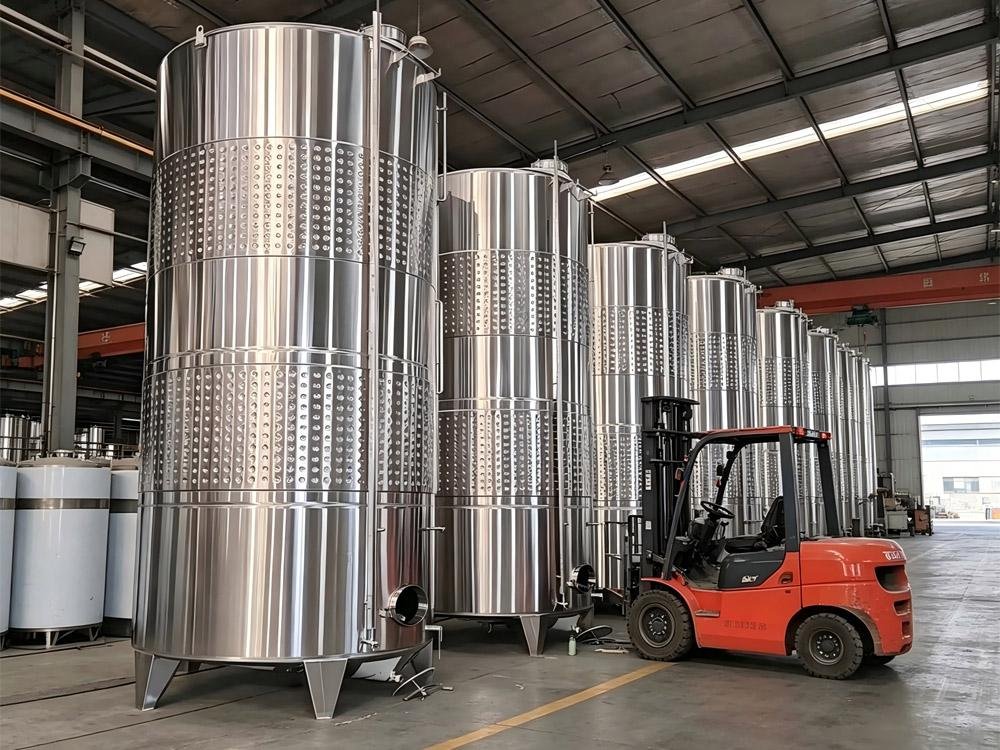
Accurate Cooling for Consistent White Wine Fermentation
Temperature management plays an important role in white wine production. Fermentation is generally conducted at relatively low temperatures to help preserve the natural aromas and fresh, fruity characteristics of the wine.
The 100HL fermentation tank is fitted with a cooling jacket, which can be connected to a glycol cooling system or chilled-water circulation system. This allows the winemaker to regulate the fermentation temperature accurately and maintain a stable environment for yeast activity.
Proper temperature control can help minimize the loss of desirable aromas, avoid excessive fermentation characteristics, and contribute to a cleaner, fresher, and more elegant final wine profile.
Side Manway Designed for White Wine Production
A notable feature of this 100HL fermentation tank is its side manway, positioned slightly above the bottom of the tank instead of being installed directly at the lowest point.
This configuration is particularly practical for white wine fermentation.
In most white wine production processes, the grapes are pressed before fermentation, meaning that the fermentation tank mainly contains clarified grape juice rather than grape skins and seeds. After fermentation, the primary solid material remaining in the tank is usually yeast sediment, which can be discharged through the bottom outlet.
By placing the manway slightly above the tank bottom, operators can conveniently access the interior for inspection, cleaning, and maintenance while maintaining a hygienic and practical tank structure.
Why the Same Manway Design Is Less Suitable for Red Wine
The fermentation process for red wine is quite different. Red wine is typically fermented together with the grape skins, which rise to the surface and form what is commonly known as the “cap.”
During fermentation, the cap needs to be regularly mixed back into the juice through techniques such as pump-over or punch-down. This helps improve the extraction of color, tannins, and other desirable compounds from the grape skins.
Once fermentation is complete, a significant amount of grape skins and other solid materials may remain inside the tank. With a side manway positioned above the bottom, these solids can collect in the lower section and become more difficult to remove.
This may result in additional cleaning work and make solid-material handling less convenient.
For this reason, red wine fermentation tanks are generally designed with features such as:
A large manway positioned closer to the bottom;
Easy access for removing grape skins and other solids;
Tank structures specifically adapted to skin-contact fermentation.
A Practical 100HL Fermentation Tank for Professional Wineries
With a 100HL working capacity, this single-wall jacketed fermentation tank is well suited to medium- and large-scale wineries that need efficient production while maintaining stable fermentation conditions and consistent wine quality.
The tank design is based on practical winemaking requirements. Features such as the cooling jacket, temperature control capability, and manway position have been considered specifically for white wine fermentation.
Selecting the right fermentation tank is an important part of establishing a reliable winemaking process. Since different wines require different fermentation methods, wineries can also customize tank configurations according to their production processes and specific requirements.
More Information,please contact project manager Abby Wang
Email: [email protected]