
If you’ve explored commercial kombucha brewing equipment, you’ve probably noticed that many kombucha fermentation tanks feature an open-top design rather than a completely sealed vessel. This often raises an important question for new kombucha producers:
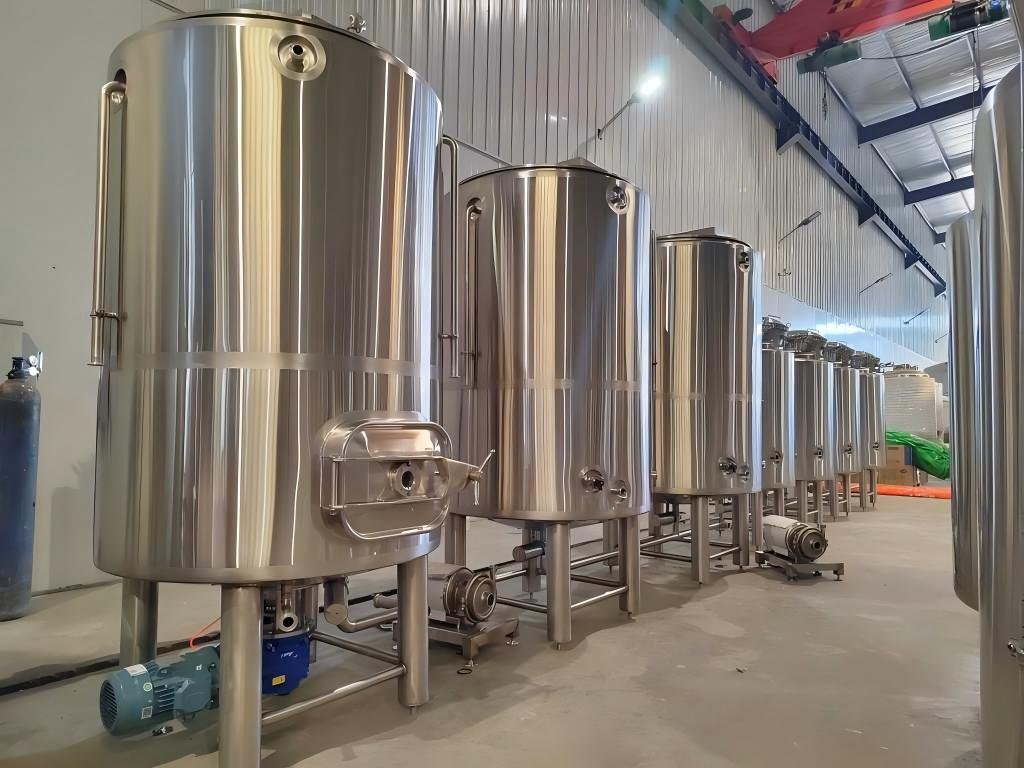
Why are kombucha fermentation tanks open-top?
The answer lies in the unique fermentation process of kombucha. Unlike beer, kombucha relies on a living culture known as SCOBY (Symbiotic Culture of Bacteria and Yeast), which requires oxygen during primary fermentation. An open-top fermentation tank provides the ideal environment for healthy SCOBY growth while ensuring consistent product quality.
Oxygen Is Essential for Kombucha Fermentation
One of the biggest differences between beer brewing and kombucha production is the fermentation environment.
Beer fermentation is typically carried out in sealed fermenters to prevent oxygen exposure after yeast has begun fermentation. In contrast, kombucha undergoes aerobic fermentation, meaning oxygen plays an essential role throughout the primary fermentation stage.
Acetic acid bacteria within the SCOBY convert alcohol into organic acids only when sufficient oxygen is available. Without adequate airflow, the fermentation process slows down, acidity develops poorly, and the final flavor may become unbalanced.
For this reason, commercial kombucha fermentation tanks are commonly designed with an open top covered by a sanitary breathable cloth or filter, allowing fresh air to enter while preventing dust and insects from contaminating the product.
Better SCOBY Development
During fermentation, the SCOBY gradually forms a thick cellulose layer on the surface of the tea.
An open-top design provides the stable air exposure needed for healthy SCOBY growth. A strong and uniform SCOBY helps maintain consistent microbial activity, resulting in predictable fermentation cycles and reliable product quality.
For breweries producing kombucha on a commercial scale, maintaining a healthy SCOBY is essential for batch-to-batch consistency.
Improved Heat Dissipation
Fermentation naturally generates heat. Although kombucha fermentation temperatures are relatively moderate, excessive heat accumulation can affect microbial activity and flavor development.
Open-top kombucha fermentation tanks allow better natural heat exchange with the surrounding environment, helping maintain a stable fermentation temperature.
Many commercial systems also include cooling jackets for precise temperature control when producing larger volumes.
Easier Cleaning and Daily Operation
Another practical advantage of an open-top tank is convenience.
Operators can easily:
- Inspect the SCOBY during fermentation
- Remove or replace the culture
- Clean the tank thoroughly
- Add tea, sugar, or starter liquid
- Perform routine sanitation
These features significantly improve production efficiency, especially for breweries managing multiple fermentation vessels simultaneously.
Food-Grade Stainless Steel Construction
Most professional kombucha brewing equipment is manufactured from food-grade 304 or 316 stainless steel.
Compared with plastic containers, stainless steel offers several advantages:
- Excellent corrosion resistance against acidic kombucha
- Easy cleaning and sanitation
- Long service life
- Smooth internal surfaces that reduce bacterial buildup
- Professional appearance for commercial production
Combined with an open-top configuration, stainless steel tanks provide both durability and excellent fermentation performance.
Can Kombucha Fermentation Tanks Be Sealed?
The answer depends on the stage of production.
During primary fermentation, the tank should remain open to allow oxygen exchange for the SCOBY.
Once fermentation is complete, kombucha is usually transferred to sealed vessels or bottles for secondary fermentation, where natural carbonation develops under controlled pressure.
Therefore, open-top fermentation is specifically designed for the primary fermentation stage and should not be confused with carbonation or storage tanks.
Choosing the Right Kombucha Fermentation Tank
When selecting kombucha equipment, breweries should consider more than just tank capacity.
Important factors include:
- Food-grade stainless steel construction
- Open-top sanitary design
- Cooling jacket options
- CIP cleaning compatibility
- Weld quality and surface finish
- Custom sizes to match production requirements
The right equipment not only improves fermentation performance but also helps ensure consistent flavor, higher production efficiency, and easier daily operation.
TIANTAI Customized Kombucha Brewing Equipment
At TIANTAI, we manufacture professional kombucha fermentation tanks and complete kombucha brewing equipment for craft beverage producers worldwide.
Our open-top stainless steel fermentation tanks are designed to provide the ideal environment for SCOBY development while meeting commercial hygiene and production standards. We also offer customized capacities, cooling systems, and complete turnkey solutions tailored to your production goals.
Whether you are launching your first kombucha brand or expanding an existing facility, our engineering team can help you build a reliable and efficient kombucha production system.
Contact us today to learn more about our customized kombucha fermentation tanks and complete brewery equipment solutions.
Email: [email protected]
Edit by Jane