
Essential oils are increasingly popular in aromatherapy, cosmetics, and natural health products. Whether you’re starting a small essential oil business or expanding an existing production line, choosing the right essential oil distillation system is crucial for efficiently and consistently producing high-quality essential oils.
1. Understanding Your Production Needs
Before selecting a distillation system, consider your production capacity, the type of plant material you will be processing, and the type of essential oil you want to extract. Small businesses can start with a 50- to 200-liter distillation unit, while larger operations may require 500 liters or more. Understanding your production goals will help determine the appropriate system size, design, and functionality.
2. Choose the Right Distillation Method
Two distillation methods are commonly used in essential oil production:
Steam distillation: Suitable for most herbs, flowers, and leaves. Steam gently extracts the essential oils without overheating the plant material, preserving its aroma and potency.
Water vapor distillation: Suitable for roots, seeds, and harder plant materials. The plant material is boiled in water, and the resulting steam transports the essential oils to a condenser. Many modern systems are versatile enough to support both methods, providing flexibility for different types of plants and essential oils.
3. Materials and Manufacturing Quality
The materials used in a distillation system directly impact the quality of the essential oils and the lifespan of the equipment.
Stainless steel systems: Durable, corrosion-resistant, easy to clean, and hygienic. Ideal for maintaining the purity of delicate essential oils.
Copper stills: Copper is a traditional material for essential oil production. Its excellent thermal conductivity ensures even heating and prevents hot spots that can damage the plant material. Copper also interacts with sulfur compounds and other impurities in certain plants, enhancing the aroma and flavor of the extracted essential oil.
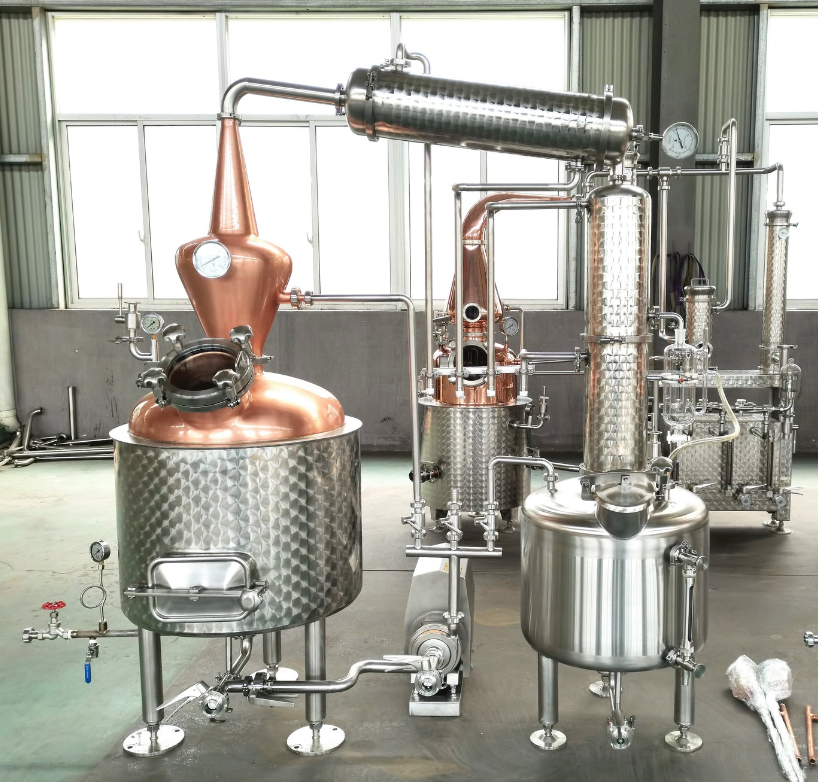
Many producers choose copper to produce high-quality essential oils, especially when working with aromatic herbs such as lavender, rosemary, and citrus peels. Some modern distillation systems combine a stainless steel shell with a copper still to balance durability, hygiene, and performance.
4. Temperature and Pressure Control
Precise temperature and pressure control is crucial during the distillation process. Overheating can degrade the essential oil, while insufficient heat can reduce yield. Modern systems typically feature an integrated thermostat, pressure gauge, and safety valve to ensure optimal extraction conditions.
5. Accessories
Integrated condenser and oil separator
CIP (clean-in-place) cleaning option
Safety valve and pressure relief system
6. Maintenance and Lifespan
High-quality distillation systems are easy to maintain. Stainless steel and copper surfaces are easy to clean and corrosion-resistant. Regular maintenance ensures long-term efficient operation, maximum yield, and protects your investment.
7. Partner with a Reliable Supplier
Choosing a trustworthy supplier is just as important as choosing the right system. At Tiantai, we offer customizable stainless steel and copper essential oil distillation systems for small- to large-scale production. Our systems feature fully welded construction and meet hygienic standards, designed to help you produce high-quality essential oils safely and efficiently.
Contact Tiantai today to learn more about our stainless steel and copper distillation systems!
👤 Cassie
📧 [email protected]