
CIP stands for Clean‑In‑Place. It cleans tanks, pipes and valves without taking equipment apart. It is the core sanitation solution for craft breweries. Brewhouse vessels, fermenters, bright beer tanks, hop guns and dry hopping dosers all rely on CIP cleaning.
Before CIP technology, workers had to open tank manholes and scrub tank interiors manually. This process took lots of labor time and brought high risks of microbial contamination.
A complete CIP unit consists of stainless steel tanks(Caustic Tank, Acid Tank, Sterilization Tank, Hot Water Tank, Sterile Water Tank), heating parts, CIP pumps and control cabinets. Cleaning liquid sprays all over inner tank walls through static or rotary spray balls. It washes away yeast, protein, hop resin and beer stone. The whole cleaning and sanitizing cycle runs without removing any equipment parts.
Three mainstream CIP types by Tiantai:
1. Portable CIP Pump: Only a mobile CIP pump unit, users prepare separate chemical buckets/tanks. Low‑budget basic solution for tiny brewpubs.
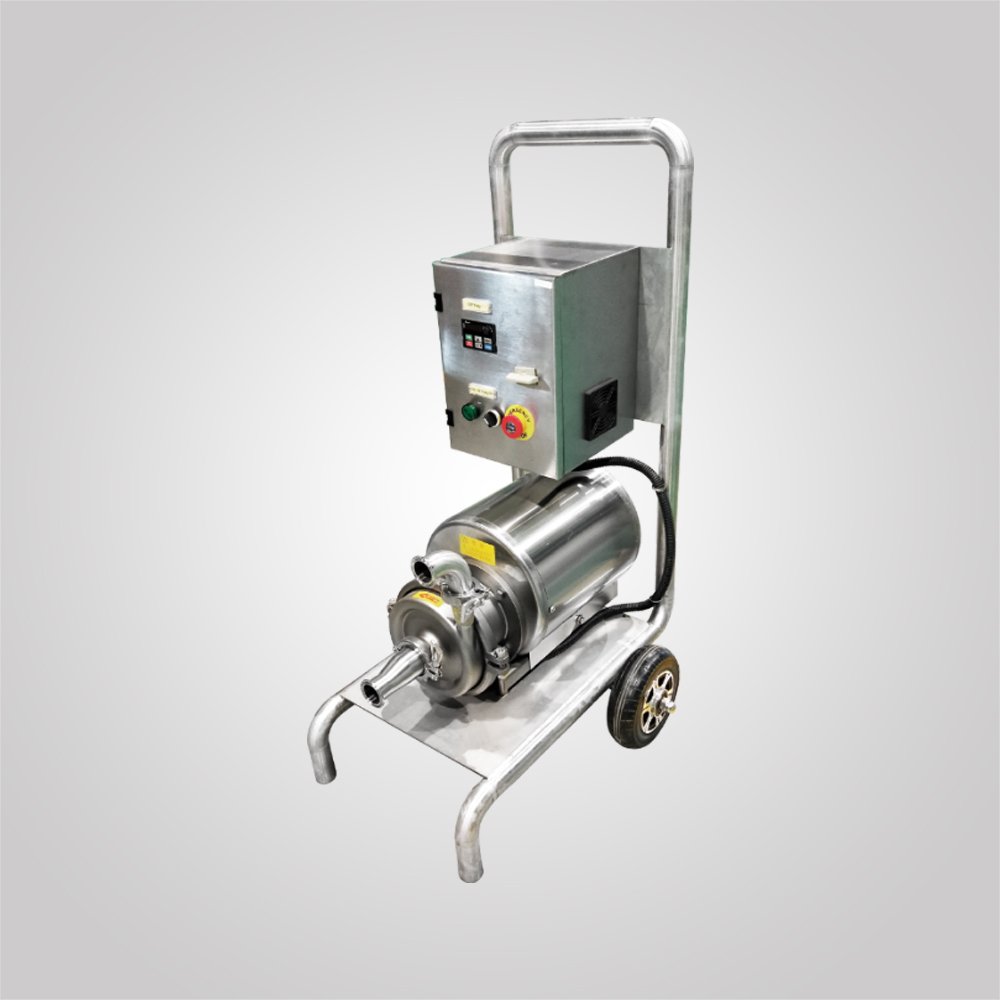
2.Portable CIP Cart: Wheeled complete mobile unit with built‑in acid, caustic or hot‑water tanks. One set serves different tanks in turn. Good for small breweries and brewpubs.
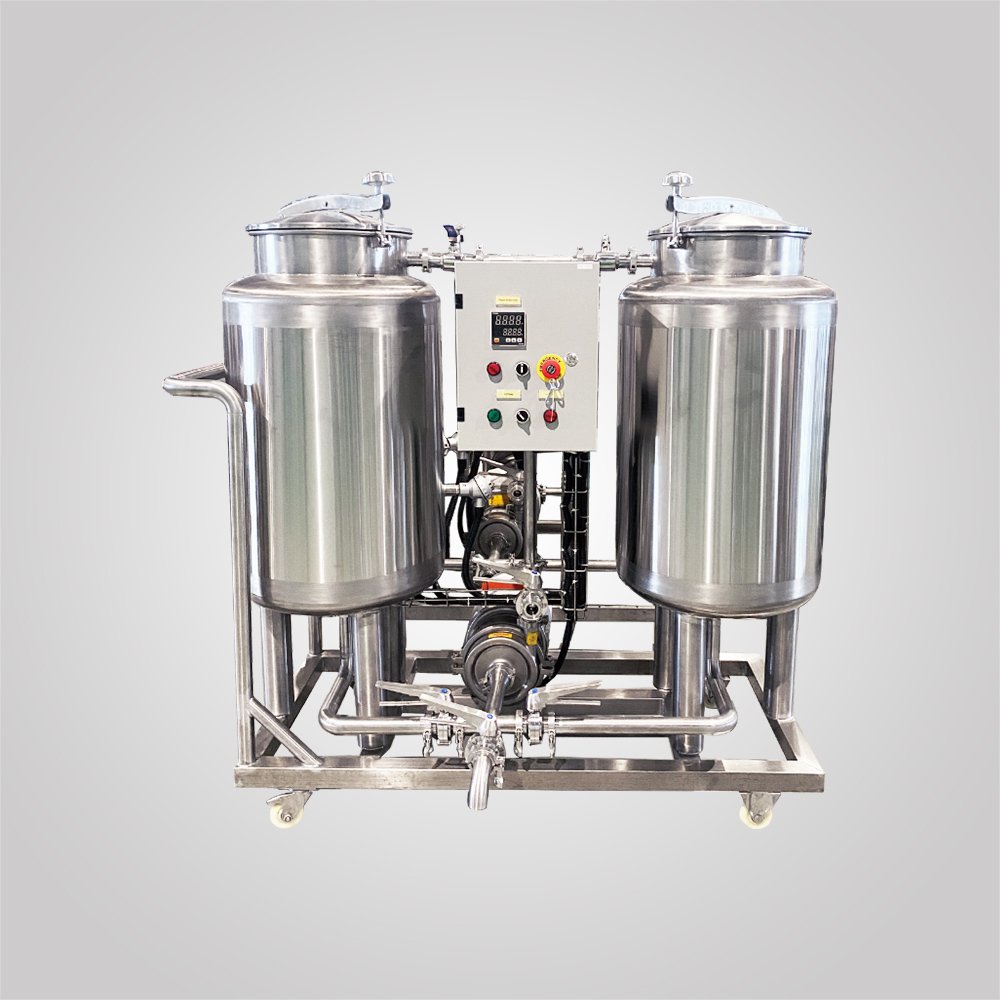
Fixed CIP System: Fixed‑mount integrated station installed on frame. Semi‑auto or full‑auto PLC control, designed for medium‑to‑large breweries with many tanks.
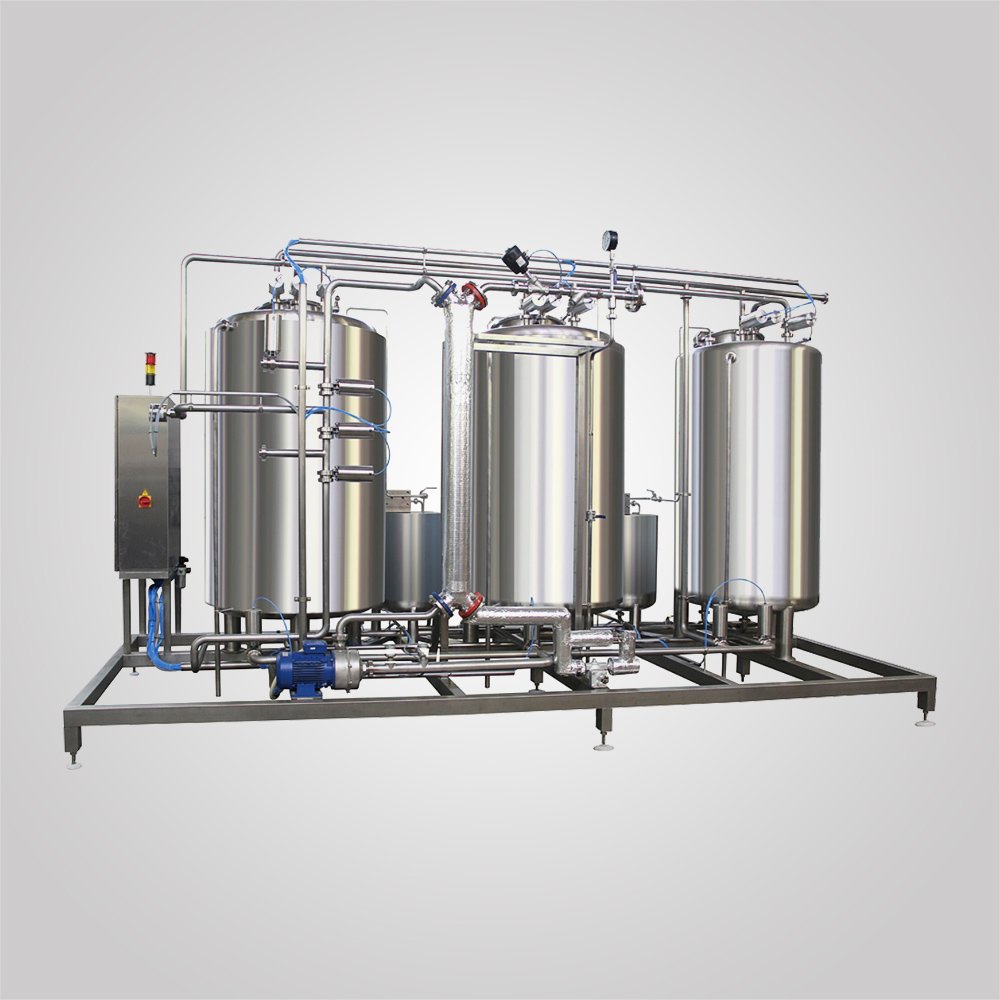
Core Functions of a CIP System
1. Remove residues and prevent bacterial contamination
After fermentation, yeast, protein, hop residues and beer stone stick to tank inner walls. Poor cleaning allows lactic acid bacteria and other unwanted microbes to grow. This causes sour off‑flavors, cloudiness and full‑batch loss of beer. Standardized CIP cycles fully remove organic and inorganic residues and keep consistent beer quality batch by batch.
2. Save labor and shorten downtime
No need to open manholes or send workers inside tanks. Cleaning runs automatically by setting program parameters. Tanks finish cleaning faster and become ready for next batch. Even closed dry‑hopping devices like hop guns and dry‑hopping dosers require full CIP circulation instead of simple water flushing.
3. Separate caustic and acid cleaning for different dirt
‑ Caustic solution (sodium hydroxide): Removes organic dirt including yeast, protein, hop resin and sugar residues.
‑ Acid solution (nitric or phosphoric acid): Removes inorganic dirt such as beer stone and mineral limescale.
Standard CIP cleaning sequence: Pre‑rinse with water → Hot caustic circulation → Intermediate water rinse → Acid circulation → Final water rinse → Sanitization with hot water or sanitizer → Drain for next production.
4. Protect stainless‑steel vessels and extend equipment service life
Beer stone and acidic residues stuck on inner walls may cause pitting corrosion on stainless steel. Proper regular CIP prevents corrosion and prolongs the service time of whole brewery equipment.
5. Recordable data meets international food‑safety standards
Fixed CIP units can record cleaning temperature, circulation time and conductivity data. These records satisfy HACCP and food‑safety audit requirements for overseas buyers.
Main Components of CIP System
- Caustic tank with heating function for alkaline cleaning liquid
- Acid tank for storing acid descaling liquid
- Hot‑water/recovery‑water tank for rinse water; some models support water recycling to cut water consumption
- CIP pump: creates turbulent flow to meet required flow speed for pipe cleaning
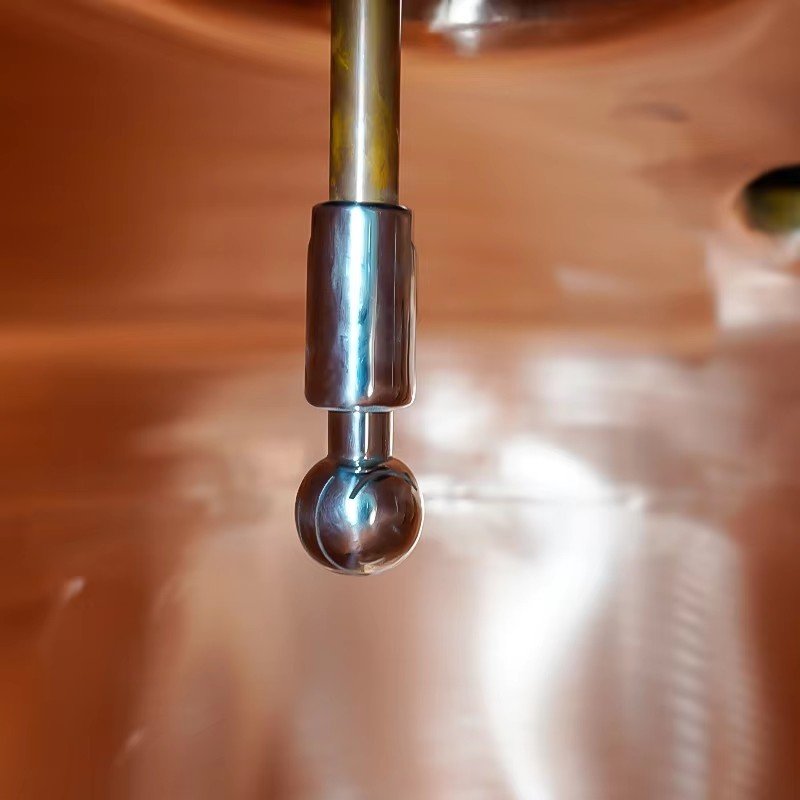
- Spray balls/rotary spray heads: installed at tank top for 360‑degree inner‑wall spraying
- Pipes, valves and control cabinet: manual/semi‑auto/full‑auto PLC control
Portable CIP Pump VS Portable CIP Cart VS Fixed CIP
| Item | Portable CIP Pump | Portable CIP Cart | Fixed CIP (Central CIP Skid) |
|---|---|---|---|
| Target brewery | Micro‑brewpub, very small batch, limited budget | Small‑size breweries, brewpubs with low output | Medium‑large craft breweries with many tanks |
| Structure | Only circulation pump, no integrated chemical tanks | Complete wheeled unit with built‑in acid, caustic & hot‑water tanks | Fixed frame‑mount integrated station |
| Operation | Manual, dip pump into separate chemical buckets | Manual or semi‑auto, move between tanks | Fixed piping, semi‑auto / full‑auto PLC |
| Cost | Lowest investment | Medium cost | Higher equipment cost |
| Features | Lightweight, simple; users need to prepare chemical containers by themselves | Flexible, all‑in‑one, one unit for multiple tanks | High efficiency, store cleaning data, support frequent mass production |
Advantages
‑ No tank opening or disassembly, reduces risk of oxygen and bacterial contamination ‑ Standardized cleaning result, not depending on workers’ experience ‑ Saves manpower, short‑turnaround tank cleaning improves production capacity ‑ Fits all brewing equipment: brewhouse, fermenters, bright beer tanks, hop guns, dry‑hopping dosers, pipelines and heat exchangers ‑ Fixed CIP version stores cleaning records for overseas audits
Disadvantages & Common Misunderstandings
‑ Chemicals including caustic, acid and sanitizer are required. Operators need to learn correct concentration, temperature and circulation time. Over‑concentrated chemicals will damage stainless‑steel gaskets and seals.
‑ Blocked spray balls lead to failed cleaning. Spray nozzles need regular inspection and maintenance.
‑ CIP is far more than simple water flushing. Plain water cannot remove beer stone and stubborn protein residues
CIP Clean‑In‑Place system is the basic guarantee for brewery sanitation. It replaces risky manual tank‑scrubbing with repeatable closed‑loop circulation cleaning. Portable CIP Pump fits tiny budget‑limited brewpubs. Portable CIP Cart is popular for small breweries. Fixed CIP supports high‑volume mass‑production breweries. Choosing a proper CIP unit helps brewers keep stable beer quality and extend equipment lifespan.