
Introduction
A great glass of craft beer goes through a long brewing journey before it reaches your glass. Many brewers focus heavily on mashing and fermentation, but they often overlook the very starting point of production: malt milling.
As the first process in craft beer making, malt milling looks like simple crushing work. In fact, it sets the foundation for the final beer quality. Small mistakes at this early stage can bring unwanted troubles for all later brewing steps.
What Is Malt Milling and Why It Matters
Malt milling is not just smashing malt grains into small pieces. Proper milling increases the surface area of malt. When hot water mixes with the milled malt later, starches and other useful substances inside the grain can dissolve much more easily.
This prepares well for the enzymatic reactions during mashing. If milling is done correctly, you can get better extract from raw materials. Sweet malt flavours are fully released, and the whole batch of beer will have a stable and reliable quality.
Good milling helps brewers make full use of every grain of malt. It saves raw material costs and brings more consistent results for every new brew.
The Golden Rule: Break the Endosperm, Keep the Husk
There is one golden rule every experienced brewer follows for malt milling: break the endosperm but keep the husk as whole as possible. This balance is the most tricky part of this step.
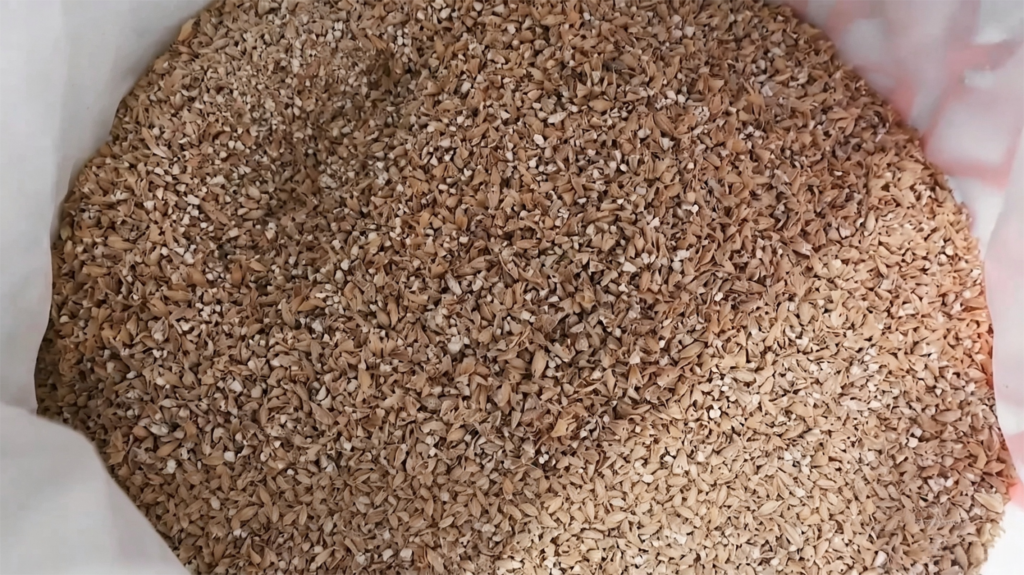
Malt husks contain pigments and tannins. If husks are crushed into tiny fragments, too many bitter compounds will leak into the wort. They bring unwanted harsh taste and ruin the clean flavour of beer.
Besides, fine husk pieces will block the filter bed. Filtration speed drops sharply. In serious cases, the grain bed gets compacted, and wort can hardly flow through. Production stops and causes big losses for breweries.
Clearly, malt milling is far more than simple physical breaking. It is a careful balancing act. The soft starchy endosperm needs fine grinding to release sugar, while the outer husk must stay intact. Whole husks work as a natural filter layer during lautering.
Key Equipment in a Modern Milling Workshop
It is hard to reach this ideal milling result without professional raw material pre‑treatment equipment. A modern milling workshop has a complete set of supporting machines working together.
The destoner first removes stones and hard impurities mixed in malt. Hard stones will scratch or damage the milling rollers without this step. It is a basic protection for your expensive mill.
The magnetic separator catches tiny metal fragments. These metal pieces may come from transport or storage. Removing them protects the whole production line and improves workplace safety.
A pulse dust collector captures floating dust created during milling. It keeps the workshop clean and lowers the risk of dust explosion. Dust control is very important for daily brewery operation.
Dry Mill vs Wet Mill
Two main types of mills are widely used in craft breweries: dry mills and wet mills. Each type fits different production needs.
Wet milling adds a little water to moisten malt husks first. Moist husks become tougher. They are less likely to break, so it is easier to hit the “broken but not shattered” standard. Many large and medium breweries choose wet mills for stable lautering.
Dry milling has a simpler workflow. No extra water is needed before crushing. It suits small and medium breweries that need flexible production schedules. Dry mills are also easier to clean and maintain.
All these pre‑treatment devices work as a system. They avoid troubles like foreign objects, heavy dust and uneven milling. Smooth mashing and lautering follow, and beer flavour stays consistent batch after batch.
Tiantai Complete Brewing Solutions
Every tiny detail at the pre‑treatment stage decides the upper limit of your craft beer. Tiantai keeps up with market demands and devotes itself to developing core craft beer equipment.
Our product range covers the full brewing chain: raw material pre‑treatment, mashing systems, fermentation tanks, beer filtration and filling lines. Custom one‑stop equipment solutions are available for different brewery capacities, site conditions and brewing recipes.
We know that many new brewers do not only need a single mill. They want matched equipment that works well together. Tiantai’s engineering team can offer practical layout suggestions and technical support for your whole brewery project.
Excellent beer starts with excellent malt milling. Choosing reliable pre‑treatment and brewing equipment locks in quality from the very first step.
Only in this way can the rich aroma of every malt grain turn into delicious craft beer in your glass. Pay attention to malt milling, and you will see clear improvements in your beer taste and production efficiency.